The Curse of Salvation

The Curse of Salvation

Saturday, 5 March 2022

The hubbub over ‘village’ parties

Deputy President William Ruto addresses his supporters at a Kenya Kwanza coalition rally in Nyeri town on February 26, 2022.                         
By 

By Makau Mutua, Professor at  SUNY Buffalo Law School and Chair of the KHRC.

What you need to know:

  • The idea of single large, hegemonic political parties with a monopoly, or near monopoly, of the political arena is antithetical to choice.
  • Even initially well-meaning political parties, such as South Africa’s ANC, become corrupt and get power-drunk because of their dominance of national politics.

I love villages. They are often pristine, unpolluted, and largely innocent. At least my ancestral village – known as either Ghana or Ngiini in Kitui Township – is one such place. That’s why I built Kitui Villa there. I’ve unofficially renamed the domicile Ubuntu Village, a homage to our philosophy as an African people.

        So, I don’t like people who malign “villages”. I’ve come to distaste epithets like “village idiots” or the use of the term “villager” to describe an unworldly, illiterate, and unsophisticated “native”. In this vein, shame on those who despise so-called “village parties”.

        I believe the term “village parties” in Kenyan political lexicon was originated by DP William Ruto. Mr Ruto, if you understand his political parentage, is a true son of Kanu, the party that brought independence to Kenya, and once bestrode the country like a colossus. After 1969, when Mzee Jomo Kenyatta banned Jaramogi Oginga Odinga’s KPU, Kenya became a de facto one-party state. Meaning that the state and the Kanu party were unofficially fused into one ruling behemoth of a party-state. By definition such a party-state is undemocratic and authoritarian. On June 10, 1982, the late AG Charles Njonjo and former President Mwai Kibaki rammed through Parliament a constitutional amendment to make Kenya a de jure one-party state.

        Kenya had dropped all pretence of being a democracy by making it official that the state was a bona fide in-your-face dictatorship. In a twist of poetic justice, both Mr Kibaki and Mr Njonjo – who helped President Daniel Moi abolish the accoutrements of formal democracy – became his victims. The lesson couldn’t be clearer – pass draconian laws at your own peril because they may become a loaded gun aimed at your head. The idea of single large, hegemonic political parties with a monopoly, or near monopoly, of the political arena is antithetical to choice, which lies at the heart of the democratic franchise. It constrains citizens and puts them in a single sack like potatoes. It’s a dictator’s dream.

Non-dominant political parties

Even initially well-meaning political parties, such as South Africa’s African National Congress, become corrupt and get power-drunk because of their dominance of national politics. That’s why Kanu, even after it had lost its reason to rule and a fatigued brain-dead political sledgehammer, roamed the country like a mad elephant stomping over everything. Eventually, with the leadership of Narc’s Mwai Kibaki and Raila Odinga, the beast was put out of its misery in 2002. Mr Kibaki helped kill the monster he had created. Mr Ruto, on the other hand, was on the wrong side of history. He was among a cabal of diehard Kanu hawks who fought tooth and nail against democracy and the Narc wave that swept Kanu out.    

        It’s not surprising that today Mr Ruto would refer to smaller, non-dominant political parties as “village parties”. His political pedigree disdains dissent and choice. He was the moving spirit behind the creation of Jubilee, a mega party out of TNA and URP. He hoped to turn Jubilee into another Kanu so that he could engineer a smooth succession of Jubilee’s Uhuru Kenyatta. Inheriting Mr Kenyatta and ruling Kenya without a single dissenting voice have been Mr Ruto’s guideposts. That’s why he has chafed at the emergence of “village parties” – especially in the Mt Kenya region – which he believes he’s herded away from Mr Kenyatta. Putting Gema in one political sack and becoming their overlord is the top priority. 

         The term “village parties” serves two purposes. First, it demeans the smaller parties and wages psychological warfare against them. Secondly, it discredits them as “tribal” and unworthy.” By extension, it tells the leaders of those parties that they are minnows in the political space, insignificant earthlings who should kowtow to him, bowl in hand. He wants UDA, his party, which has bedrock support in his Kalenjin Rift Valley to extend a suffocating blanket over Gema country. As we saw recently, he employed the same political skulduggery to swallow up Amani’s Musalia Mudavadi and Moses Wetang’ula Ford-Kenya. For all practical purposes, Mr Ruto has politically killed Mr Mudavadi and Amani and Mr Wetang’ula and Ford-Kenya. Their “village parties” aren’t anymore. 

            The design of the 2010 Constitution abhors autocracy. It calls for a thousand flowers to bloom. That’s why it allows candidates to run independent of political parties. It obviously doesn’t outlaw hegemonic political parties, but it keeps the political field open to make it difficult for political behemoths to husband, and I use the word with deliberate negative connotation, all space. That’s why I applaud Narc-Kenya’s Martha Karua, TSP Kenya’s Mwangi Kiunjuri’s, and PEP’s Moses Kuria’s for “flipping the bird” on Mr Ruto and UDA. They, and other smaller parties, must stand their ground. They can join coalitions but retain their own legal personalities. But it’s important they are driven by ideology, not primordial ethnicity or banal regionalism. As Ms Karua has forcefully argued, we can’t allow Kenya to be returned to the one-party state.

Makau Mutua is SUNY Distinguished Professor and Margaret W. Wong Professor at Buffalo Law School. He’s chair of KHRC. @makaumutua.

Source: Daily Nation.

Thursday, 3 March 2022

THE NEW MWALIMU NYERERE LEADERSHIP SCHOOL: DEVELOPING AFRICA’s KNOWLEDGEABLE POLITICAL LEADERSHIP MANPOWER

On Wednesday last  week, 23rd  February  2022;  the  ruling  party  Chairperson, President  Samia  Suluhu  Hassan,  inaugurated   the  Mwalimu  Nyerere  Leadership  School,   which  is    locate  in  Kibaha  District, Coast  Region.   Those  of  us  who  were  present  at  that  ceremony, were  informed  that   it  was  constructed  at  a  cost of  45  million US dollars, generously  funded  by  the  Communist  party  of  China (CPC);  and further  that  this   was  a  ‘joint  venture  project’  sponsored  by  six ‘Liberation  political  parties’,  that  was  intended  “to  nurture  talents,  which  will   enhance  good  governance, and  facilitate   the  achievement  the   political  and  socio-economic development  for  their  respective  countries  and  people” The participating  Liberation  political  parties  are:-  Chama  cha  Mapinduzi  (CCM)  of  Tanzania;  the  African  National  Congress (ANC)  of  South  Africa;   the  Mozambique  Liberation  Front  (FRELIMO) of Mozambique;  the  Peoples’  Movement  for the  Liberation  of  Angola (MPLA);    the  South-West Africa  Peoples’ Organization (SWAPO)  of  Namibia;  and    the  Zimbabwe  African  National  Union-Patriotic  Front  (ZANU-PF).   
        And later  in  her  speech  at  that  inauguration   event,  President  Samia  Suluhu  Hassan  expressed  her  high  hopes  and  expectations,  that    “this  school  will  greatly  help  to  expand  the   thinking  of   youths  on  leadership  in  the  political  context,  as  well  as  shape  our  leaders  to  efficiently  to  effectively  execute their  leadership  roles”.  In other  words,   these   were   the  purposes,  or  the  ‘objects  and  reasons’,  for  the  establishment  of  this  school.
  In justification   for  leadership  training.
“Knowledge is  power”  is  a  common  saying  which  is  attributed  to  the  gurus  of  English  literature. Indeed,  being  “knowledgeable” about  a  matter,  is a  vital  qualification  for  leadership  in  the  area  of  that  matter. The   need  for   knowledgeable   manpower  in  the  ‘political  management’  profession  cannot  be overemphasized.  This  is  because   political  management”, primarily  involves  the  management  of  peoples’  affairs   in  a  given  jurisdiction.  Thus,  considering  the  vast  variety  of  personal  interests,  propensities,   and  idiosyncrasies   among  ordinary  people;   a  proper  management  of  their  affairs  is  complicated  enough to  require   some  specialist  skills,  which  can  only  be  obtained  through   some   specialized  training.                                                  
        And   Mwalimu  Julius   Nyerere  was  fully  aware  of  this  requirement,  which  is  what   explains  why,  upon  the  attainment  of  Tanganyika’s  independence,  he  was  quick in  establishing    the  then   Kivukoni  College,   for  the  sole  purpose  of  training  cadres  who  would  hold    political  leadership  positions  in  the  management  of  the   new  country’s  affairs.    Consequently,   many,  if  not  all,   of  the  early  leaders  of  TANU  and  its  government,  were  routinely   sent  to  Kivukoni  College  for  training  in leadership  skills  (Mbinu  za  Uongozi  bora);   some   for  short  courses  lasting  three  months,  and  others  for  longer   courses  lasting nine  months.                                     
         Numerous three  to five  days’   leadership  seminars   were  also  regularly  scheduled  and  held  there,   for  cadres  at  all  leadership   levels  of  the  party  and  the  government. And  in  particular,   following  the  adoption of   the  immortal  Arusha  Declaration  in  February 1967 (which  also   caused  my  appointment  as  TANU’s Executive  Secretary  General,   thus   becoming the  person  responsible  for  organizing   these  leadership  courses  and  seminars).    It   became   a  policy  of  ‘endless  leaders’  training  and  re-training’;   with  emphasis  being  placed  on the   Leadership   code  of  Ethics,  which  had  been  introduced in  the  Arusha  Declaration  policy  document;   and  was  binding  upon all  party  and  government   leaders.        
        And  subsequently,   when  Chama  cha  Mapinduzi  (CCM)  was  established  in 1977 (with  me  again  as  the  Executive  Secretary  General); we rapidly  opened  six  zonal  colleges   affiliated  to  Kivukoni  College;  with  the  aim  of  expanding  the  leadership  training  facilities in  order   to  cater for  a  much  larger  numbers  of  leaders   at  the  Regional and  District  levels.
        We also  introduced  compulsory   three  months  training  courses for  all  new CCM   members;  which,  for  the  convenience  of  the  large  numbers  of  such  new  members,   were  conducted  at  the  level of  CCM  Branches;  and  for  that  purpose,  we  established  a new cadre  of  ‘District  political  education  officers’, who were given  the  responsibility  for  organizing  these  party  membership courses,  which  were  designed  to  focus  on   the  party’s  Ujamaa  ideology,   plus  its  aims  and objectives,  its  organizational  structure,  and  the  opportunities  available   for  getting  into  party  and  government  leadership   positions, through  party   competitive  elections.                                       
         It  is  most  fortunate, and   indeed  very praiseworthy,  that  this   high tempo of  leadership  training;   and  the  dedicated  commitment  to   that  concept; have commendably  been  maintained throughout  the  intervening  years,  right  up  to  the  present  day;  and  that  not  only  within  CCM,  but  also  within  other  important institutions,   specifically  the  National  Assembly  (BUNGE).  
         For  example,  I  have  just  returned  from Tunguu  in  Zanzibar,  where  I  had  been  invited  to  present  a  Paper  on  the “Appropriate  strategies  for  persons  who  preside  over   the  proceedings  of  Parliament  and  its  Standing  Committees;   and   my  personal  experiences  in  relation  thereto,  or  connected  therewith”. ‘Tunguu’ is   the  place   where  the  BUNGE   Zanzibar   sub-offices  are  located;  and   that   was  the  venue  for  a  five  day  seminar  for  all  the  leaders  of  that  Institution,  namely  the  Speaker,  the  Deputy  Speaker,  and  the  Chairpersons  of  all  the Parliamentary  Standing  Committees;  which  focused  primarily  on   topics  related  to  leadership  training.  For  the  benefit  of  our  readers  who  are  interested  in  parliamentary  affairs,  here  is  a  summary  of  my presentation  at  that  BUNGE  leadership  seminar. 
I  utilized  that  opportunity  to  take  the  Seminar  participants  through  the  vast  literature  which  is  available  regarding  this  matter;   a  summary  of  which  is  presented  here  in  the  paragraphs  which  follow   below.  
        In  narrating  my  personal  experiences  in  relation  thereto,  I  started  by  mentioning   the  difficult   challenges  which  had  to  be  overcome  during  the  initial  period  of  transition  from  the  being  a  colonial  Legislature,  to  being  the  Legislature  (Parliament)   of  an  independent  country,  while  still  operating  on  the  basis  of  a  Constitution  which  conferred  what  was  known  as  “dominion  status”  to  independent  Tanganyika;  whereby  the  British  Queen  Elizabeth  II  remained  (as  was  the  case  under  colonialism),  the   Head  of  State  of  an  independent  Tanganyika!                   
         For  example,  we  continued  with  the  structures  of  the   British   multi-party  Parliament  of  ‘party  caucuses’,  even  though  there  was  no  Opposition  camp  in  our  Parliament; which  was  a  de  facto ‘single- party’  Parliament;  with  me  as  the  Katibu  wa  Bunge. I  also  told  my  audience   the  story  of  how  we  progressed through   thirty  years  of  the de  jure  single- party  Parliament, and  the  challenges  of  making    the  necessary   reforms  and  adjustments  in  the  Rules   and  procedures  of  the  House, in  order  to  accommodate  this  new  environment.    
            I also  explained  the  challenges, which  were encountered    in the making of new rules incorporating the major  reforms and  adjustments, which had to  made upon  the country’s return to  the  multi-party  political  dispensation (this time with  me  as  the  Speaker of that august House).  And, perhaps more  importantly, I also explained  the ‘objects and reasons’ for  making  each  of   those  Rules; that is  to  say, the foundations upon  which  the  new  Rules  were  built.  This  was intended to  equip  them  adequately  with  the  “power” that is implied in the  dictum   that “knowledge  is  power”. 
 The skills required  for  good  parliamentary leadership.        
    I identified  some  specific  skills  which  could   help a person   to  be   a  good  leader  (kiongozi bora);  which, in summary  form,  include  the  following:-                                                                               (i)  The   willingness,  and  preparedness,  to  learn;   in  order  to  enhance  one’s knowledge.  This  is  because,  as  we  have  already  seen  above, “knowledge  is  power”.  Hence,  in  that  connection,  I  urged the  participants  to  refer  to  my  book  titled  “The  story  of  the  Tanzania  Parliament” (Nyambari  Nyangwine  Pubishers,  Dar es  Salaam, 2012),  (I  offered  a gift  copy  of  this  book  to  each  participant); in  which I have  detailed  my  experiences  gathered  during  the  period  when  I  was  occupying  the  Speaker’s Chair  for  15  years,  initially as  Deputy  Speaker, and subsequently  as  Speaker of the House.                
        In  that  book,  I have  described  what I referred  to  as  the  “Speaker’s burdens”, namely  the great  stresses, which  are imposed  on  the  body and  mind  of the  person  who  presides  over the  proceedings  of the  House; of  having  to  listen  to  each  and  every  word  that  is  spoken  during  debates  in  the  House  (which  requires  constant  alertness); in  order to manage  the  risk  of  losing his reputation,  in  certain  unforeseen  circumstances  which  my occur  abruptly  in  the  course  of  debate  over  which  he  is  presiding.  And  gave  examples  of  such  events  which  occurred  in  the  Parliament  of  Australia,  in  February  1975,  which  led  to  that  Speaker’s  forced  resignation!                                                             (ii) The  need  for  the  Speaker  to  observe,  and  adhere  to,  the  principle  of ‘being  the  servant  (and  not  the  master)  of  the  House.  This “servant  principle” was established   in January  1642;  when  King  Charles I personally  marched  into  the  House  of Commons, with  the  intent  of  arresting  five  members,  who  were  his opponents.  The  King  went  into  the  House,  and  asked  the  Speaker  to  show  him  where  the  five  members  were.   Speaker  William  Lenthall’s  reply  was  what  established  this  principle.   He  said  this:- “May  it  please  your  Majesty,  I have  neither  eyes  to  see,  nor  tongue  to  speak  in  this  place,  but  as  the  House  is  pleased  to  direct  me,  whose  servant  I  am  here; and  I  humbly  beg  Your  Majesty’s  pardon,  that  I  cannot  give  any  other  answer  than  this  to  what  Your  Majesty  is  pleased  to  demand  of  me”. 
       (iv)  The  need  to  adhere  to  the  principle  of  “shared  leadership” (Uongozi  wa  pamoja).   With  regard  to  parliamentary  leadership,  I  drew  the  attention  of  the  Seminar  participants,   to  the  specific  instruments  which  have  been  established  in  the  Rules  of  the  House,   with  the  aim  of  achieving  the  implementation  of  this  principle;  which  include  the  Kamati  ya  Uongozi (Business  Committee) ;  and  each  party’s   parliamentary  caucus;  which  are  recognized  by  Standing   Order  no,  131(1)  of  the  House  Rules;  and  emphasized  the  need  and  importance,  of  the  leaders  working  in  close  cooperation  as  friends  and   colleagues  in  the  same  venture. 
(iv)  The  need  to  observe  and  adhere  to  the  principle  of  “impartiality”. This  is  a crucial  and  vital  principle  which  must  be  strictly  observed,  in   all  multi-party  Parliaments;  pointing  out  however,   the  difficulties  associated  with  this  principle,  especially in  jurisdictions  like ours,  where  the  Speaker,  in  order  to  qualify  for  election  to  that  position,  must  be  sponsored  by a  political  party  to which   he/she   actually belongs; a  situation  which  creates  the  burden  of  being  suspected  by  the opposition  party  MPs  that  he   will   feel  obliged  to  favour  his  party  colleagues.                                  
         In  this  respect,  I  referred  to   the  interesting  variety   of   recorded  experiences  around  the   Parliaments  of  the  Commonwealth, of Speakers  who  even went  to  undignified    extremes in   their  attempts  to  demonstrate  their  impartiality!     
I also reminded  my  distinguished  audience   of  the reason  why  we  became,  and  have  remained, dedicated members  of  the  (British)  Commonwealth;  namely  that this decision  was  based  on  Mwalimu  Nyerere’s  vision, which he  expresses in  his speech  in  the  National  Assembly  on  5th  June, 1961, in the  following  clear,  persuasive terms :-“More than  any  other  group  of  nations  in  the  world,  the Commonwealth  binds  together,  in  friendship  and  in  like-mindedness, an  astonishing  variety  of nations,  both  great and small, without distinction  between them, or  discrimination  amongst  them;  which  offers  much  greater  hope  for  lasting  peace  and  friendship  among  the  people  of  the  world”.
    “Knowledge   is   power”;   and   such   knowledge  can   only  be  acquired   through  appropriate  training.    Best   wishes   to   Mwalimu   Nyerere  Leadership   School.
piomsekwa@gmail.com /0754767576.
Source: Daily News and Cde Msekwa.


Tuesday, 1 March 2022

Russia- Ukraine War: What it Says About Africans

Currently, the world, more importantly, the United Nations is busy deliberating on how to avoid cataclysm in Ukraine. This is after bullish Russia decided to invade Ukraine. Russia took actions after Ukraine, its former territory under the defunct USSR showed signs of joining North Atlantic Treaty Organization that brings together the US and some European countries for the purpose of shielding themselves against any invasion, which can only come from Russia, and possibly China. These acquainted with the geopolitics and the superstructure of the world aren’t shocked at all. What’s shocking are the manner and speed Russia unexpectedly has acted.
    Today, we aren’t talking about what’d be done to kerb the conflict. Many analysts have already done so. Instead, we’ll expose what we view as international conspiracy and racism against Africans. Social media’s overflowing with videos showing Ukrainian police or Poland border guards denying Africans the openings to flee the war in Ukraine simply because they are black. Despite the knowledge about such deplorable and horrible acts, neither the AU nor the UN decried this blatant racism and gross violation of human rights and Africans. None of them has shown any concerns about/for such innocuous people who are suffering simply because of the dyestuff of their skin. 
        Let’s face it openly and straightforwardly. What does this say about Africa and Africans? 
        First, the inference the racism above shows is that Africans themselves don’t care about/for each other. What’s wrong if at all, even beasts in the jungle do care, and sometimes, fight for each other? Refer to how Buffaloes fight off lions or gnus fight hyenas. Why’re Africans blasé when it comes to welfare of their brethren?  Don’t they know that such slackness gives racists a carte blanche to keep on discriminating against Africans as a people and race as has been the international organisations and systems?
         Those who remember how an African mom with her baby, among many appalling incidents in Ukraine, were denied access to a shelter intended for children and women simply because they weren’t white enough––––to be considered woman and child––––will agree with us that Africans, in this way, are part and parcel of discrimination against themselves considering how the AU and all African countries maintained silence as if what’s done is legit and normal. 
            Apart from discrimination in Ukraine, those in Africa can attest to how they’re conspirators in racism if they consider how they kind-hearted treat Asians, for example, who maltreat Africans while the same victims mistreating their brother and sister Africans though not all. Those who wonder why, can get the answer on how the said persons feature high almost in all mega corruption scandals in upper echelons of power in Africa where corrupt political officers trust and prefer to conspire with them to rob their countries. Isn’t this self-discrimination Africans commit against others? 
        I once wrote about the Jarawa, the Africans who live in the Andaman Island in India, and the way they’re treated like animals by Indian authorities. The AU has never bothered even to research and seek truth about such allegations. It’s never taken any action whatsoever. Also, refer to the recent accusations of slavery in the Maghreb where African Arabs still sell blacks to slavery. Similarly, the AU’s nowhere to be seen. But when former Libyan dictator Muamar Gaddafi’s killed, the AU’s the first to come forth and condemn. 
        There have been some accusations of deaths and tortures for African house helps in the Gulf and other Arab countries. As usual, Africa never heard it, thus, has done nothing. Refer to how Israel has been discriminating against its black Jews or Falasha it took from Ethiopia and the AU is silent. Even if these guys were duped into denying that they’re Africans but Jews, we don’t need to punish them or repeat the same crime their dupers are committing. As usual, the AU has never adequately addressed the above scandals nor individual African countries where victims come from. What’s this if not condoning racism against ourselves as Africans?
        Secondly, racism in Ukraine shows that even the international community doesn’t care about/for Africans simply because they aren’t white enough to be valued. To know this, just imagine. What’d have been the reaction of the international community had whites been mal/treated the same as Africans are treated in Ukraine in Africa or by Africans. The West duped us into internalising self-discrimination historically. When it introduced Christianity, it taught us to discriminate ourselves. It started slowly and methodically after we abandoned our beliefs, culture, names and the ways of life. Islam followed. 
        Thirdly, racism in Ukraine speaks to how Africans are heedless of who they’re not to mention devaluing ourselves. Why’s it possible to ignore such criminality against the entire race that’s been ongoing for many years since slavery and colonisation? Currently, some African countries are busy condemning Russia, which’s a good thing to do. Again, charity begins at home. How do they get the audacity to condemn Russia and the chutzpah to condone discrimination against their brothers and sisters? What’s wrong with us? Failure to know and appreciate who we’re, we’re going to suffer even more.
        Now what’d we do? There are many steps we need to take as a people. 
        First of all, we need to value ourselves and care about/for each other. Like other races that discriminate against us do, when one or any of theirs is discriminated against or jeopardised, they stand together with him/her to maintain and show their significance and worth. 
        Secondly, Africa and Africans need to hit back to whoever discriminate any of them. For example, after the war ends in Ukraine, Africans should not go to study there even if it is for free or scholarships provided by the Ukraine government. Thirdly, Africans should unite their countries and form one country that’ll be able to give them a voice internationally not to mention establish the services they seek abroad. 
        In sum, there’s neither an angel nor uncle that’ll fight for our dignity as Africans and people. We’re responsible for ourselves. If we love ourselves and each other, others will love us. If we respect and value ourselves, others will. But shall we remain negligent and stroppy as we currently are, we’re going to suffer even more. It is as possible and simple as that.
Source: African Executive Magazine tomorrow.

Monday, 28 February 2022

Saturday, 26 February 2022

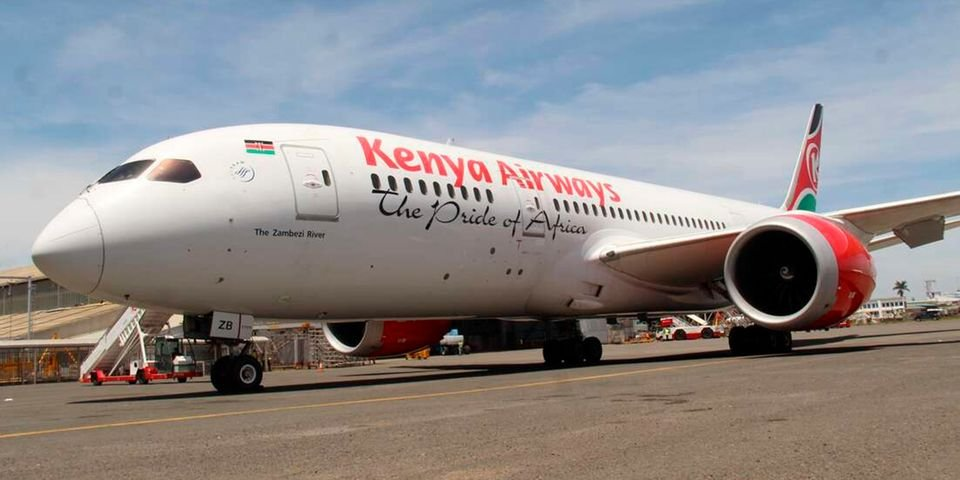
Cry my beloved Kenya Airways

  • What you need to know:

    • Kenya Airways, or KQ, as it’s popularly known, once ruled the African skies.
    • There was never a truer moniker for the national carrier than the “Pride of Africa”.
    There was never a truer moniker for the national carrier than the “Pride of Africa”.
    • Today, I write to mourn the possible – perhaps probable – demise of Kenya Airways, once a leading airline on the African continent. Kenya Airways, or KQ, as it’s popularly known, long, long ago – in the misty past unknown to anyone below 25 years of age – ruled the African skies.
    • There was never a truer moniker for the national carrier than the “Pride of Africa”. Africans of every hue and nationality bowed to KQ and swore by it. But that was back then. Today, KQ might as well be named the “Shame of Africa”. Once an undisputed giant, KQ is but a dwarf of its former self. What happened to this monument to national pride? Who, or what, cannibalised it?
    • Let me first lay my cards on the table before jingoists start ranting, and gagging. My late sister – may she rest in peace – was among the founding staff of KQ. She, along with everyone in the family, took deep pride in the national carrier. That’s why it pains me to write what some may see as a eulogy. But only an ostrich stupidly buries its head in the sand in the face of an oncoming cyclone. KQ is deathly ill, perhaps terminally, unless Kenya works a miracle. If not, we must ask ourselves for how much longer should the poor taxpayer continue to carry this carcass on her shoulder. Should we accept the inevitable and read its last rites?
    • One can’t blame emergent post-colonial states for their fascination with state-owned, or funded, national airlines. Piercing the skies and borders of other nations through the national airline was the most emphatic and visible image of independence and national sovereignty, even if the boast was empty. Literally penetrating another country’s borders – especially a European one – brought Africans psychological satisfaction. The colonial “master” had to accept this form of “native” revenge. The national airline usually adorned the colours of the national flag just to drive the point home. That’s why the collapse of some national airlines – and Uganda’s comes to mind – was an incalculable blow to the national psyche. Most states maintained unprofitable national carriers for the sake of ego.
    • Haemorrhaging KQ
    • It wasn’t just in Africa where the national carrier is a measure of a state’s greatness. Many European countries measure their international standing by the girth of their national airlines. I vividly recall how despondent the Swiss became when Swissair – the choice airline for UN diplomats and jetsetters – literally and figuratively came crashing down to earth and plunged into the deep oceans. You could hear the national hollers all the way from Geneva. One would’ve been forgiven for thinking that the Swiss had been decapitated of their manhood by a machete. The Dutch tightly clutch on to KLM, the French to Air France, the Brits to British Airways, the Qataris to Qatar Airways, and UAE to the Emirates. 
    • Even the mighty Americans, although they’ve no official national carrier, take great pride in the privately-owned large carriers such as Delta, American, United, and others. Not to mention that America is the home of Boeing, the world’s most iconic airplane manufacturer. So “little” African countries like Kenya should be cut some slack for holding onto a hulking money pit like KQ. But a time comes when enough is enough. Over the last two decades, the Kenyan taxpayer has repeatedly bailed out the haemorrhaging KQ to the tune of billions – with a big “B” – of dollars. Mismanagement, corruption, looting, bad partnerships, the government’s fecklessness, and plain old stupidity have done in KQ. Covid has driven in the last nail.
    • I heard that a certain imposing Gulf carrier wanted to make Nairobi its Africa hub. But corrupt government mandarins wanted to be kissed with millions of dollars. So the carrier took its wares and is now making some tiny Kenyan neighbour its hub. Very soon that country – no bigger than my native Kitui – could replace JKIA as the region’s dominant hub. If KQ dies and is buried, that tiny state will be Kenya’s only outlet to the outside world. When it rains, it pours. We will all be trooping through there, tail between the legs. Why? Because Kenyans – officials, the private sector, and citizens – are corrupt through and through. Who, or what, will slap us out of our slumber?
    • Wide-body jet
    • I end with a vignette. Last week I flew back and forth from Nairobi to Johannesburg. The flight there in a wide-body jet was on time and uneventful. The crew was excellent and the flight smooth. But the return leg was terrible. The nightmare started at the Oliver Tambo International Airport. It wasn’t clear whether to check in at Terminal A or B. We trekked back and forth. After check in, the departure gate became a mystery. It changed several times without warning. Then an interminable delay before departure. KQ ground staff were clueless. The flight crew was nice, although the pilot could’ve offered a full-throated apology. Should we just kill KQ?
    • Makau Mutua is SUNY Distinguished Professor and Margaret W. Wong Professor at Buffalo Law School. He’s chair of KHRC. @makaumutua
    • Source: Daily Nation tomorrow.

Thursday, 24 February 2022

Letter to Kakwenza Rukirabashaija

Bwana Mdogo Kakwenza,
I’m happy that, at last, you left the gaol you’re wantonly confined to, tortured, battered and humiliated. I thank Lord that they tortured your body but not your spirit. I thank God that you outsmarted them and fled even when you’re on bail for committing no offence. Your spirit is still fresh and committed.  For, you’re recently saying that you’ll return to Uganda without sneaking as you sneaked out. Again, I’ve some nuggets of wisdom for you. It is too early to think about coming back and stand your ground. You need to underscore power dynamics between you and your muggers. First, next time, before you write any lampoon, please first read Festo Kivengere’s book, I love Idi Amin: The Story Of Triumph Under Fire In The Midst Of Suffering And Persecution In Uganda.
        Bwana mdogo, remember. When you write something that can provoke even those you didn’t aim, you need to be very careful. When Kivengere wrote he loved Amin, it was to the contrary. And he got away with it. Sometimes, you can show your dander through laughter and vice versa. Let me give you an example of Kenya’s President Uhuru Kenyatta. When he wants to say a serious thing, he says it jokingly. If I were you, the title of the book would have been a very loving saviour or something close to it. What if the book were titled Our Selfless Saviour? Using such tactics and techniques doesn’t depict you as a chicken or anything but a shrewd thinker who wants to safely deliver his message to both those who likers and loathers. Why using poison to kill your enemy while using honey can? Also, keep your bolthole a top secret since barbarians nowadays hunt down their enemies even abroad.
        Secondly, never use obvious innuendos, metaphor or anything close. Instead, you can think of what we call creative deconstruction. For example, why call somebody a greedy barbarian whereas you can call him a selfless fighter who fights for nobody except his family as Gen. M7 once told Ugandans to stop thinking he’s working for them as if he were their servant. If I were you, I’d use greedy pigs instead of barbarians since nobody’d like to associate him/herself with a hog.  I know your intention’s well and you’re sick and tired of lowbrows and their hangers-on. But remember. God sends meat and the devil sends cooks. Who knows if the cooks for the powers that be are the ones who misconstrued your message and told your target to mercilessly descend on you? Next time, never involve yourself in a tweeting duel with the lowbrows. They’re coldblooded and are game for killing. Make sure you write something like Ngugi’s Matigari Manjiruungi or Ngaahika Ndeenda. Hopefully, you know these shrewd pieces by this doyen of literature.
        Thirdly, why did you write about a greedy barbarian while Uganda either has none or is pregnant with many? Why one greedy barbarian while Africa––––Uganda included––––has millions of them? Did you aim at chopping the head or destroying the entire thing or just attacking the queen? If your title were about greedy barbarians and the milieu were about a barbarian, you’d have safely gotten away with murder young man. The sage’s it that if you want to hide a tree, hide it in the forest.
         Anyway, I don’t want or intend to tutor you on how to write about something controversial you believe in. I know you young guys have torrid blood wishing to address everything brutally and truthfully. You’d like to solve all problems the world’s facing. Sometimes, you wrongly ruminate that our generation’s cowardly languid. And that’s why it produced greedy barbarians like those you targeted. Again, when you think of writing such stuff next time, please make sure you’re not within the barbarian’s jurisdiction when the stuff hits the shelves. I’m saying this to remind you that you need to know the type of banana republic you live in and the type of greedy and hard-nosed barbarians you’re dealing with. I want you to understand that freedoms and liberties we hear our politicos sing about are but theoretical. Even those the gurus of human rights who encourage us to fight for and enjoy our freedoms and rights such as the right to expression, in our humbly views, are the ones who have maintained barbaric and corrupt morons simply because they rob us and vend them the pillages. They’re the same that killed our radical leaders such as Patrice Emile Lumumba and Kwame Nkrumah among others.
        Fourthly, never write something even a buffoon can crack. If your satire were highly knotty, those barbarians and goons that ordered your torture would not get it easily as they did. They don’t read books. Thus, I doubt what attracted them is the provocative title you give your book. I don’t want to go deeper into this since I haven’t yet read your magnum opus, which I wish I must read and learn one or two things about the greedy barbarian.
        Fifth, before writing, you need to gage your enemy or target. Methinks you know what I mean. For example, there’s no reason whatever to write something that’d cost your dear and tender life. Think about your young family, own life and future not to mention your contribution to the nation. Also, remember, when you write anything allegedly to be against the dude who’s an avenger or the avenger himself who wield such much power, you must cover your tracks or ass.  For today, this is enough. Pole sana Bwana Mdogo Rukirabashaija. To those persecuting Rukirabashaija, you’re tarnishing the good name of Uganda. You can kill or force one Rukirabashaija. Many are under your noses even though they don’t holler like dogo. To avoid their poisonous arrows, just accountably and equally do justice to everybody. Stop corruption, authoritarianism, hooliganism, nepotism, nihilism, and other isms of the sorts.
Source: Daily Monitor today
.


FURTHER REFLECTIONS ON CCM’s 45th BIRTHDAY ANNIVERSARY.


 CCM’s   annual  celebrations  of  its  birthday  anniversary  on  February   5th      of  every  year  ,   has  always  been  the   greatest  political  event of  that   month.  This  was  also  the  case  for  the  current  year;   when  these  celebrations,  the  45th  in  the  series,  were   duly   held  in  Musoma.  These  celebrations  are intended  to  provide   an  opportunity  for  the  ruling  party  to  reflect  on  its  past  performance ,  and  on  the  way  forward.                       
          In   our  article  of  February  3rd,  2022;  we  discussed   some of  the  positive   factors  which  have  facilitated  CCM’s  longevity  as  the  country’s  ruling  party,  ‘basking  in   the  sunshine’  of  the  past   huge  electoral   successes  which  have  kept  it  in  power. However   in  order  to  provide  a  proper  balance  in  the  presentation  of  these  facts,  we  need  to  also  take  a  look  at  the ‘negative’  factors,  namely  those  that  could  possibly   lead  to  CCM’s  removal  from  power.That   will  be  the  subject  of  today’s  article.                                                                    
        For  the  purpose  of  this  presentation,  I  have  deliberately  excluded  the  unlawful,  remote  probability  of  the  occurrence   of   an  unconstitutional  seizure  of  state  power  by  the  military  (which  post-colonial  Africa  has  witnessed  many  times  in  many  different  countries).  This  is  because,  following  the  military  coup  in  Uganda  in  January  1971,  President  Nyerere  addressed  a  huge  rally  at  the  famous  Jangwani  grounds  in  Dar  es Salaam,  at  which  he  not  only  strongly  condemned   this  unconstitutional  seizure  of  power  by  General  Iddi   Amin,  but  he  also  prophesied  that  no  such  coup  would ever  take  place  in  Tanzania,  in  the  following  words:-  “Mtu  mmoja  kichaa  anaweza  labda   kunipiga  risasi  barabarani,  akaniua.  Huyo  atakuwa amepindua  serikali.  Lakini  hakuna   mapinduzi  ya  kijeshi  yatakayotokea.  Hakuna.                            
        Similarly,  I  have  also  excluded  the  unlawful  activity  of  “hacking”,  or  otherwise  “doctoring”  the  election  results.    
I  am  therefore   talking  only  about  the  democratic  process   of  changing  power,  as  a  result  of   civilized  competition  between  political  parties. For  that  purpose,  I  have  identified  two  categories  of  ‘negative’  occurrences   which  could  possibly  remove  CCM  from  power;  which  are   the  following:-                    (i)  the  effects  of  longevity  itself;    
(ii)  dangerous  complacency;  and  
 (iii)   the  self-inflicted  injuries.
Analysis.
(i)    A  political  party’s  longevity  in  office  may,  unwittingly,   create  its  own  problem  by  being  the  cause  of  its  downfall  from  office,  and  more  particularly,  the  longevity  in  office  of  its  op  leader,  who  is  normally  designated  “Chairman”  or  “President”  of the  relevant  party.   It  is  normal  human  nature  for  people  to  ‘get  tired’  of  their  leaders  who  stay  in  office  for  long  periods  of  time.  They  develop  a  feeling  that  they  have  had  enough  of  his  leadership;   even just   because  they  no  longer  find  him  interesting,  or  because  he  makes  them   angry  or  unhappy.   They  thus   develop  the  urge  to  get  rid  of  him.
        And,  as  happened  in  the  case  of  President  Kenneth  Kaunda  of  Zambia  in  1991,  who  was  voted  out  of  office  when  he  lost  that  year’s  Presidential  election;  with  the  result  that  his  political  party,  the  United  Independence  Party,  was  also  defeated,   and  thus   ceased to   be  Zambia’s  ruling  party. It  is  the  awareness  of  this  danger,  that  led  to  CCM  adopting  the  policy  of  limiting  its  top  leaders  term  of  office  to  only  two  five  year  terms;  which  has   paid  handsome  dividends,  following  President  Nyerere’s  own  voluntary  resignation  from  the Presidency  in  1985.
(ii)  The  need  to  avoid  complacency.   
In  this  context,  the  word  “complacency”  is  used  to  mean  ‘a  feeling  of  satisfaction  with  a  situation,  so  that  you  do  not  think that any  change,  or  improvement,  is  necessary. Fortunately,  CCM  has always  wisely  avoided  falling  into  this  dangerous  complacency;  and  this  is  easily  confirmed,  firstly   by  CCM’s  vigorous   and  serious  campaigns,  which  the  party  always   undertakes  during  all  general  elections;   as well  as   by-elections;  and  secondly,  by  its  convention,  or  rule,  of  carefully  preparing  “election  manifestos”  for  each  and  every  general  election,  outlining  its  policies  and  programmes  which  will  be  implemented  during  the  post-election  leadership  period.         
        The  political  gurus  have  said  that  “political  parties  are absolutely  essential  for  the  proper  functioning  of  democracy;  simply because  democracy  gives  the  majority  the  right  to  govern,  and  there  is  no  acceptable  way  of  establishing  such  majority without  an  open  competition  taking  place  between  different  political  parties  for  the  right  to  form  the  government;  by  resenting  their  different policies  and  programmes  to  the  electorate;  and  each  party  trying  to  persuade  that  electorate  to  vote  for  its  candidates,  on  the  basis  of  their  policies  and  programmes”.  However,  this   doctrinaire  argument  does  not,  and  cannot,  extinguish  the  right  of  private  candidates  to  participate  in   elections,  a  constitutional  right  which  has,  at  all  times,  unfortunately   been  denied  to  Tanzanians.                
        But,  unlike  some  of  he  other  political  parties,  for  some  lame  excuses,  have opted  to  boycott  some  of  the  elections;   CCM  has  adopted  the  option  of  seriously  and  vigorously   participating  in  all  the  elections,  in  fulfillment  of  the  requirements  of  the  political  parties  Act  of  1992,  which  impose  on  political   parties  (in  the  definition   of  the   words  “political  party)  the  duty  of  participating  in  elections  “for  the  purpose  of  forming  a  government,  or  a  local  Authority”.   But  CCM  has  also  been   making  ‘deep  reflections’  on  its  electoral  performances  after  every  such  election,  in  order  to  enable  it  to  design  appropriate  improvements,  where  necessary.           
        For  example,  immediately  after   the  2010  general  election;   CCM’s  policy  making  body,  the    National  Executive  Committee,  carried  out   long  and  serious  deliberations  regarding  its  relatively  poor  electoral  performance,  and  made  new  decisions   to  improve  its  organizational  structure,  in  a ‘surgical’  operation  which  was  aptly  code-named  “kujivua  gamba”  
(iii) the  “self-inflicted  injuries”.
        Experience  has   shown   that  the  phenomenon  of   self- inflicted  injuries  is  the  ‘mega’  threat  in  this  particular  respect;  as  this  is  what contributed  to  diminished  election  victories  in  some  of  the  past   general  elections,  specifically  the 2015  general  election  where   CCM  garnered  the  lows  ever  election  victory,  in  terms  of  percentages,  with  only  58.46%  for  the  Presidential  candidate,  and  73.86%  of  the  total  number  of   Parliamentary  seats.  Although  these  results  were  very  good  for  CCM,  but  they  were  still  worrying,  when  compared  with  the  previous  2010  election  victories,  in  which  the  Presidential  candidate  had  obtained  61.17%;  and   78.2%  of  the  Parliamentary  seats.
Examples  of  CCM’s  ‘self-inflicted  injuries’.
Failure  to  discipline  its  perceived  ‘truant  leaders’.
One  such  example  was  the   apparent   failure,  during  the  2005 -  2010  leadership  period,  to enforce  discipline  among  some  of  its  leaders  at  the  national  level.  This  was  in  connection  with  certain    financial  scandals,  which  generated   a  great deal  of   public  anger  countrywide.                        
         There  were  two  specific   “anger-generating”  scandals which  were  closely  associated  with certain  high-ranking  CCM  government  leaders,  namely  the  “Richmond”  scandal;  and  the  “EPA”  scandal.  The  “Richmond” scandal  surfaced  in  an  acrimonious National  Assembly  debate,  which  eventually  led  to  the  forced  resignation  of  then  Prime  Minister  Edward  Lowassa.  This  particular  debate  inflicted  immense  damage  to  CCM,  for  it  created  two  antagonistic  groups  among  its  members  of  Parliament;  one  of  which  was  labeled  the  “mafisadi”  group;  while the  other  presented  itself  as  the  “anti-mafisadi”  crusaders;  which  dedicated  itself  to  the  task  of  seeking  the  downfall  of  the  “mafisadi”   group  at  the  next  following  general  election  of  2010.
        As  that  alone  was  not  bad  enough,  this  “Richmond”  scandal  was  followed,  in  quick  succession,  by  another equally  damaging  scandal,  involving  accusations  directed  at  some  leading  CCM  national   leaders,  who  were  alleged  to  have  stolen  money  from  the  External  Payments  Account  (EPA)  of  the  Bank  of  Tanzania.                                                             
        Such  accusations,  naturally  generated  a  significant  amount  of  anger  among  many  Tanzanians,  and  thus  hugely  contributed  to  the  loss  of  confidence  in  the  ruling  party  top  leadership,  for  failing  to  take  action;   and,  consequently,  gave  rise  to  the  presumption  that  the  top  leadership  was  deliberately  protecting  the  abhorred  “mafisadi”  cadres  within  its   ranks!
        It  is  such  damaging  public  perceptions  that  created  what  may  be  described  as  “collective  anger”  against  CCM;  and  probably   led  to  the  very  low  turnout  of  voters  at  their  respective  polling  stations  on   polling  day  for  the  2010  general  election, which  was   a  dismal  42%;    and  contributed  to   CCM’s  diminished  CCM’s  victory  in  the  Presidential  election,  from  80.25  in  the  2005  election,  down  to  61.17%.                    
        And   with  regard to  the  parliamentary  elections,  the  problem was  further  compounded  by  CCM’s  imprudent  selection  of  some of  the  “mafisadi” group,  as  candidates  for  the  parliamentary   elections.  It  was  very  much  like  “rubbing  salt”  in  the  wounds  of  the  already  angry  electorate;  which  is  probably  what  explains  the  very   low  turnout  of  voters  referred  to  above,  as  a  demonstration  of  protest.  
        Such  “collective  public  anger” fits  quite  well  into  the  definition  of  “self-inflicted  injuries”;  for  it  was  brought  about  as  a  result  of  failure by  the  CCM  top   leadership  to  take  appropriate  disciplinary  action  against  the  culprits.  It  was  at  about  the  same  time  that  the  African  National  Congress  of  South  Africa  was  going  through  very  hard  times,  because  of  “corruption  scandals”  that  were  being  associated  with  its  top  leadership.                                                                                                       According  to  South  Africa’s  media  reports  coming  out  at  that  time,  “South  Africa’s  ruling  party  is  struggling  to  show  the  voting  public  that  it  can  clean  up  the  mess  it  has  made.    With  voting  trends  suggesting  a  significant  decline  in  its  share  of  the  votes,  there  is  a  very  real  prospect  of  the  ANC  being  voted  out  of  power  at  the  forthcoming  general  election  of  2019;  which  was  unthinkable  until  recently”.   
The  importance  of  party   discipline.
It  should  be  noted  that  the  culture  of  multi-party  politics  puts  the  greatest  emphasis  on  two  related  factors.  These  are:  
(a)  party  organization;  and 
 (b)  party discipline.                                                  
 This  culture  generally  recognizes  and accepts,  that  these  two  factors  are  the  most  fundamental  features  of  any  serious  political  party;  which  must “organize  effective   support  throughout  the  country’;   but  must  also  be  prepared  to  “ impose  discipline  on  its  leaders  and  members”,  where  necessary.
CCM’s  organizational  structure  has  served  this   party  extremely   well,  by  giving  it  the  strength  required  to  win  competitive  elections.  
        And  it  may  be  helpful  at  this  juncture,  to  remember  party  Chairman  John  Pombe  Magufuli’s  “sweeping”  positive  reforms  which he  introduced  into   the  organizational  structure  of  our  ruling  party,  thus  providing  it  with  a  more  suitable  framework  for  more  effective  participation  in  the  competitive  politics  of  the  multi-party  political  landscape.
         But   the   disciplining  of  its  members,  and  particularly   its  leaders  where  necessary,  is  of  equal  importance.  We have  already  referred  above,  to  the  antagonistic  groups  which  at  one  time  developed  among  CCM  members  of  Parliament  during  the  9th  Parliament,  and  the  damage  which  was  caused  by  the  failure  to  take  appropriate  disciplinary  action  against  the  culprits. This  should  be  enough  evidence  of  the  importance  of  implementing   party  discipline,  for  its   guaranteed  survival  as  the  ruling  party. 
“Reasoning   with  the  worst  that  may  befall” 
This  now  reminds  me  of  that  famous  English  Playwright  and  dramatist,  William  Shakespeare,  who  wrote  the  following  lines  in  his  Julius  Caesar,  Act  V,  scene 1 : “since  the  affairs  of  men  are  uncertain,  let  us  reason  with  the  worst  that  may  befall” 
 This  presentation  largely  assumes  that  the  affairs of  electoral  politics  are  equally  uncertain.  I  have  therefore  “reasoned  with  the  worst  that may  befall  CCM”; namely   the  remote  probability   of   its  democratic   removal  from  power;  for  the  purpose  of  alerting  it  to  the  need  to be prepared  to  guard  against  such  an  unwelcome  eventuality.  
piomsekwa@gmail.com/0754767576.
Source: Daily News and Cde Msekwa today.

Monday, 21 February 2022

MIAKA TISA TANGU KUFARIKI RAFIKI YANGU JOHN WANDIBA KIJANA WA MJINI NA BAUNSA WA UHAKIKA

Hayati John Wandiba akiwa na Yvonne Chakachaka alipotembelea Tanzania enzi zile. Wangapi wanamkumbuka njemba huyu machachari? Nadhani akina Santana bado wanadunda. RIP JOHN

Saturday, 19 February 2022

WAKENYA WANGEMUELEWA MANDAGO


Kenya’s reset moment beckons


                                      By Makau Mutua
Professor at SUNY Buffalo Law School and Chair of the KHRC.
What you need to know:
A state can’t be better than its people and their leaders.
It’s never happened anywhere in the world, and Kenya is no exception.
During every presidential election cycle, pundits refer to the historical moment at hand. To hear them tell it, you’d think every presidential contest has historic – epochal – significance. That’s rarely the case. It’s akin to the story of the boy who always cried wolf without cause only to be in serious trouble when a real wolf actually waylaid him.
        However, the August 9, 2022 Kenyan elections are truly epochal. Really. Kenya today stands at an inflection point. The country has lost confidence in itself. The populace is not at ease. The legitimacy of institutions is in doubt. It’s an era of discontent. Everyone is on a short fuse. The conspiracy of nature and man have made this a reset moment. States are only as good – or bad – as the people in them, and those who run them. A state can’t be better than its people and their leaders. It’s never happened anywhere in the world, and Kenya is no exception.
        The character of a people is the crucible in which the nature of the state is forged. I am aware that the state is an instrumentality, an ogre, bent on the metaphorical consumption of humans. In other words, the state is naturally a controlling, repressive and jealous husband of its citizens and inhabitants. It wants to see – and know – everything. But it’s also a cultural and moral phenomenon. These two – culture and morality – determine the nature of the state.
Culture and morality
Culture and morality shouldn’t be understood as artefacts that exist in the museum of antiquities. They are dynamic and in constant evolution. They’ve a genetic fingerprint that distinguishes one culture, or moral structure, from another. You notice these stark differences when you travel from one country, or state, to another. Or even one region of the same country to another. Often, culture and morality seem intangible, but they aren’t. They are thick, and you can almost cut them with a machete.
        Two particular cultures have been very critical for Kenya. The first is about political governance. The second is about ideological conviction. The two work together to produce the moral structures of the state and society. Let’s unpack them.
        At independence, the state got off on the wrong foot. Rather than forging a united nation, our early leaders disagreed on the nature of political governance and ideological convictions that would anchor the emergent state. They put personal greed over the national interest. They put their ethno-cultural nations ahead of the idea of a Kenyan nation. As a consequence, the Kenyan nation has been stillborn – barely stirring in its crib. Often, we’ve almost choked the baby to death, as we did after the 2007 elections.
Later leaders were mainly the ideological children of the worst proclivities of our political forebears. And even when we make the right turn, we often find a way to end up in the ditch.
Ideological convictions
Our three single most important flaws are corruption, the tendency towards fascism and lack of public shame. Today, the corrupt and those who loot from Kenyans – the taxpayer and the littlest among us – are our heroes. They steal our future and give us offensive handouts that we fight over at political rallies without any concept of dignity. They keep us poor so that they can dominate us. They have found the political wand for domination – impoverish the people, make them desperate from disease, hunger and ignorance. Then colonise them through the police state. Even when you send Kenyans to school, the system makes sure they are undereducated. Graduates can’t string together two coherent sentences, let alone write a page.
        We are a broken people. The state and our rulers have broken us. Then we have empowered them to continue breaking us. We’ve lost faith in each other and the state. Even the animals in Maasai Mara treat each other better because they don’t harm each other for gratuitous pleasure. They do so only in self-defence, or for dinner.
We destroy each other deliberately. We don’t understand that the welfare of one is the welfare of all. And that if one is harmed, then the whole is harmed. We need to reengineer our morality and culture – deliberately. This must start at home, our local communities and schools. We must recover – reclaim – our souls as individuals and as a state.
        On August 9, 2022, we must choose leaders who have proven – in their public and personal lives – that they are not thieves and looters. We must choose leaders who can prove how they acquired what they own. We must choose leaders who understand how we can reset the moral structure, political culture, and ideological convictions of our people and the state. We must choose leaders who’ve proven they can love others, not just themselves. Leaders who will reset the foundations of our state and society. But to do so, we must – each and every one of us – reset our own moral and political codes and structures.
Makau Mutua is SUNY Distinguished Professor and Margaret W. Wong Professor at Buffalo Law School. He’s Chair of KHRC. @makaumutua.
Source:Daily Nation and consent of Bro, Makau Mutua.