The Curse of Salvation

The Curse of Salvation

Wednesday, 30 October 2019

Africa Must Stop Duplicity on Dual Citizenship

The Daily Nation (October, 27, 2019) run a fine article by professor Makau Mutua on the issue titled “Kenyans at home hate those in diaspora but love their money.”  I don’t intend to replicate the same. Although Makau put Kenya on the spotlight, sadly, the situation is the same in many African countries.  After reading this well-written piece full of nuggets of wisdom, I educed former US president Barack Obama. If Obama were Kenyan something many Kenyans euphorically still think he’s though he’s never practically been, won’t  have become president of Kenya. This is because African countries do not wholeheartedly entertain dual citizenship, especially those bearing it are viewed as a threat to the status quo.
            In Makau’s piece, Mwende Mwinzi, a Kenyan with dual citizenship, was denied the right to represent Kenya to South Korea simply because was born in the US to an American mother and a Kenyan father like Obama. I remember. When Obama was elected a senator, Kenya went wild with joy and braggadocios because one of its own was elected to serve in the government of the very powerful country. I remember how we used to drink a beer known as Senator, named after Obama, not to mention hearing about the stories of many children, schools and whatnot named after him.
            Let us face it. Had Obama decided to follow his father to his native land of Kenya, I don’t think he’d have become a gem. This makes me wonder; why Africans let themselves down for their peril then thereafter blame it on colonialism while they practise the same. Had Obama vied for the presidency in Kenya or in any African country, he’d not have even preliminary passed to compete simply because he’s not Kenyan enough just like Mwinzi.
            I always argue that the hatred against Africans with dual citizenship is the creature of colonial dregs that Africa needs to get rid itself of shall it aspire to develop. Call it whatever you want. Denying Africans with dual citizenship opportunities to serve their countries in political capacities is racism just like Afrophobia in South Africa where Africans are referred as amakwerekwere or foreigners in their continent despite many African countries contributing heavily to the liberation of South Africa.
            The point that is clear is that the same countries denying their citizens with dual citizenship the opportunity to serve their countries don’t do so to the monies the same remitted in billions to their countries. Swahili sage has it that baniani mbaya kiatu chake dawa literary, the banyan trade (Gujarat or baneam Portuguese) may be evil but not his shoe. How long will this racism prevail as Africa loses it out to colonial mindsets.
Additionally, this is why it is next to never to easily and freely travel across Africa for an Africa while it is super easy for Europeans and Americans and others?  African countries prefer to trade with other non-African countries to their sister African countries. Free movement is the capital that changed the West before it became rich so as to curtail it currently for the fear of overpopulation that has never been the concern for Africa when it comes to fortune seekers from the West!
            If we critically examine the history of the demise of Africa, especially through corruption and embezzlement of public funds, who are the kingpins of this crime? Do they have dual citizenship? This speaks to the fact that patriotism is not about the number of citizenships one has but, instead, it is about one’s contribution to his or her country as opposed to criminality and sheer fear. Why is it not viewed as lack of patriotism for African countries to be run by money from foreign countries?  Again, many of those making laws that banish and shun citizens with dual citizenship are the same honchos of depravity. Roho mbaya tu to and myopia. If we remind ourselves of those who ushered Goldenberg, Anglo-leasing, Dams, Unga and others in, they’re not Kenyans with dual citizenship. Instead, they were engineered by citizens number ones and their accomplice in the upper echelons of power.
            Ironically, when it comes to the danger and toxicity of dual citizenship, the colour of a person becomes an issue. How many, for example, Asians do have multiple citizenships and still aren’t disturbed when it comes to offering them lucrative tenders obtained by the ways of kickbacks and criminality? Again, who bothers with such partners who do not involve themselves in politics? The answer is simple that, in Africa, politics is a booming business that needs to be protect at all cost especially through the law of exclusion of true citizens and/by inclusion of carbuncular ones.
            Further, the logic why Africans with dual citizenship aren’t welcome to a political table. First of all, though not all, most of them enjoy high exposure to the world that African politicians envy and venerate. Secondly, they’re difficult to get rid of when things become rancid. This remind me of the scandal in Tanzania in 1993 wherein  Chavda, an Indian with multiple citizenship, was implicated in many stinking mega scandals involving bigwigs at the time. Guess what. When the truth started to emerge, the fat moggies implicated along with Chavda rose to the bait; and thereby decided to toss him by deporting him to cover their tracks. And it worked. For up until now, the bigwigs fully involved in this stinking mega scandal have never been disclosed. So, the major reasons for denying Africans with dual citizenship the opportunities to serve their countries revolve around corruption, duplicity, colonial dregs, envy, fear, myopia and the like.
            Kenya currently is overwhelmingly tottering with Kimmerer and Aror Dams scam involving billions of shillings. Guess what. Almost all those behind this stinking scam do not have dual citizenship just as it was in other scams before; and most them are in the upper echelons of power.
            In sum, time for Africa to stop internalising internal colonisation as arrived. Africans with dual citizenship, as was in the case of Obama in the US, must be constitutionally and legally enabled, not allowed because it is their right, to serve their countries in political capacities.
Source: African Executive Magazine today.

Sunday, 27 October 2019

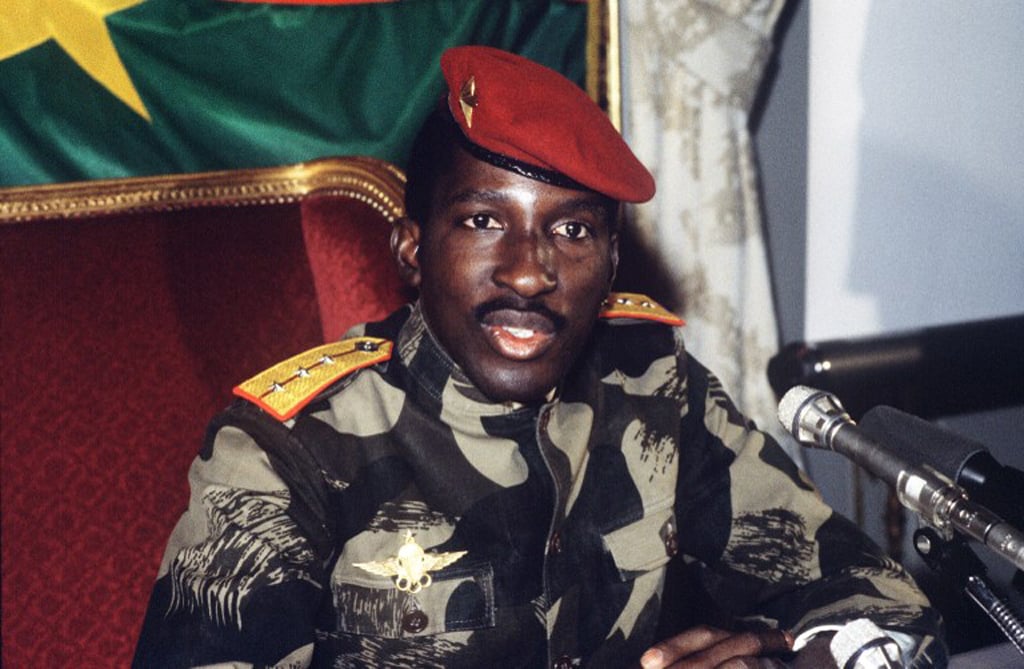
SONS OF AFRICA WHO DIED IN OCTOBER

Image result for nyerere First president of Tanzania
Image result for photos of samora

Image result for photos of thomas sankara
Thomas Sankara of Burkinaa Faso
First president of Mozambique
Image result for Abdirashid Shermarke  Former president of Somalia


Thursday, 24 October 2019

REMEMBERING MWALIMU NYERERE’s INITIATIVE IN CREATING THE CONSTITUTIONAL LIMITATION ON PRESIDENTIAL TERM


Image result for photos of msekwa In  this  article,  I  am  advancing   the  view   that  Mwalimu  Nyerere’s   role  in  influencing   the  imposition  of  that    Constitutional  limitation on  Presidential  terms  of  office,  deserves  to  be   given  a  prominent   place  in  the  compendium  of  his  legacy to  our  nation;   in  the  hope  that  it  could  serve  as  another  useful   contribution  to  the variety  of  commemorative  events   designed   to  celebrate  the  20th death  anniversary  of  his  death  during  this  month  of  October,  2019.                 
This  is  because  of the  ‘greatest  good’  that  this  constitutional  provision  has  contributed  to  the  country’s  continuing  stability,  unity  and  peace,  even  after  his  departure  from  this  world.
 I  can  bear  personal  testimony  to  the  fact  that  it  was  President  Julius  Nyerere  himself,   who  personally  influenced  the  inclusion   in the  Constitution  of  the  United  Republic  of  Tanzania,  of  that  (seemingly  controversial)  provision,   which  limits  Tanzania’s  Presidents   to  a  maximum  of only  two  terms  in  office.  This is  because    I  participated fully  in  the  decision-making  process  which  endorsed  Mwalimu  Nyerere’s     powerful  submission  to  the  CCM  National  Executive  Committee, in  1984;  which  subsequently  gave  birth  to this  Constitutional decision.                                                            
 I  will  attempt  to  paraphrase  what  he  said  in  my  own  words,  as  follows:-“It  is  in  the  nature  of  the  political man  who,  having  acceded  to power,  to  want  to  remain  in  that  power,  especially  when  he  is  so  encouraged  by  some  of  his  deceitful  followers,  (who  normally  will  have  their  own  personal  vested  interests);   who  will  connive  to  convince  the  leader  through  deliberately   misinforming  him,    that   “ this  is  the  wish  of  the  majority  of  your  people”.                                                                       
Now,  it  has  been  rightly  said  by  some  wise  man,  that  “power  corrupts”.   Thus,  because  power corrupts,   the  victim  leader  will  succumb  to  that   great  temptation,  probably  claiming  that  ‘he  has  fallen  captive  to  the  will  of  his  people.’         
But  woe  to  the  nation  if  that  leader,  under  the  influence  of  the   power  corruption,  later  turns  dictator  and  starts  inflicting serious   harm  on  the  people.   The  affected  people  will  have  no  remedy  whatsoever!    Hence,   even  for  that  reason  alone,   It  is  of  vital  importance   that  the  decision  to  quit  Presidential  office  should  NOT  be  left  to  the  individual  who  holds  that  office.   That  crucial decision  should  be  made  for  him  by  the  Constitution”.        
 Mwalimu  Nyerere’s   powerful  argument  was  so  convincing   that  it  was  easily  accepted,  thus  clearing  the  way  for  it  to be  enacted,  soon  afterwards, by Parliament   as  a  Constitutional  provision.     
But  subsequently,   several   (failed)  attempts  have  been  made  by  some  ‘vested  interests’   at  different  times   in  the  political  history  of  our  country,  to  have  this  provision  removed  from  the  Constitution.     In  view  of  such   attempts,   my  reference in the  preceding  sentence  that  this  provision  is  “seemingly  controversial”,  was  probably  an  understatement !    For, looked  at   in  the  context  of  African  countries ,   this  issue  has,  in  recent  years,   become  truly  controversial ,  with  as  many  as  five  countries  removing  such  provisions  from  their  Constitutions  since  2015. 
The  African  experience  with Presidential  term  limits.
It  is  worth  noting,  that  these   attempts   (to  change  the country’s  Constitution  so  as to remove,  or  increase,   the  presidential  term  limits),   have   not  been  confined  to  Tanzania  alone.
Information  given  by  the  CITIZEN on  SATURDAY   of  19th  October,  2019, quoting   the   Africa  Center  for  Strategic  Studies,   says   that  “the  leaders  of  FIVE  African  countries  have  put  aside,  or  changed,   their  constitutional  term  limits  since  2015,  bringing  the number of  countries  in  Africa  that  do  not  have  Presidential  term  limits,  to  18.  However  in  contrast,  21  countries,  including  Tanzania,  have  continued  to  uphold  these,  and  an  additional  15  countries  have  such  term  limits  in  the  books.“                                                                         
The  fact  that  as  many  as  five  countries  have  removed  the  Presidential  term  limits  from  their  Constitutions  in  such  a  short  period,  needs  more  detailed  examination;   and,  specifically,  in  order  to  establish  the  source  of  their  strength   that  enabled  them  to succeed.     
 In  fact,  there  is  no  secret  at  all  regarding  that   source;  because  anyone  who  cares,  can  easily  pinpoint  the  source  of  such  pressures  for  constitutional change to  remove   this   limit.  And  it  is  equally  easy  to  pinpoint   whose  interest  such  exercise  is  actually aimed  to  serve.  This  is  so  because  there    can  only  one  source,  namely  the  top  leader  himself  who  happens  to be  there  at  the  material  time,  and  who  also  happens   to be  so  ‘power-hungry’,  that  he  wants  to  remain  in power  indefinitely   for  his  entire  life;  or  “until  death  do  us  part”,  by  sending   such  leader  to  ‘another  Kingdom.’                                                             Furthermore,   such  exercise   can only  be  in  the  interest  of  that  leader,  plus  a  few  others  who  expect  to  benefit   from  his  continued  occupation  of  the  highest  office  in the land.   
The    CITIZEN  story  quoted  above,  also  gives  a  lot  more  information  about  how  certain  specified  countries  have  cunningly  handled  this  matter,  as  follows:-  “Experience  from  across the  Continent  shows  that  all  the  movements  to  scrap  term  limits  off  the  respective   countries’   Constitutions,  started  with  the  beneficiaries of  the  proposed  changes  pretending  to be  against  them;  but  later  giving-in,   in the  name  of  the  public  interest.    It  is  the script  that  has  been  followed   throughout,    that  it  is  difficult  to  be  ignored” .  And  specific  examples  relating  are  given  therein,   relating  to  Uganda;  Rwanda;  and  Burundi;  which  help  to  buttress  the  point.      
For  example,   in  the  case  of  Uganda,   it  says  that  “ President  Museveni   had  promised   in  his  2001  Presidential  campaign,  which  was  his  second  after  Uganda  had  returned to  electoral  democracy  in  1996,  that  that  would  be  his  last  term.   Yet  before it  was  even  halfway  over,  a  movement  was  initiated  among  the  National  Resistance  Movement (NRM) members,   to  lift  the  two-term  limit  established  in  the  1995  Constitution.  He  denied   orchestrating  that  movement,  but  took  no  steps  to  quash  it,  arguing   that   if  Ugandans  were  intent  on  drafting  him, how  could  he  refuse?”.
 Why  Tanzania  has  succeeded  in  resisting  that   temptation.
 In  my  humble  opinion,  the  basic  reasons  for  Tanzania’s  success  in  resisting  this evil   temptation  are:  (a)  the  realization  of  the  dangers  associated  with  the  removal  of  Presidential  term  limits;  and   (b),  the  proven  resilience   of  our  political  system,  represented  by  the  ruling  party CCM.
Experience  from  several  African  countries  shows  that  where  Presidential  term  limits  exist,  attempts  to  remove  them  have  often  led  to violence,  causing death  to  hundreds  of  innocent  people,  or  to  internal  displacement  of  thousands  of  other  people.                                                            
But  on  the  other  hand,   where  they  continue   exist  undisturbed,  and  specifically  in  the  case  of  Tanzania,  the  Presidential  term  limits have been  an  important mechanism  for  lowering  the  stakes  around  general  elections,  and   ensuring  greater  trust  in  the  political  system;  which   are the  crucial  factors   underlying  the  democratic  legitimacy,  by  increasing   the  willingness  of  Opposition  political  actors  to  accept  a  given  election  loss, and  patiently   wait  for  the  next  following   general  election,  when  they  know  that  they  will be  competing  against  a  different  CCM  Presidential  candidate.                                                 
But  despite  these  advantages, , as already  shown  above,  there  have    been  pressures  exerted  from  time  to  time,   by  some  ‘vested  interest’  individuals  or  groups,  to  have  this  provision  removed  from  our  Constitution,  all of  which,  fortunately,   have  failed.                                                 
I  would  suggest   that  there  are  two  main  factors,  which  have   enabled  Tanzania,  so  far,  to  retain  that  Constitutional  provision,  and  its  operation,  exactly   in  the  way  it  was  crafted and  intended  by  the  father  of  the  nation,  the  late  President  Nyerere. One  is  the  determination  of  the  ruling  party  to  keep  it  so;  and  the  other  is  the  sincere  obedience  to  the  directives  of  their  party,  by  all  the  CCM   nominated  successor  Presidents,    who  took  office  after   Mwalimu   Nyerere ‘s  voluntary  retirement.                                                               
Evidence  of  the  positive  influence  generated  by  both  these  factors,   is  readily  available  in  the  records,  as  briefly  narrated  here  below. 
 A  brief  survey  of  the  past.
The  opening  first  test  occurred  during  President Ali  Hassan  Mwinyi’s  tenure  at  State  House,  when some  elements  in  his  official  group  of  advisers  devised  a  strategy,  which  apparently  convinced  him,  to  propose  relevant  amendments  to the  Constitution  that  would  remove  this  provision,  in  order  to enable  President  Mwinyi  to  vie  for a  third  term  in  office.   Mwalimu  Nyerere  soon  got  wind  of  this  plot,  and  immediately  set  to  work,  through  the  CCM  National  Executive  Committee,  to  prevent  its  success.   He   did  indeed  succeed,  and  as  a  result  of  which,  two   senior  advisers  to  President  Mwinyi,  namely   the  Prime  Minister,  and  the  CCM   Secretary General,   lost  their  jobs.                                                                                      
The  full story  of  Mwalimu  Nyerere’s   endeavours   in  connection  therewith,  is   succinctly  told  in  his  book  titled  “Uongozi  wetu  na  Hatima  ya  Tanzania."  A  little later,  similar  attempts  were  made  in  Zanzibar,  where  a  ‘group  of  CCM  elders”,  claiming to  representing  the  “voice  of  the  Zanzibar  people”,   also  attempted  to  obtain  a  third  term  for  the  then  Zanzibar  President,  Hon.  Salmin  Amour,  who  was  serving  his  second  and  final  term.                      
 But  this  was  easily  contained ,  through  prompt  preventive   action  taken  by the  party  Central  Committee,   then   under  the  chairmanship  of  President  Benjamin  Mkapa,   the  CCM  national  Chairman  at  the  time.                                   
 These  two  incidents  serve  to  provide  ample  proof  of  the  “resilience of  the  ruling  party”  which  I  mentioned  earlier above,  in  terms  of  its  capability  to  overcome  such  personal, or  group  ‘vested  interests’,   in  favour  of  the  public  interest.
One  weak  point  in  many  of  these  attempts,  is  that  they  normally   tend  to  base  their  arguments  on  the  good  performance  of  the  incumbent  President  at  the  material   time.  That  is  what  explains   why  the  proponents  of  the  current  initiative  to extend  President  Magufuli’s   term  of  office.                                                                                     
The  incurable   weakness  of  such  argument,  lies  in  two  distinct  areas.   One,  is  the  factor   of “power  corrupts”.    We  all  have  seen  examples  of  certain  excellent Presidential   performers  in  the  initial years  of  their  stewardship,   but   subsequently   turning  into  ugly  dictators,  obviously   as  a result  of  having  been  corrupted  by  power  which  they   held  over  too  long  periods.    But  the  other,   is   the  possibility  that  electors  may,  quite  unknowingly,  vote  for  the  wrong  person,  who  subsequently   makes  himself  ‘unwanted’,  by    becoming   a  very  bad  President,     whom  the  people  will  rightly  want  to  get  rid  of.                                               
The  limit  prescribed   by  the  Constitution  is  what   gives  such  people  the  needed  relief,  absolutely  effortlessly  on  their  part,   when  his  term  in  office  comes  to  an  end   by  operation  of  the  Constitution. 
In  that  connection,  It  should  be  appreciated  that    the  “Parliamentary   system”   of  governance,    also  known  as “Government  by  political  party”   that  is  operating  in  Tanzania;   that  has  enabled  Chama  cha  Mapinduzi  (CCM)  to  remain  in  power  for  all these  years;  and  whose   internal   “candidate  selection”  procedures   have   enabled  this  party  to  select  worthy  candidates  (like  John  Pombe  Magufuli,  and  his  predecessors) ;  who,  even  as   Presidents,   faithfully  obeyed  the  directives  of  their   party,   in  relation  to  maintaining  the  Presidential  term  limits  prescribed  by  the  Constitution;  a  factor  which  has,  no  doubt,  contributed  to the  country’s  unity,  stability,  peace  and  tranquility.                    
Thus,  as  we  commemorate  the  20th  anniversary  of  Mwalimu  Nyerere’s  death.  We  should also   remember   to  say  kudos,  or  hats  off,  to  all  our  Presidents,  past  and present,  for  sustaining  Mwalimu  Nyerere’s   legacy  in  that  particular respect. 
piomsekwa @gmail.com /0754767576.   
Source: Daily News and Cde Msekwa Himself.