The Curse of Salvation

The Curse of Salvation

Thursday, 23 March 2023

President Samia’s reconciliation efforts: The dawn of a new era

By Pius Msekwa 
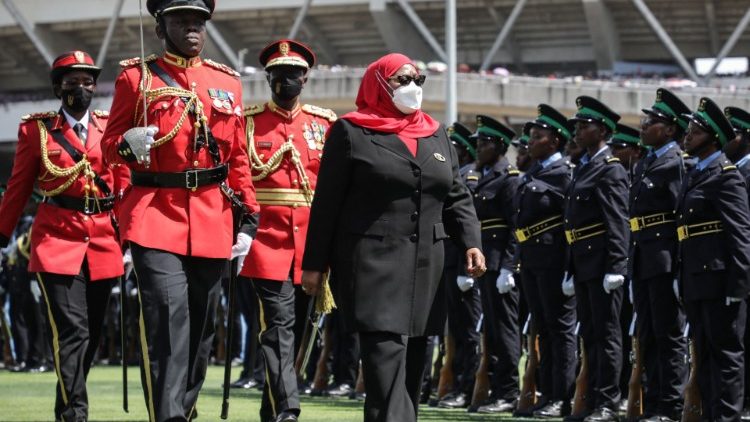
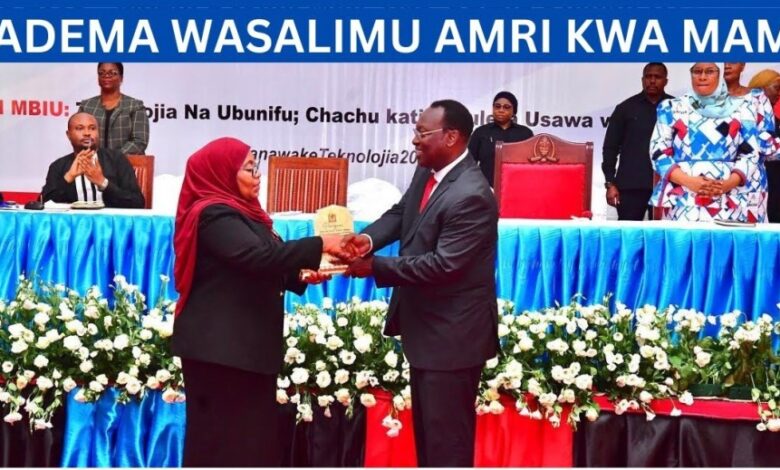
Wednesday, March 8th, 2023 was the day when President Samia Suluhu Hassan truly ‘made history’, by becoming the first ever President (and CCM National Chairpeson) to grace an Opposition (CHADEMA) party’s event.   As CHADEMA National Chairman Freeman Mbowe himself put it, “many took it as a joke when I announced that President Samia would grace this event”.
        But she elegantly did; to the genuine delight of many people. It was, indeed, the beginning of a new era in the politics of Tanzania.
Hence, this matter will be the main topic of today’s presentation; primarily in order to draw attention to the important role of the individual person who happens to be the  ‘political system operator’ at the material time.  It is my contention that, just as the safety of the passengers on a Bus, largely depends on its driver’s commitment to adhere to the traffic rules, so does the political system’s well-being, which similarly depends on the commitment of its principal ‘system operator’ in adhering to the relevant rules.
        ‘Political reconciliation’ actually becomes necessary only where serious, fundamental differences arise between the ruling party and the parties in opposition.  And such differences generally arise only in circumstances  where the ruling party uses ‘state power’ to suppress the parties that are in opposition.  This assertion can best be illustrated by looking at our own political history.
        The multi-party political system was inherited at the time of independence in 1961; when there were several political parties competing in the pre-independence elections. Tanzania Mainland had four such parties: The Tanganyika African National Union (TANU); The United Tanganyika Party (UTP); The African National Congress (ANC) and The All-Muslim Party National Union of Tanganyika (AMNUT).
        Three more parties were registered soon after independence. They were:  The All People's’ Convention Party (PCP); The African Independence Movement (AIM) and The Peoples’ Democratic Party (PDP).
        Similarly, in Zanzibar, at the time of their independence in December 1963 there were four registered political parties: The Afro-Shirazi Party (ASP); The Zanzibar Nationalist Party (ZNP); The Zanzibar and Pemba Peoples’ Party (ZPPP) and the UMMA Party. Competitive elections were first introduced in Zanzibar in 1957 and in Tanganyika in 1958/59.
        On the Tanganyika side, these elections were generally conducted ‘freely and fairly’ by the colonial Authorities, where the Tanganyika African National Union (TANU)’s obtained massive victories in all the pre-independence elections, and thus made that party so politically dominant, to the extent that the other political parties were reduced to oblivion; thus making the country a de facto ‘One-party State’.
        But the situation was very different in Zanzibar; where the colonial Administration’s unfair gerrymandering of constituency boundaries in favour of the Arab parties, rendered all their pre-independence elections null and voi.  But this fact was arrogantly ignored, a factor which accounts for the Afro-Shirazi’s ‘glorious revolution’ of 12th January, 1964; which brought President Abeid Amani Karume to power; and who, because of the electoral frustration of the past, promptly outlawed all the other political parties, thus making the Afro-Shirazi party the sole, and ruling party.
The return to multiparty politics
And many of the  African countries that had adopted the “one-party” political system, including Tanzania, were suddenly faced with  strong demands for the return to multi-party politics; fueled by the severe economic crises which occurred at the material time, that was blamed on the failure of the ‘one party’ system governments to manage their economies properly.
        Unfortunately, however, when Africa inherited the multi-party system’s form, in many cases it failed to inherit that system’s culture of political competition without animosity, or “kupingana bila kupigana” as well.   And this is precisely where the ‘system operators’ come in; for the proper management and maintenance of the multi-party system’s culture, very much depends on the disposition of the principal ‘system operator’; on whom the system’s good or bad fortunes will very largely depend.
The important role of the system operators
Usually, between political parties there will always be differences of opinion, mainly related to their different policies and the competition for power. Thus, all is well when this competition, and the management of the political affairs of the country are carried out in a “just and fair” manner.
  The dawn of a new era.
President Samia was a new ’system operator’ who had entered the stage. Her action of attending the CHADEMA women’s rally in Moshi, visibly ushered in a completely new era in Tanzania politics, for it had never happened before; and, in fact, could not possibly have happened, for the simple reason that multi-politics is a competitive system, and in any such system, psychological ‘prudence’ forbids the taking of any action which gives advantage to the opponent.  That is presumably why the CHADEMA Chairman, Freeman Mbowe, referred to the said that “many people had taken it as a joke when he announced that President Samia would grace that event”.   It was, indeed, something “out of the ordinary”.
        Chairman Mbowe further lamented that: “Over the past six years, we, the Opposition, went through very tough times. However, we are ready to forgive and forget the past”.  A conciliatory gesture indeed, a new ‘system operator’ had come on the stage; and it was now “all systems go” for the success of the reconciliation process; which was necessitated by her predecessor’s actions.
        This is precisely what distinguishes President Samia’s ‘leadership style’ from that of her immediate predecessor, who had created the conflict that now required reconciliation. This single action by President Samia, generated new public trust and confidence, that she will surely succeed in her determination to achieve genuine political reconciliation.
        Although, as we saw in last week’s presentation, CCM was able to achieve successful political reconciliation with the Opposition CUF party in Zanzibar; that was actually facilitated by a different “system operator”, CCM Chairman Benjamin Mkapa.
The new constitution as part of reconciliation
The demand for a “new multi-party constitution” was one of the earlies conflicts between the ruling party and the opposition parties. Repeated demands for a new constitution were routinely rejected by the ruling party, for the stated reason that following the ‘Nyalali commission’ recommendations, the constitution had been extensively amended in 1992  in order to accommodate the new multiparty political dispensation, and that further amendments would be made whenever it became necessary;  thus, there was no valid reason for engaging in the more expensive exercise of enacting a new constitution.
        But the opposition demands persisted, thus qualifying this conflict to be included in the reconciliation process.  And, in respect thereof, President Samia disclosed that she will, in the very near future, announce her team which will be tasked to undertake the constitutional review process. “Nobody is opposing that”, said the President, and continued: “even CCM fancies a new constitution”, she said amid thunderous applause from over 3,000 CHADEMA members who had assembled at the place of that meeting.
The still unsettled major constitutional issues
In my own experience of the past constitutional review processes, there have been two major issues which have recurred again and again, but have not been finally determined, that will perhaps need to be considered in the upcoming exercise.  These are (i) the structure of the Union, and (ii) the question of the independent candidate in elections.
        Issue (i) is more intractable, because the ‘two-government’ structure of the Union is a matter of CCM policy, which was reconfirmed at after a CCM referendum which was held in 1994.   However, the restriction imposed on the independent candidate’s participation in elections is more difficult to defend, or justify.  Because of editorial space limitations, we can only deal with the first issue in this presentation.
        The ‘two-government’ structure of the Union was established by the Union “Interim constitution”, enacted on 1st May, 1964.  What it meant was that the Tanganyika partner of this Union, had no separate government, but was to be administered directly by the Union government; whereas Zanzibar had its own government, that was responsible for “non-Union” matters within Zanzibar.
But since then, there have been several attempts to change this arrangement; starting with the then Zanzibar President, Aboud Jumbe; who, in 1984, embarked on a plan to introduce a three-government structure.   But his attempt failed, and he was forced to quit from all his leadership positions; for the cardinal offence of promoting something which was against CCM’s sacrosanct ‘two-government’ policy.
        The next attempt was made by the ‘Nyalali Constitutional Review Commission’, appointed by President Ali Hassan Mwinyi in 1991;  which also recommended a change to the ‘three-government’ Union structure; but this was also rejected, for precisely the same reason of  being against CCM policy.
        Then came the BUNGE resolution of 1993; wherein the Parliament of the United Republic, formally called upon the government “to initiate a process which will culminate in the establishment of a Tanganyika government within the Union structure”.   This actually meant the establishment of a ‘three-government’ structure.
        This was a particularly serious development; because, firstly, the Members of the House who passed this resolution were all CCM members; and so was the government of the day.  Thus, this resolution was, in fact, an act of rebellion.  Secondly, by established convention, BUNGE resolutions are binding upon the government, and must therefore be implemented.  Hence, perhaps unwittingly, this became  an ‘oversized, ingenious  paradox’;  and, consequently,  it took a lot of time and energy, in terms of numerous meetings of the relevant CCM organs at the national level, to find a viable solution.
But, as the saying goes, “where there is a will, there is a way”.  It was decided to hold a referendum of all CCM members, who were asked to indicate, by secret vote, which structure they preferred among the ‘one government’; ‘two-government’; or ‘three-government’ structures.
        The results of the referendum showed that the majority (61.75 per cent of the CCM members) voted in favour of retaining the ‘two-government ‘structure; thus reconfirming the party’s ‘two-government’ policy.   But the rebellion produced its own victims. The Prime Minister, at that time John Malecela, lost his job; and so did Horace Kolimba, the Secretary General of Chama cha Mapinduzi.
But, surprisingly, even subsequent to that, recommendations for the adoption of the ‘three-government continued being made by the Constitutional Review Commissions which were appointed later.          The first to do so was the “Kisanga Commission”, which was appointed by President Benjamin Mkapa in 1998; and more recently, by the Warioba Commission, appointed by President Jakaya Kikwete in 2012.  Needless to say, their recommendations were routinely rejected.
        The re-introduction of multi-party politics in Tanzania in 1992, was brought about by the strong “wind of change” that blew across Africa and much of the rest of the world at that material time; as a result of which, the powerful communist “Union of Soviet Socialist Republics (USSR)” collapsed, followed by the fall of the “Berlin War” in Germany.  These events effectively terminated  the “cold war” between the Western “Capitalist countries”,  and the Eastern “Communist block”; thus the Western ‘Capitalist block’ remained as the only effective ‘world power’ which  could, and in fact did, use its influence to  exert undue pressure on the  ‘one-party’ States to change to multi-party politics;  
This shows that this matter remains unsettled; as it is, apparently, still on the drawing board. It thus qualifies for inclusion in the reconciliation process.
piomsekwa@gmail.com  / 0754767576.
Source: Daily News today.


Saturday, 18 March 2023

RIP JOHN POMBE MAGUFULI ALWAYS MISSED

Although your beneficiaries in big numbers seem to have abandoned and forgotten you, we still remember  and treasure you as the leader who attempted to decolonise and deconstruct almost everything. 
RIP John Pombe Magufuli

Thursday, 16 March 2023

Letter to Muhoozi Keinerugaba, Tweet Even More Please

Muhoozi, before saying something, I must remind Ugandans the best day the country has ever had. On 24th April 1974, Uganda and the world were blessed with and received one of the most powerful sons of presidents in the world, you. This is the time you (he who avenge or revenges) came to this earth to save some of earthlings from the ennui of a long-time ruler who happens to be one of your makers. It is the time your great mother gave birth to you, the great son of president who wields as much power as his father, the son who needs more power. Indeed, your arrival wasn’t a habitual occasion. It wasn’t like the birth of small men and women who come from poor and weak families. Yours was the birth of a saviour of some sort, especially for those who don’t believe that the more things change the more they remain the same. You know what I mean. Still, you’re a saviour for the status quo so to speak as far as Ugandan politics is concerned.

            Dear Muhoozi, a few weeks ago, you, as the most power son of the most powerful man you unveiled what Ugandans need to make do with.. Yep, you started to bite at the power that your dad’s been eating on for long. Because of your significance and that what you want everybody to know and made do with you fired a tweet Kenya threatening to take and occupy it within two weeks. No joke. You’re not joking. Did you mean business or you’re just looking the way take a bite on power and come out of the political closet.  This, for me, shows your significance as the son of the most powerful man in Uganda as the most powerful son of the president over the insignificance of the rest that can be taken for a ride. The twosome of–––without forgetting your mother––––are the most powerful people Uganda’s ever had. Let Ugandans know that your trinity’s unshakably intact and unique since you’ve made Uganda what it’s today, rich for them and poor for the rest.  Let them know that you still have a lot to offer, and Ugandans must wait for more surprises from this trinity.

            Dear good General, underscoring your greatness and significance, I propose that next time you tweet, all Uganda’s media must support you by subscribing to your tweeter account I propose that your tweets must be made breaking news in all Ugandan media. I know those who don’t like you, dear good general, will wag tongues thinking I’m trying to get a mileage out of this assertion, or I might have been paid to say this. Nope, what I’m saying is as simple as the tweets themselves. I know those who don’t know the importance of the first family, you, the mother general, and the father general, wrongly think that their lives––––that are adversely impinged on with uncertainties your tweets cause. Go figure. Guys, who are you in Uganda? Who bewitched or cheated you not to get it?

            Dear General, when the story of your tweets and threats to Kenya surfaced in the media, a friend sent me an email complaining about the uncertainties they’d cause. Also, he’s concern about the EAC, which’s never delivered anything. I scolded him to stop being selfish, evil, and naïve since things have changed. Christians believe Jesus died for their sins though they’re told everybody to carry one’s cross. To the contrary, politicians believe that citizens must die for them and their sins. Methinks this is the genesis for many African rulers to live larger than life while their taxpayers live in penury. I told the guy to consider other related things such as the disturbances democracy’s been causing in many African countries that tried it and ended up abusing it through vote rigging and tampering with constitutions to extend their time in office.
            Dear General, methinks Ugandans––––whether they like it or not­­­­–––should brace themselves to see you becoming their leader shall anything happen to your father. This is simple to decipher. When I consider your gruff rise in the army, you can easily know what I mean. Also, if you interrogate the reason[s] behind your father’s clinging unto power, you’ll be on the same page with me. More so, if you consider the powers your mom has behind the curtains, you’ll agree with my hypothesis. To give those who pretend to deny the truth, I want them to ask themselves as to why your tweets are leaving everybody shocked? Is the system testing the waters? Is it preparing Ugandans psychologically for what’s in the card in the upper echelons of power wherein manipulations are one of bread and butter of its mainstay? Why have you become such important this time around? Let’s get as serious as a seal instead of trying to screw over this rear up of your display. What do you aim to achieve if not more power?

            Dear General, in sum, let me wish you a very spiffy tweeting mission. The Swahili sage’s it that clouds are the signs of rains. Therefore, what you’re seeing with regards to your centrality is but the beginning if not the tip of the iceberg. Tweeting threatening the neighbour is one leg in the waters. The sage’s it that if you can’t beat them, join them. Whether they like you or not, they need to understand Uganda’s power dynamics, especially after your dad came to power and altered everything to his advantage. If he were able to prop up you so quickly that way in the military, how can he fail to do so in the office of the president? Once again, Dear General, you seem to brace yourself for big things. Big things come to big people. That’s my titbits of sagacity. Ring-a-ding-ding, nothing but.

President Samia’s outstanding performances in her two years ‘on the throne’

IN her maiden address to Parliament on 22nd April, 2021 President Samia Suluhu Hassan said the following (translated from Kiswahili):-“This is the first time in the history of our country that we have a female President. For that reason,    I know that there are some people who believe that I will not be able to shoulder the heavy Presidential duties and responsibilities. I want to assure such doubting people that the almighty God did not create ‘weaker minds for females and stronger minds for males’.  That is not the case at all, since all human beings are born equal.  It much depends on the individual person’s upbringing and the environment in which he or she was brought up.   I want to assure everyone that I was brought up under proper care and attention and that I have accumulated sufficient experience in matters relating to governance”.
“Walking the talk”
Well, her two years on the Presidential throne, have shown very clearly that she has, indeed, ‘walked her talk’.  She will be remembered more particularly for her outstanding performance and achievements in two distinct areas.
One is her acknowledged success in the difficult area of ‘political reconciliation’; and the other is in the area of the ‘general Administration’ of the country’s affairs, both as Head of government, and as Head of the ruling party, CCM.
Political reconciliation
“Reconciliation” is achieved when there is an end to serious disagreement, either between individuals, or groups of individuals.    Between political parties, there will always be differences of opinion, mainly related to their different policies, and the competition between them in the quest for the opportunity to rule the country.
            But matters become “serious” when the party in power uses state power to suppress the parties that are in opposition. And this is what happened on two different occasions:  One was during the reign of the late President Dr John Pombe Magufuli of the United Republic; when some opposition cadres were forced to seek political asylum in foreign countries, allegedly for fear that their lives were in grave danger; and the other was during the reign of  Zanzibar President Dr Salmin Amour; when a large number of cadres in the Opposition camp fled to Mombasa (Shimoni)  in  Kenya;  for the similar fear that their lives were in danger. In one of his works, good old William Shakespeare, that famous English Playwright, gave the following warning: “Oh, it is nice to have the strength of a giant, but it is tyranny to use it like a giant”.
            In the case of Zanzibar, ‘political reconciliation’ was achieved after a long process of repeated negotiations between the ruling party CCM, and the dominant Opposition party (then the Civic United Front (CUF).  Such negotiations had to be repeated three times, simply because the Agreement reached as a result of the earlier negotiations, was unceremoniously broken immediately after the following Presidential election, which the CUF candidate lost.
It was only the third Agreement (MUAFAKA III) which produced lasting peace in Zanzibar, which was facilitated by the establishment of a “government of National Unity” (GNU), in 2010.
President Samia’s unique leadership style
In order to give her Administration a semblance of continuity, she tactfully invented the catchword slogan “Kazi iendelee”; while she, in fact, quietly set about introducing radical shifts from her predecessor’s hardline policies. She was, apparently working on the basis of the ‘doctrine’ enunciated by British Labour party Prime Minister Tony Blair; who, upon winning victory in the relevant British Parliamentary election, and thus ousting the Conservative party government from power; is reported to have said the following: – “What is good and working well, we will maintain, but we will abandon all that is not so good”.
        Her radical policy shifts started with the ‘covid 19’ pandemic, which her predecessor had dismissed as a hoax.  She appointed a ‘committee of experts’ to advise her on the way forward, by proposing measures that would keep Tanzanians safe.
        Then came her decision to allow ‘teen mothers’ to return to school to continue with their studies. This is another ban which had been imposed her predecessor, a measure which had been widely condemned by some of the development partners, and the human rights campaigners. But of much greater political significance, was her lifting of the ban that had been slapped by her predecessor the Opposition political parties to hold public rallies; plus lifting the ban on a number of media outlets; measures which were very well received by all the stakeholders.
The reconciliation process
The authorization for her to proceed with the task of reconciliation was readily given by her party CCM, in apparent compliance with the saying that “where there is a will, there is a way.
But after obtaining it, she skillfully handled the rest of the process in her own personal style, starting with the appointment of a “reconciliation committee” to do the necessary groundwork.   The positive results of her sterling stately work are wide open to everyone who cares to see them.   As they say in Kiswahili: “Mwenye macho haambiwi tazama”.
        Both Islam and Christian religion teaches us about the diabolical spirit of ‘revenge’, which should be shunned; and the holy nature of mercy and forgiveness; which should be embraced.
President Samia seems to have imbibed the spirit of these teachings in full measure; a factor which presumably has contribute immensely to her wisdom in managing the reconciliation process.
        A bit part of President Samia’s wisdom in respect of the ‘mercy and forgiveness’ aspect, was revealed in her address to the residents of USA River minor settlement on the outskirts of Arusha City, when she said something which is akin to, or reminiscent of, the Biblical story of the ‘prodigal son’. This is what she said (translated from Kiswahili):-“My younger brother (Lema) said to me:  “Mama, I want to come back home. Come back now, I said to him, for we need to build our country together.  But Mama (he pleaded), there is a manufactured political case in court against me, of which I am very fearful. Fear not Lema, I said to him, it will be terminated, using the usual court procedures” (presumably of nolle prosequi).
        Obviously in full trust of the President’s word, Godbless  Lema  quickly came back from exile in Canada, and so did the other exiles, like Tundu Lissu, who had also fled the country   “for fear of their lives”.  If proof is needed in order to determine the success of President Samia’s success in the reconciliation process, this is it.
President Magufuli’s critics
The word “criticism” is defined as ‘the act of expressing disapproval of somebody or something’.  The late President Magufuli was severely criticised, especially by his political opponents, for what appeared to be his intention and willingness to strangle the opposition parties. But what riles me, is the bad and unreasonable habit of some persons who continue criticising him,  even so  long after his departure from this world.
        The famous German Statesman Bismark (1815 -98), is on record as having said in his speech to the Prussian Chamber in December 1863, that “Politics is not an exact science”.
One interpretation of that statement, could be that ‘in managing politics, one is liable to make mistakes’.  The late President Magufuli did make mistakes, including that of attempting to ‘strangle the opposition parties’.   But what riles me, is the bad and unreasonable habit of some persons, who continue criticising him even so long after his death.
        For example, it was only last week that a sympathetic friend sent me a scanned newspaper cutting of an article that was recently published in the “East African” newspaper, which carries the provocative article headlined “Tanzania needs some cathartic healing from the Magufuli trauma”.  When I read it, I quickly remembered these ancient wisdom pieces: –  One is William Shakespeare’s ‘observation’ in one of his famous Plays, that “the good that men do, is often interred with their bones. But the bad lives long after them.
        The late President Magufuli certainly did a lot of good things for the development of our country, but the author of the said article seems determined to let all those ’good’ things done by the late President Magufuli  be “interred with his bones”, by weirdly harping only on  the late President’s ‘bad’ deeds.
The second, is the saying of the British poet William Blake (1787 -1727), who said the following: –  “a truth that is told with bad intent,  beats all the lies you can invent”.
The tone of this writing shows clearly that the author of the said article is telling his story with such “bad intent”; i.e. with a determination to do something harmful.
        The third, is our own ‘traditions and customs’; one of which advises us “not to speak ill of a dead person”, This author is clearly in blatant breach of that highly respected custom. He may claim to be utilizing his “human right” to express his opinions.  But, as President Samia said on a recent occasion. “even human rights have their limitations”.   She was condemning the evil practices   of homosexuality, whose perpetrators also claim to be “exercising their human rights”.
As Head of the ruling party, CCM
It is a fundamental convention of Chama cha Mapinduzi, that the person who is elected to the country’s Presidency, shall also become the party’ national Chairperson. Thus, on the basis of that convention, following her elevation to the Presidency after the sudden death in office of party national Chairman Dr John Pombe Magufuli; Dr Samia Suluhu Hassan, Doctor of Philosophy (Honoris causa);  was  duly  elected Chairperson of Chama cha Mapinduzi (CCM) on 30th April, 2021;  by an extraordinary special meeting of the ‘CCM National Congress’  which was held in Dodoma for that purpose.   And, immediately after her election, she literally “hit the ground running”;  for on that same day, she got down to the serious business of appointing the group of officials who constitute the party’s Secretariat, all of whom were new faces, including the Secretary General, Daniel Chongolo.
       Indeed, the reform actions which she began taking to rejuvenate the party, and to re-shape the government direction, during her first few months in office, confounded the ‘doubting Thomases’ and all their accomplices.
The inherent strength of Chama cha Mapinduzi.

President Samia was, in a way, lucky to have inherited a ruling party which already had “the strength of a giant” deeply embedded in it; that is securely based on the following four basic factors:- 
        (i) It is a strongly unified party; (In its long history since independence, there has not emerged any  ‘power hungry’ monsters, who  create divisive groups or factions within the party, for the greedy purpose of helping them to acquire  power, which is often the reason which has scattered some political parties in our neighbouring countries) .
        (ii) The clarity of its ‘Mission’ and ‘Vision’; (as spelt out in the party Constitution).   
        (iii) Its successful implementation of its policies and programmes; (which are regularly articulated in its ‘Election Manifestos’ every five years).  

        (iv) Its strong Organisational structure; (which makes the party presence felt everywhere throughout the country, down to the ten-house ‘party Cells)’. Her main job is thus limited to properly managing these ‘valuable assets’.
Source: Daily News today.
piomsekwa@gmail.com /0754767576.


Saturday, 11 March 2023

Kenya’s political eclipse; Part III

The Supreme Court of Kenya is where democracy goes to die. Its ruling in 2022 giving the IEBC the legal fiat to rig elections will live in infamy. The last institution that could have saved Kenya’s democratic experiment has not performed as expected.

 By Makau Mutua   Professor at SUNY Buffalo Law School and Chair of the KHRC.

This Sunday in my series on Kenya’s Political Eclipse, I focus on the end of Kenya’s experiment with the democratic project. At some point as a country and people, we have to look each in the eye and have an honest conversation. We have to say the things that are difficult to say. We must mean what we say, and say what we mean. We can’t – and shouldn’t – keep lying to each other with a straight face.

At least I can’t, and won’t. We have become a nation of liars. And the biggest lie we have been telling each is that we are a democracy. I am sorry boys and girls – we aren’t a democracy. We are a kleptocracy.

        I have been a student of law and politics my entire adult life. I have lived for extensive periods in four countries – Kenya, Tanzania, Italy, and the United States. I’ve spent most of my adult life in the last of these four – the US. Apart from book learning and teaching, I have observed first-hand – and participated – in four diverse political cultures. Everyone knows the torturous route that the US – the world’s most successful democratic state – has travelled in history.

        Its most demonic moments are unspeakable. So we know the democratic project isn’t easy. But what I learnt and witnessed from the front row in the 2022 Kenyan General Election was enough to kill me a thousand times. 

Let me tell you why Kenya isn’t a democracy, and why we may never become one. A democracy is a state in which the values and tenets of liberalism – equality, equity, the rule of law, liberty, freedom, autonomy, separation of powers and checks and balances – are used to create a society of economic and social opportunity for all.

        The end result must be the happiness of the largest majority of the people. Such a society must reduce powerlessness for most of its people. It must curb political and economic despotism. The praxis of democracy must be internalised by large swathes of the elite and the hoi polloi in norms, processes, and institutions. It must become second nature in citizens.

        A democratic society and culture produce a prototype of a human being who is philosophically and by sensibility powered by its values. It’s a society generally of empathy, not antipathy. A society that’s bounded by redlines on the limits of State power. Where officials go into government to serve the people, not the other way around. And where the people don’t expect officials to be masters, but servants – not looters of public coffers, but stewards of the people’s purse.

Mutual cannibalisation

If you look at all these indices of democracy, you can’t argue with any credulity that any – a single one of them – is present in the Kenyan zeitgeist. Ours is a voracious culture of mutual cannibalisation and the crudest of materialism.It wasn’t always this way and doesn’t have to stay this way. I remember a time when Kenyans had a softer heart and an Ubuntu sensibility. But those days are long gone. In my view, we have entered the “door of no return” in our politics. We have become savage beasts in human form.

        Most Kenyans get whatever they can get no matter the cost to the next guy or the society. Our political elite aspires to state power, not for any other reason but to steal from us. If you listen to UDA’s Rigathi Gachagua, or his boss William Ruto, you know what I mean. Their disdain for citizens who will not cave to them is gargantuan. 

        Importantly, Kenya’s democracy has died because of the calibre of leaders and the corruptible nature of the institutions that are central to it. Key among these is the Independent Electoral and Boundaries Commission (IEBC). That institution is rotten through and through to its innermost core. Most senior officials who have worked in it – and its predecessors – are some of the most corrupt Kenyans alive or dead. The IEBC in the last election was a feeding trough for the most piggish officials. The truth is Kenyans know this and yet go along with the theft.

        Today, some Kenyans tell me Azimio should’ve been a smarter thief than UDA. They believe you must steal elections to win, or you are the fool. Lastly, one cannot discuss the death of Kenya’s democratic experiment without defrocking the intellectual and moral midgets at the Supreme Court. The Supreme Court of Kenya is where democracy goes to die. In spite of the David Maraga Court in 2017 which made history by calling out the theft – a clear aberration – the Supreme Court is possibly public enemy number one.

        Its ruling in 2022 giving the IEBC the legal fiat to rig elections will live in infamy. The last institution that could have saved Kenya’s democratic experiment has not performed as expected. That’s why I say without equivocation that Kenya’s democratic experiment is buried – entombed – at the Supreme Court.

Makau Mutua is SUNY Distinguished Professor and Margaret W. Wong Professor at Buffalo Law School, The State University of New York. @makaumutua.

Source: Sunday Nation tomorrow.

Thursday, 9 March 2023

International Women’s Day 2023: Insights into the continuing journey to women’s emancipation in Tanzania


By Pius Msekwa            

YESTERDAY, 8th March, 2023 was “International Women’s Day”, so recognised by the United Nations Organisation and celebrated in all countries around the world. Such celebrations are intended to give an opportunity to women to highlight the efforts that have been made towards the achievement of the goal of women empowerment, or gender equality; the successes arising therefrom, plus examining the issues that still require attention. We have devoted today’s presentation to this topic
        The word “emancipate” is used here in its usual meaning of “freeing a person from legal, political, or social restrictions”. And we have described this as a “continuing’ process, simply because our women folk have not yet been totally emancipated therefrom, especially with regard to certain cultural restrictions.
        Many countries, including the United Republic of Tanzania have, over the years,  been progressively taking appropriate steps, mainly through legislative measures, to emancipate their women citizens from such restrictions, but there are some others which have obstinately remained in place; such as the issue of girls’ cruel ‘genital mutilation’, even though it is against the law of the land.
The traditional role of Women in Society
Traditionally, women in every country, including Tanzania, have always played a significant role, especially at family level, as economic producers and providers of strong stability for the household.  But certain well-known factors, mostly cultural in nature, are what have prevented their meaningful participation in the nation’s public affairs, particularly in matters relating to the country’s governance. They managed to do this, in the first place, by providing obstacles to the education of girls, for example, through early marriages forced upon them by their parents; plus other unreasonable tribal customs, such as that which is widely practiced in my own District of Ukerewe, which forbade women to eat certain types of nutritious fish and meat; as these were reserved “for men only”.
            However, such negative factors notwithstanding, the women have always contributed significantly to the democratic process through their active participation in elections, but essentially as voters, not as elected leaders, except in very few isolated cases.  But that was so only until recently, when President Samia Suluhu Hassan, came on the stage, and introduced dramatic positive changes in that respect; which have given the women ‘participation in governance’ spectrum an entirely new fresh look.
Tanzania’s structured efforts in this area
This information has been assembled from various scattered sources; going back to the pre-independence days of British colonial domination in Tanganyika; when the colonial Administration nominate women candidates to enter the Legislative Council (LEGCO).  The Tanganyika Legislative Council was established by legislation cited as the “Tanganyika Legislative Council) Order – in Council, 1926”; which was passed by the British House of Commons on 26th March, 1926; and held its first session on 7th December, 1926, in Dar es Salam.
        But it was not until 1955, when the Governor decided to nominate the first female Members to join the Legislative Council. They were:  Elifuraha Mkamangi  Marealle,   K.F. Walker, and S. Keeka.
The post-independence period
Then came the reign of Mwalimu Julius Nyerere, “a man of principle”; who had dedicated himself to implementing  the principle that “Binadamu wote ni sawa”.
And, indeed, he was able to overcome   some of these  obstacles, particularly those relating to ‘women participation in matters of the country’s governance’,  when in the 1960 pre-independence parliamentary elections, TANU (the political party which he led as its President), nominated women to stand for constituency elections. These included Bibi Titi Mohamed (Rufiji-Utete constituency); Mwami (Chief) Theresa Ntare (Kasulu constituency); and Lucy Lameck (Moshi constituency).
            Their election was greatly facilitated by TANU’s political dominance at the material time, which enabled them (and many other TANU candidates) to be elected unopposed  in 58 out of a total of 71 constituencies countrywide. However, come the next parliamentary elections of 1965, this ‘privileged facility’ had been removed by the new constitution, which had removed the possibility of candidates being elected unopposed, because TANU was now required to nominate two candidates for each and every constituency; which resulted in no woman candidate being elected in any of the constituencies whose number had been increased to 120.
        Subsequent to that, no woman candidate was able to win a constituency seat until the 1985 parliamentary elections; when a single woman won the election in a constituency. Further improvements occurred in the 1990 parliamentary elections, when two women won the election in their respective constituencies.
        In these circumstances TANU, which was now the only political party (under the then subsisting “One-party” political system) devised a new innovative method of getting women into Parliament; when it caused legislation to be passed to amend the constitution, in order to provide for the establishment of what were called “Designated National Institutions”, solely for the purpose of nominating candidates for election to Parliament. Each of these designated institutions was guaranteed five seats in Parliament to be filled through election by the other Members of Parliament sitting as an electoral college.  These included “Umoja wa Wanawake Tanzania” (UWT).
        In addition, the Constitution also allowed the President to nominate up to ten Members of Parliament, among them, five must women. The provision for ‘designated National Institutions’ was removed from the constitution by the major constitutional amendments which were introduced in 1984.  But still, in order to cater for the need for women’s meaningful participation in Parliament; new constitutional provisions were introduced, which made provision for the establishment of what were, and still are, designated as “special women seats” in Parliament. The initial allocation was only15 per cent of the constituency Members of Parliament, but this figure was progressively raised through further constitutional amendments, to the present “not less than 30 per cent”.
The Gender Forum Coalition on the Constitution (GFC)
As we continue travelling down memory lane,  I must also mention a more recent initiative  that was taken here by the women themselves, following former President Jakaya Kikwete’  establishment of a ‘Constitution Review Commission’ under the Chairmanship of  Judge (rtd) Joseph Warioba, in 2012;  The women took that opportunity to form an Organisation called  the  “Gender Forum Coalition on the Constitution”; which was given the task of ‘mobilising women in Tanzania to raise their voices in demanding a constitution which would  provide for gender equality, particularly in matters related to governance’;  or, in its Kiswahili version, “Uwakilishi wa wanawake  kwenye vyombo vya maamuzi”. Their stated objective was to achieve 50/50 representation in Parliament.
            It is gratifying to note that President Samia Suluhu Hassan has indicated that she is desirous of achieving that goal.  But this is, perhaps, more easily said than done.
This objective can, of course, be more easily done by just changing our electoral system, from “First-past-the-post” (FPP) to “Proportional Representation” (PR).
            But this is “easier said than done”; because all the stakeholders in this country were brought up under the FPP electoral system, And, to the best of my memory, no such recommendation has ever been made in all of the constitutional review exercises that have been undertaken. It is most unlikely therefore, that such change will be achieved in the foreseeable future.
        Advocates of this change can continue to base their hopes on the Bible inspiration given in the Old Testament, that “To everything there is a season, and a time to every purpose under the heaven”.
Mwalimu Nyerere’s speeches and writings.     
There are many people who are presumably aware of Mwalimu Nyerere’s  speeches and writings, in which he reiterated his sincere belief in the “equality of human beings”, regardless of a person’s different gender, race, colour, or creed.
        One of his earliest writings published in 1942, while he was a student at Makerere Teachers’ College in Uganda, amply demonstrates his commitment to the liberation of women.  In that Paper, which was titled “The plight of African women”, Nyerere highlighted the hardships and miseries of African women who, he pointed out, “worked almost like slaves”; and strongly condemned the tribal customs which facilitated this existence of undesirable situation.
       This was, apparently, a competition essay, and as the records show, it won him a handsome five hundred East African shillings (a lot of money in those good old days), having been the winner of that competition.
        It would appear that  his essay was most likely based on his own experience of  his mother’s tribulations in that regard;  for his biography (which was published after his death) also  includes the following information:-“As a young boy, Julius Nyerere witnessed how much his mother toiled, having to wake up at the first cock-crow to go and work in her own shamba, returning later to her hut to cook for her children (and her husband if it was her turn); thereafter heading to her husband’s communal shamba for further work along with the other members of the family.  In between, she was supposed to collect firewood and fetch water.  This was part of the culture of the tribe, under which women worked like slaves, and in which Julius Nyerere himself was brought up”.
        And later in 1967, when he wrote the famous policy document titled, The Arusha Declaration” he said the following: –  “It is true that within our traditional society, ill-treatment, plus enforced subservience, could be the women’s lot. This is certainly inconsistent with the concept of the equality of all human beings, and the right of everyone to live under the same freedom and security as all the others. Thus, if we really want our country to make full and rapid progress, it is essential that our women are enabled to live on terms of full equality with their fellow citizens who are men”.
Attempting to find the core of the problem
With regard to the unsatisfactory condition of women elected representation in the State’s elective organs, what could be the core of this problem?  Why do women generally fail to obtain sufficient votes at the relevant elections, that would them to enter Parliament inn larger numbers?
        In my considered opinion, there are three basic reasons which account for this state of affairs. One is the FPP electoral system that is in operation; the other is the people’s   biased mindset; and     the third (in the particular case of Tanzania), is the constitutional provision for “Women Special Seats”.  This provision was actually intended to increase the number of women in Parliament and in Local Authorities Councils. But it produced the completely unintended, and mischievous excuse, for the male candidates to campaign against women constituency candidate by falsely claiming that the women have their own sufficient reserved seats, and should not seek constituencies seats.  “Hiyo ni tamaa mbaya” the male campaigners would add mischievously; thus effectively providing support, for the already biased voters’ mindset.
        The FPP electoral system is, indeed, heavily influenced by the voters’ mindset also in some in other respects.  For example, when nominating their candidates for elections, political parties have the   tendency of ignoring women; with the result that very few women get nominated for election in the constituencies.
And if you add the outdated traditional attitudes of regarding women as “made only for the upkeep of the family household”; the total effect of these ‘negatives’ is what provides the major impediment to women’s representation in Parliament, and in the Local Authority Councils.
piomsekwa@gmail.com   / 0754767576.
   Source: Daily News today.

Monday, 6 March 2023

Kenya's fourth president Uhuru Kenyatta receives a sword as a symbol of authority from his predecessor Mwai Kibaki (left) during his inauguration at the Moi International Sports Center Kasarani in Nairobi on April 9, 2013.

By Makau Mutua Professor at SUNY Buffalo Law School and Chair of the KHRC.


On this Sunday, I offer you the second instalment in my four-part series on Kenya’s political eclipse. My purpose is to stoke public intercourse about Kenya’s stunted political and economic growth, which has become an existential threat to the state. Today, I focus my piece on the construction of Kenya as a republic of fear. In spite of bursts of resistance when pushed to the wall, the Kenyan people are largely docile when faced with state tyranny. It’s this docility and submission to proto-fascists that has held the country back. Kenyans have blinked every time they’ve come to the precipice of true liberation. They settle and compromise on mediocrity, and often worse. We are definitely a country of cowards. 

        First, I want to stipulate that all colonised societies suffer a form of psychoses of self-hate. Perhaps no continent has suffered more from colonial pogroms than Africa. It’s here where the White Man enjoyed the deepest penetration of our souls and bodies. He rendered many of us into zombies.

        Just look around you. We carry strange European names that we can’t even pronounce. Our people, especially women, are in love with fake European hair. This hair pornography, as I’ve called it, is a testament to the rejection of our negritude. Brainwashed and intellectually defeated, we long abandoned our African spiritualities. We worship alien European, Jewish, and Arab gods. It’s these traumas that make us easy prey for the dictator. 

Liberal state

At independence in 1963, the honeymoon between the new black African government and the people didn’t even last two years. The Independence Constitution attempted to impose a form of a liberal state but it was a sad cynical exercise, a cruel ploy by the colonialists. The economy was left fully yoked to the British monarchy, then still an empire. Left with a few scraps on the table for the “natives” to share, Mzee Jomo Kenyatta immediately embarked on the creation of an ethnocracy to consolidate his personal rule. He took a hammer to the residual wobbly ramparts of what passed for a liberal constitution. Like the imperial British before him, he decided that Kenyan blacks were natives, not citizens. 

        Mzee Kenyatta systematically dismantled virtually all the commanding tenets of a liberal society. In their place, he revived the colonial republic of fear in which obedience and subservience to the state became the watchwords of the new republic. Gone by the boards was any pretence of a free-thinking citizenry or a democratic zeitgeist among the people.

        I remember one particular incident of that era. I was in Form Six at Alliance High School when Attorney-General Charles Njonjo, whom I believe was the Chair of Governors of the school, graced the prize-giving day in 1978. Rather than rejoice, we were all gripped by fear and trepidation at his presence. I was a student Senator but even I wasn’t at ease.

        I remember freezing when called up to accept several academic prizes. A joyful moment became a long minute of fright. Why? That’s because we knew the state wasn’t ours, and that AG Njonjo and other senior state officers were enemies of the people. In contrast, I remember the joy with which we received President Barack Obama at the State University of New York in Buffalo in 2013. The contrast couldn’t be clearer. Here was the world’s most powerful human mobbed by an exuberant university community. Juxtapose that against Mr Njonjo, an African potentate of a cruel and beggarly post-colonial state, and you get the picture. In 1978, Kenya’s political bone marrow was already baked in the oven of dictatorship. 

        So, we trace Kenya’s republic of fear to the rise of illiberalism under Mzee Kenyatta and his destruction of liberal norms, the evisceration of dissent within Kanu, and the abolition de facto of the opposition. In 1978, when Mzee Kenyatta passed on, Vice-President Daniel arap Moi ascended to the presidency by the miracle of accident.

    Timid and unsteady at first, Mr Moi turned into a bear soon after realising that he was president with imperial draconian powers. He learnt that his word was law. After the abortive coup of 1982, Mr Moi became the embodiment of fear and dictatorship. In many areas, he made Mzee Kenyatta look like a novice. He perfected the politics of repression and fear.

Excesses of power 

President Moi’s two successors — Mwai Kibaki of Narc/PNU and Uhuru Kenyatta of Jubilee — were both less draconian because of their nature and the constraints of the 2010 Constitution. Still, both engaged at times in unspeakable excesses of power. But their attempts to thwart the constitution were often rebuffed by the courts. Enter UDA’s William Ruto in 2022.

        Mr Ruto, a man who bitterly opposed the 2010 Constitution, is a political animal in his own league. Already, he’s brought back Mr Moi’s totalitarian tactics. Unless he’s checked, Kenya could easily become another North Korea. Next Sunday, in Political Eclipse Part III, I look at the end of democracy.

Makau Mutua is SUNY Distinguished Professor and Margaret W. Wong Professor at Buffalo Law School, The State University of New York. @makaumutua.

    Source: Sunday Nation yesterday.

Friday, 3 March 2023

When Museveni united Kenya and Uganda


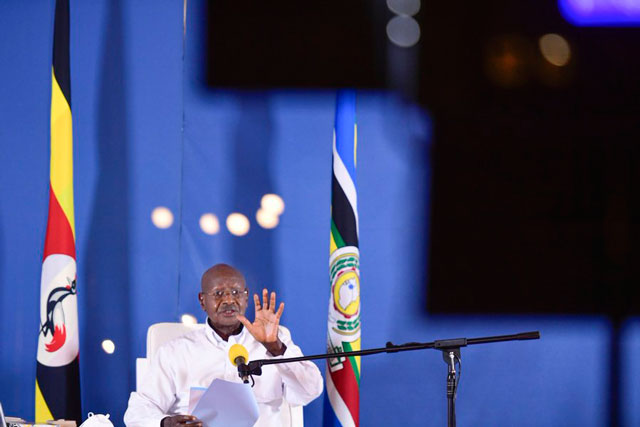
Museveni.  PHOTO PPU
COMMENT | Nkwazi Mhango | If there is a day that defined President Yoweri Museveni, it is the one when he defied everyone and signed an anti-gay bill into law for Uganda a decade ago. A lot of water has flowed under the bridge since, but his defiant stance remains popular in the region.
        As a wave of new legislation against homosexuality is again being considered in the region, Museveni stand on the issue is quoted widely in  Uganda and neigbouring Kenya.  “If the West doesn’t want to work with us because of homosexuals, then we have enough space here to live by ourselves and do business with other people” (CNN, 2014).
        You give it to Museveni, because many African leaders avoid this issue. It is only former Zimbabwean President Robert Mugabe who addressed this matter openly at the UN conference in 2015, something that also elevated him in the eyes of many on the contientent..
        A decade after Museveni made his remarks on CNN, Kenyan Supreme Court delivered its mindboggling and provocative ruling, especially for Kenyan MPs who spent much of their time deliberating and condemning this decision and the Supreme Court altogether. The Supreme Court ruled “at a time where the Kenyan LGBTIQ+ community is decrying the increased targeting and violence; this decision affirms the spirit and intention of the Constitution to protect all Kenyans and guarantee their rights.” This judgment did not augur well with the MPs who openly attacked the Supreme Court for its decision.
        Well, now that we have put everything in the context, then how did Museveni make good out of this controversial and thorny issue? He squarely declared his anti-gay stance that he’s been agitating for many years. If you read his words between the lines, you’ll find that Museveni has a plan B already. He hints that if the West abandon him, the East, which is China and Russia will take him in. Again, where did Museveni get such guts?
        Recently Vladimir Putin also started a crusade against gays and the likes when he signed an anti-gay bill into law December last year. Geopolitics aside, by coming out brazenly as he did, for the first time, Museveni united Kenya and Uganda on this matter. Later President William Ruto had to hastily issue a statement on the matter after some Kenyan MPs wanted him to do so.
        Like, Museveni Ruto said “I am a God fearing man. Even though we respect the court, our religion, traditions, law and customs do not allow for women to marry fellow women, nor for men to marry fellow men” (Daily Nation, March, 3, 2023).
        As for Tanzania where I come from, nobody talks about it despite the fact that there has been reported the increase in homosexual activities in the country. When news broke that there were such activities, the Minister of Education, Science and Technology Prof Adolf Mkenda was quoted as saying “the government is very shocked by the report and we’re ready to take appropriate measures” (Allafrica, Jan 18, 2023).
        If there are things Museveni is the master of, it is his ability to rebrand and the timing. After standing tall against gays, Museveni beat the game so to speak. For many so-called Africanists started to sing his praises. Many went far as alleging that the West seeks to introduce its things as the means of destroying Africa’s population with the aim of taking their land and resources after its population shrinks as it is a problem in the West currently.
        I watched Kenya’s Parliament on the issue. Two things surfaced. Almost whoever took the podium referenced two things, namely African cultures and religion. For the first time, African cultures that religions felled were united under Museveni’s stance to condemn LGBTIG+, which is ironic since the two are antithetic in nature.
        Underscoring the sensitivities of the two, I don’t know how this thing will end. However, one thing is obvious that the EAC can be united easily. What is needed is the agenda for it. If it can be easily united this way, then why don’t the likes of Museveni scratch their heads and come up with the ingenuity of uniting it under whatever pretext? If anything, Museveni, though for a while, might have already succeeded in uniting and lead Kenya and Uganda in anti-gay campaigns.
Source: Independent (Uganda) today.

Thursday, 2 March 2023