The Curse of Salvation

The Curse of Salvation

Wednesday, 10 June 2020

MY FINAL DECADE IN THE PUBLIC SERVICE (2000 – 2010).


DailynewsMy  second  term  in  the  office  of  Speaker,  started  with  the  2000  general  elections;   when  I  happily  sailed  through  the   Speaker’s   election  completely  unchallenged,  neither  from  within  the  Ruling  party,  nor from  the  Opposition  parties.  In  those  pleasant  circumstances,  I  invited  the  Speaker  of  the  British  House  of  Commons,  Hon.  Miss  Betty  Boothroyd,  to  attend  my  swearing-in  ceremony  in  Dodoma,  which  she  kindly  accepted,  and  graciously  attended.                                                       It  was,  indeed,  a  very  auspicious  start  to  my  new  term  in  office. But  that is  also   when  President  Mkapa   chose  to  display  his  extraordinary  confidence  in  me;   for  he  chose  to hand  over  to  me                                                                                               the  name  of  his  nominee  for  the  Premiership,  the  day  before  voting  day.   And ,  when  doing  so,  he  decided  to  even  explain  how  he  had  arrived  at  his  choice.    He  said  that   in  his  experience,  “the  smooth  running  and  success  of  Government  business  in  Parliament,  largely  depends  on  the  relationships  between  the  Speaker,  and  the  Prime  Minister.  If  these  are  not  cordial,  Government  business  is  bound  to  suffer.   I  have  been  observing  your  manifest  close  friendship   with  the  outgoing  Prime Minister,  especially  from  the  way  you  frequently  socialize  together   in  your  Speaker’s  Lounge.  It  is  on  that  basis,  that   I  have  decided  to  re-appoint  Fredrick  Sumaye”.                                                                                                                      
My  second  term  was  generally  devoted  to  the  continuation   of  efforts  to  ensure  the  effective functioning  of  the  multi-party  Parliament.  But  there  were  also  other  developments  which  are  worth  putting  on  record.
More  challenges  of  the  multi-party  Parliament.
 Another   serious  challenge  of  the  new  multi-party  Parliament  was  created  by  the  2000  general  elections,  which  produced  a  negative  “balance  sheet”  for  the  Opposition  parties,  because  they  obtained  a  combined  strength  of  only  29  parliamentary  seats,  and  this  fell  short  of  the  minimum  number  of  30  MPs  required   for  them  to  qualify  to  be  allowed  to  form  the  Official  Opposition  in  Parliament.   I  was  of  the  settled  view,  that  a  multi-party  Parliament   always  needs   an  Official  Opposition   for  its  proper  and  efficient  functioning.   Thus,  I  had   to  do  something  to  rescue  the  situation.  I  therefore   decided,  and  ruled,  that  the  relevant   Rules  be  amended,  so  as  to  reduce  the minimum  number  required  (for  the  opposition  to  qualify  to  form  the  Official  Opposition),   from  30 MPs, down  to  20  MPs.   This  was  done,   which   enabled  CUF  to  form  a  coalition  with  UDP  to  establish  the  Official  Opposition,  this  time  with   John  Cheyo  (MP)  of  UDP  being  the  leader  of  the  Opposition.               But  then,  because  CUF  had  disputed  the  Zanzibar  Presidential  election  results,  they  decided (unreasonably)  to  demonstrate  their  dissatisfaction  and  anger,   by  ordering  their  members  of  both  the  Zanzibar  House  of  Representatives,  and  those  of  the  Union  Parliament,  to  boycott  all  the  sessions  of  these  Houses  respectively.                                                                                                                                         Hence,   ironically,   John  Cheyo  was  forced  to  function  as  leader  of  an  absentee  17-strong  CUF  battalion!
MY   SPIRITED  DEFENCE  OF  PARLIAMENT  IN   A  COURT  OF  APPEAL  JUDGMENT   EPISODE.
At  the  beginning  of  the  year  2002,  I   became  involved  in   a  minor   incident  which  however,  unexpectedly,  created  what  could  be  aptly  described  as  “a  storm  in  a  tea  cup”,  and  was  totally  unprecedented.  It  all  started  with  an  inoffensive  and  innocuous  article  I  had  written,  for  the  purpose  of  explaining  Parliament’s  intention  in  passing  a  certain  piece  of  legislation;  which  the  Tanzania  Court  of  Appeal  had  just   nullified,  on  the   ground  that  “Parliament  had  exceeded  its  legislative  powers”  in  enacting  that  law.    
My  article  was published  in  two  local  English  language  newspapers,  the  Daily  News;  and   The  African,  on  26th  February,  2002.  This  article  was  simply  commenting  on,  and  certainly  not  challenging  or  criticizing,  the  judgment  which  had  been  delivered  by  the  Court  of  Appeal  of  Tanzania  on  14th  February,  2002,   in  the  case  of  Julius  Ishengoma  Francis  Nyanabo  vs  the  Attorney  General.    In  its  judgment,  the  Court  had  held  that  section  112 (2)  of  the  Elections   Act,  1985; was  unconstitutional.  The  provisions  of  that  section  had  required  the  petitioner in  an  election  petition  to  deposit  in  court,  as  security  for  costs, the  sum   of  Tshs  five  million,  without  which  his  case  could  not proceed  to  hearing.                                                 
My  motivation  for  writing  the  said  article  was  certainly  not  to  challenge  the  said  court  judgment.   I  was  fully  aware  that  court judgments  can  only  be  challenged  by  way  of  appeal  to  a  higher  court,  if  that  is  possible;  but  that  was  not  possible  in  this  particular case,  because  the  judgment  came  from  the  Court  of  Appeal,  which  is  the  apex  court  in  Tanzania.        My  enthusiasm  in  writing  that  article  was  purely  academic.  It  was  based  on  my  desire  to  make  a  presentation  of  a   piece  of  legal  literature,  largely  for  the  digestion  of  the  legal  fraternity. For  that  purpose,   I   mainly  focused  on   the  new  developments  in  the field  of  law,  which  had  just  been   published  in  the  authoritative  “Latimer  House  Guidelines  for  the  Commonwealth”.  These  guidelines   were  drawn  up  at  a  professional   meeting  of    the  “Commonwealth  Magistrates  and  Judges’ Association;   the  Commonwealth  Lawyers’  Association;  and  the  Commonwealth  Legal  Education  Association”;  which  was  held  at  Latimer  House  in  the  United  Kingdom,  from  15th  to  19th  June,  1998.  In  other  words,  that  article  was  a  purely  intellectual  and  academic  exercise;  done  in  the  knowledge  and  conviction  that  it  would  have  no  effect whatsoever  on  the  relevant court judgment;  which  had  even  admitted  that  “bearing  in  mind  the decline  of  the  value  of  the  shilling  which  has taken  place  since  1971 when  these  rules  were  made,  it  cannot  be  disputed  that  the  sum  of  shs 500  hundred  is  now  too  little  to  serve  any  useful  purpose  in  terms  of  providing  security  for  costs;  but  it  is  not  within  the  competence  of  this  court,  or  of  any other  court  for  that  matter, to  amend  that  Rule”.
However,  to  my  utter  surprise  and  astonishment,  the  “learned  brothers”  of  the  Tanganyika  Law  Society,   responded  to  my  article  by  issuing   a  prepared  statement  to  the  press,  ‘giving  it  a  bad  name’  and  mischievously  ‘hanging  it’!   In  their statement,  they   falsely  and  mischievously  claimed  that  my  article  was  “an  attack  on  the  Judiciary  by  the  Speaker” ;  slavishly  aping  one  malicious  Kiswahili  Newspaper,  which  had  responded  to  my  article,  in  its  front page  headline,  with the mischievous   wording  of  “MSEKWA  ASHAMBULIA  MAJAJI”;  when  that  strange  notion  of  “attacking  the  Judges”  was  not  there  at  all  in  my absolutely  innocuous  article !                                                                                                                                      This  eventually  turned  out  to  be  no  more  than   a  ‘storm  in  a  tea  cup’.  The  full  story  of  that  whole  episode  is  told  in  my  book titled  “The  Story  of  the  Tanzania  Parliament”  (Nyambari  Nyangwine  Publishers,  Dar es Salaam,  2012).
Fortunately for  me,  Parliament   soon  took  advantage of  the  Court of  Appeal’s  admission  in  their  judgment,  that  “the sum  of  shs 500 was  put  in  place  in  1971  is  too  little  to  serve  the  intended purpose”,  and  enacted  a  replacement  legislation  which,  not  only  revived  the  requirement  for  a  Tshs  5 miilion  deposit,  but   enhanced  that sum by  making  it  payable  “ for  each  and  every   count  listed  in  the  petition”.   Great!   I  had  won  the  battle  against  an  unwarranted,  oppressive  harassment.

THE  END  OF  MY  TENURE  AT  THE  SPEAKE’S  OFFICE.
The  2000  general  election  is  what  ushered  in  the  fourth  phase  Government  of  President  Jakaya  Mrisho  Kikwete.     The  Presidential  election  of  2005  was  the  most  comfortable  ever for  Chama  cha  Mapinduzi,  in  tems  of  election  results;   for  the  CCM  candidate  scored  the  most   resounding  victory  ever  since  the  reintroduction  of  the  multi-party  political  electoral  system  in  1995,    securing 80.2%  of  the  total  valid  votes;  and  winning  in 206  constituencies.                                                                                                  

The  end  of  my  tenure  at  the  Speaker’s  Office.
As  the  end  of  my  second  term  approached,  I  made  a  personal  decision that  I  would  not  seek  re-election  for  another  term  as  Speaker;  and  announced  this  decision  in  an  interview  with  the  Government  newspaper,  the  Daily  News.  I  had  told  the  Paper  that  I  had  greatly  enjoyed  a  very  rewarding  15  years  guiding  the  affairs  of  Parliament  from  the  Speaker’s  Chair;  plus    the  fact  that  I   would  be  reaching  the  age  of  seventy  years;  and  also  that  Parliament  had  already  passed  new  legislation  which  provided   very   handsome  retirement  benefits  to  retired  Speakers;  I  will  be  happy  to  retire  and  continue  to enjoy  these  benefits.        The  Daily  News  made my   statement   front  page  ‘breaking  news’  the  next  morning.   But  then,  external  influence  stared  appearing;   urging  me   to  accept  “one  final  term,  while  the  new  young  President  Kikwete   gets  properly   settled   in  his  new  responsibilities”.  I  was  persuaded  by  this  argument,  and  filled  the  requisite  CCM  election documents. 
However,  unknown  to  me  and  my  friends  and  supporters,  was  the  fact  that  there  had  emerged  a  serious  struggle  for  power    regarding  the  coveted  position  of  Prime  Minister;  for  which  there  were   two  powerful  aspirants,  Edward  Lowassa  and  Samuel  Sitta;  and  a  settlement  had  to  be  reached  on  who  would  get  that  post.   This  information was  revealed  to  me  by    the  CCM  Vice-Chairman,  John  Samuel  Malecela (MP),  after he  was  visited  by  Hon.  Samuel  Sitta (MP),  who  came  to  seek  the  Vice – Chairman’s  valuable  support  and  endorsement  for  his  bid  for  the  Speakership.
 On  Malecela’s  inquiry  why  he  had  decided  to  vie  for  the  Speakership  when  the  incumbent  Pius  Msekwa  had  already  indicated  his  intention  to  seek  re-election;  Samuel  Sitta  explained  that  “it  is  because  the  ‘hot’  contest  for  the  Premiership  has  been  amicably  settled  by  President  Kikwete,  who  has  decided  that  Edward  Lowassa  will  be  awarded  the  Premiership,  and  I  will be  awarded  the  Speakership”.  In  view  of  that, he said,  he  had   come  “to  seek  the  Vice-Chairman’s  blessings  and support  in  his  bid  for  the  Speakership”.                                        
 Hon  Malecela  told  me  that  he  had  been  greatly  disturbed  by  this  information;   and  that  was  why  he  wanted  to  share  it  with  me  at  once.   I  too  became  equally  disturbed,  and  I  decided  to  verify  the  information  with   President  Kikwete  himself;  for  which I  sought  appointment,  and  was  immediately  granted  audience.  
But  President  Kikwete   denied  knowledge  of  any  such  underground  pact.  He  had  apparently  been  by-passed,  so  he quickly checked and  found  out  that  it  was  the  work  of  a  ‘King-makers’ cabal  among  his  own  friends  within  the    CCM  MPs.    And,  indeed,  its  existence  was  confirmed  in  the  evening  of  the  same  day,  at  a  pre-arranged grand  reception  held  at  State  House  to  celebrate  President  Kikwete’s  election  victory;  at which  that  cabal  conducted  a  vigorous  campaign among  the  MPS  present  there,  for  Samual  Sitta’s  election  to  the  Speakership.
According  to  the  CCM  election  Rules,  it  was  by  then  too  late  for  me  to  withdraw  my  candidature.  But  I   refrained  from  wasting  time  doing  any  kind  of  campaigning;  and  just  waited  for  the  inevitable  to  happen,  when   I  was  declared  the  loser.   However,  that  did  not  unduly  disturb  me,  because  I  could  now  fall  back  on  my  handsome  Speaker’s  retirement  benefits.  And,  in  addition,   President  Kikwete  very  soon  appointed  me  to  the  Chairmanship  of  the   Ngorongoro  Conservation  Area  Authority (NCAA)  Board  of  Directors;  and  a  little  later,  he  sponsored  my  election  to  the  post  of  CCM  Vice-Chairman,  to  replace  veteran  John  Samuel    Malecela.   The  inevitable  pain  of  being made  victim  of  a  coup  executed   by  that  ‘King-makers’  cabal,  was  adequately  relieved  and  compensated. 
(Will  continue  next  week)
piomsekwa@gmail.com   /  0754767576.
Source: Daily News & Cde Msekwa Himself.

Leo Nimemkumbuka Mwalimu Wangu Rweyemamu RIP

Upumzike kwa amani Mwalimu Chrysostom Rweyemamu | Jambo Leo

Wale waliobahatika kufanya kazi na Marehemu Chrysostom Rweyemamu pale Habari Corporation watakubaliana nasi kuwa huyu jamaa alikuwa mtu mwema. Mtaalamu wa tasnia ya habari, mcheshi, mnyenyekevu na asiyembagua mtu. Mwalimu Rweyemamu kama alivyojulikana, alikuwa mtu wa watu. Isingekuwa rahisi kujua nafasi yake bila kuambiwa. Ukikutana naye, huwezi kuamini kuwa ni yule unayesikia. Leo nimemkumbuka hata kama kimwili hayuko nasi. Pia namkumbuka Marehemu Fransis Semwaiko Mungu ailaze pema mahali pema peponi, kaka yangu na kiongozi wangu Hilal K. Sued, Francis Chirwa na wengine wengi kama vile akina John Bwire jamaa mmoja poa sana, Johnson Mbwambo hakujulikana kama alikuwa ndege au mnyama,  Ansbert Ngurumo ambaye tulipishana akiachishwa mie nikianza, Said Kubenea mwandishi mdogo ambaye hakuwa na weledi wala sifa, Jabir Idris, marehemu Mayage S. Mayage,  dogo Ezekiel Kamwaga, Jostam so and so nimesahau ubin wake, Pendo Mashulano, Marehemu Godfrey Dilunga, Badra Masoud, Mwandosya Mfanga, Marehemu C. Stanley Kamana, Casian Malima,  Brothers Edgar Kasumuni, Iman Mani, Rodney Thadeus, Halima Dendego aliyekuja kuwa mkuu wa mkoa wa Mtwara na wengine wengi ambao nimewasahau. Kwa unyonge nawakumbuka mabosi waliojisifu na kupuuza wadogo kama vile Gideon Shoo ambaye hata udaktari wake sijui kaupataje, Salva Rweyemamu mjivuni wa kunuka. Kwa namna ya pekee namkumbuka Mzee Jenerali Ulimwengu, kiongozi mahiri na asiyejisifu.

Tuesday, 9 June 2020

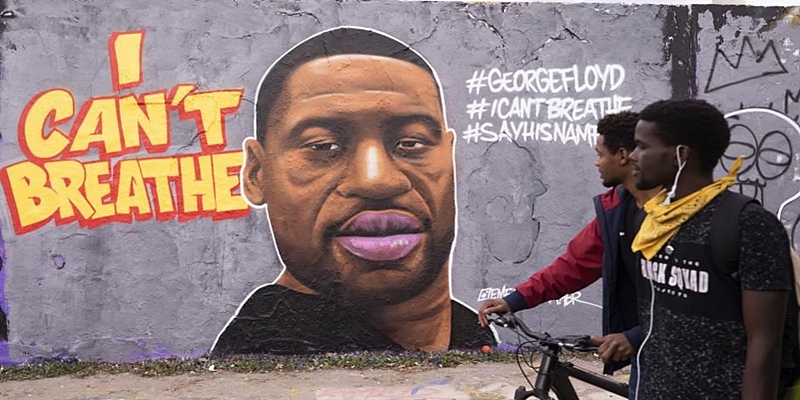
Where Do We Get Moral clout to Demonstrate Against US’s Racism?

I didn’t intend or want to revisit the same topic on what’s ongoing in the US vis-à-vis police brutality motivated by racism. Again, racism being a canary in the coal mine, I’d to; in order to emphatically and strongly put the message across. There are realities we need to address before we stand up and take on others who do the same things we do. What transpired recently in the US where police are renowned for monumental and systemic brutalities and racism against African Americans speaks volumes. Right from the outset, my argument’s that we must put our house in order before asking others to do the same. We need to be open and truthful to ourselves and others in the matters to do with brutality and racism. We need to take this pandemic called racism face on without sparing ourselves from the same shameful sin we commit daily in many African, American, Asian, Australian or European countries. Indeed, this begs for soul searching for us to do justice to ourselves and others altogether. For example, my observation’s that almost all police forces globally are colonially trained to become brutally anti-human rights. They all share the same nexus, brutality and unfamiliarity. They all are the creatures or add-ons of medieval European callousness. We thus, need to reformingly decolonise, deconstruct and reconstruct our police forces as we do the same to our countries, institutions and societies.
There’ve been many demonstrations taking place in various African countries from Nairobi to Johannesburg; Accra to Abuja etc. condemning racism in the US soon after the massacre of George Floyd by brutal US police in Minneapolis, Minnesota. Fighting and opposing racism are good deeds. For, no one’d discriminate or deem another inferior. We’re all equal despite our trivial physical distinctions.  However, looking at how racism’s emaciated Africa and the world though not noticed and practically taken head on, sometimes I wonder about what I see at the crosshair we’re at.  For example, it’s an open secret: African police are comparably more brutal than their US counterparts; because they brutalise and kill ones of their own while their governments stay aside and watch as if there’ve nothing to do with this systemic malpractice. They maltreat those whose taxes pay their salaries like nobody’s business. This is discrimination though not based on the pigments of one’s skin colour. Yes, while US police and others in racist countries kill blacks based on colour differences, in Africa, cops kill their brothers and sisters based on class or ideology. Likewise, many African governments order their police to abuse innocent people based on class and political cabalism.  To it, while the bigger chunk of the world demonstrated against racism in the US, only  a few countries with a few numbers of demonstrators did so. In the Middle East  the situation was the same compared to Europe.  South America where racism against Africans is still rife the number was negligible as well.
Beside the small number of demonstrators in Asia, everybody’s shamelessly going about his or her business when the whole world’s united against racism in the US and the commemoration of Floyd. To Asians racism against blacks was nothing important. Again, can we blame this on them while they also are renowned for the same sin against blacks? Try to imagine the country with over a billion people like India to have less demonstrators.
  Why Asia didn’t care or participate in this world movement against racism? Who cares about Africans if Africans don’t? What counts is nothing but their resources; period. And this can’t be further from the truth based on experience and reality altogether that many Asians discriminate against blacks openly and systematically.  Ironically, when Middle Eastern Arabs in Palestine are brutalised by Israel, many Africans take to the streets! Isn’t this the candle love? The candle lights others to end up perishing pointlessly. While the whole world’s reeling with this massacre, China took it as an opportunity to excoriate the US. Foreign ministry spokesperson Zhao Lijian’s quoted as saying “many people may want to ask this question: Why does the U.S. refer to those ‘Hong Kong independence’ and black-clad rioters as ‘heroes’ and ‘fighters’ but label its people protesting against racial discrimination as ‘thugs’?”
The question we need to ask ourselves is: why do we demonstrate to support the people who don’t support our cause[s]? Is it because they’re more important than us?
While the US police kill innocent people because of colour difference, in Africa, some Africans, not all, are butchering their brethren either because of ethnic or ideological differences.
While Africans protest against and condemn the ways the US brutalizes and maltreats African Americans, they don’t have the guts to replicate the same whenever ones of their owns are subjected to the same criminality. Where will this take them? Watch and see.
Many Africans in many African countries walk the streets whenever either their brethren in the West are discriminated against; but don’t do so whenever their African brethren face the same in any Africa! How many countries in Asia, Europe and the Americas reciprocate? Refer to the xenophobic attacks in South Africa or selling Africans in slavery in the Maghreb.
Further, Africans will throng the streets whenever they think that their co-religionists are maltreated in India, Middle East and elsewhere though don’t reciprocate when such a thing happen to their African counterparts as has been the case in the Central African Republic where Christians and Muslims have been butchering each other for  a while now.
Indeed, Africans are able to see what’s happening far, far, far away from them but unable to see what’s happening under their noses. They know more about the Asia, Europe and Middle East than they do on Africa! This speaks to how Africans consciously or otherwise discriminate against themselves. Do we need to save them from themselves? Consider how xenophobic attacks against Africans from neighbouring countries in South Africa’s become a norm. o further and remind yourself of the 2007 Post-Election Violence in Kenya. Further, remember the 1994 Rwandan genocide not to mention the same in Burundi though at a lesser magnitude? Refer to the North and South Sudanese war that took generations to finish not to forget the ongoing war between Dinka and Nuer in South Sudan thereafter. Where do we get the willpowers of condemning others for what we do without first condemning ourselves or just abandon the same?
The other day, I heard a Jamaican black retorting––when she was referred to as an African–– “can’t you differentiate me from Africans?” I was annoyedly flummoxed. Such a reaction reminded me of the Swahili sage: the mandrill doesn’t see its rumps. It laughs at those of others. After failing to take it, I asked her, why do your colleagues in the US are referred to as African Americans if they are not Africans? She’d not answer this thorny question.
By the by, when African Americans Muslims speak, talk about the glories of Islam and the Middle East but not Africa where they originated. For, they’re more Muslims than Africans. They’ve the Nation of Islam but not of Africa! Despite this, those non-Africans they wrongly think are their co-religionists who many reside in Asia and Middle East did not see any importance to demonstrate against or stand up on the crime that’s destroyed them for over 400 years.
Long story short, we need to put our house in order likewise all those who still think racism against blacks is not important to them as we’ve indicated above. Although some lack moral authority to condemn what they do, even staying quiet when the same criminality is committed denies them moral authority. Two wrongs don’t make a right. The saying goes that we all are a human race whether we’re black, brown, pink (white) or anything. Our races are socially constructed to serve colonial agenda. Those who participate in any form of racism or stay back and do nothing when it is time to take on it, must be shamed and told to their face. What they’re doing is a crime against humanity. Please, let all of human race be humans but not black, blue, green, pink, white or whatever. We all have the same needs; and thus, deeds to humanity. Black Lives Matter.
Source: African Executive Magazine

Monday, 8 June 2020

HAPPY BIRTHDAY Cde MSEKWA

Happy Birthday with Pink Roses | Gallery Yopriceville - High ...
BOTTOM LINE: Retired leaders need to emulate Mzee Msekwa - The Citizen

Today 85 years ago Cde Pius Msekwa, retired Speaker of the Parliament was born in Ukerewe. Today is his special day as he thanks God for giving him such a happy and responsible life. Cde Msekwa, despite clocking many years, is still going from strength to strength. As you all know, Msekwa is no guest on this blog. He is here every week presenting his arguments on many issue of note for our country. Being a mentee and comrade of Cde Msekwa, I can testify that he still has a lot to offer even after retiring from active politics and works. He's always behind the scenes doing his things. One of them is the coming book known as Magufulification: Concept that Will Define Africa and the Man Who Makes Things Happen we co-authored together. As if that is not enough, Cde Msekwa is now busy working on his Autobiography that, in one way or the other is the book of the history of Tanzania as far as leadership and struggle for independence are concerned.
In a nutshell, Cde Msekwa, apart from enjoying life, he has lived it. And he still has a lot to enjoy and offer as far as life is concerned. We who communicate with him almost in a daily basis can testify how formidably strong mentally and physically Cde Msekwa is.
HAPPY BIRTHDAY PIUS MSEKWA.

Thursday, 4 June 2020

OTHER SIGNIFICANT EVENTS DURING MY SPEAKERSHIP.


The   other  most  significant  events  during  my  first  five-year  term  as  Speaker  of  the  National  Assembly  (1995 – 2000),   include  the  following:-                                                    
(i)  The  vexatious  election petition  case  filed  against  me;                                               
 (ii)  My  leadership  engagement  with  the  Commonwealth  Parliamentary  Association;                                       
(iii)  The  formation  of  new Pan-African  Parliamentary  Institutions.                              
 (iv)  The   death  of  Mwalimu  Julius  Nyerere, the  Father  of  the  nation.The  vexatious  election  petition  case.
DailynewsOne   Sylvester  Masinde,  my  CHADEMA   opponent in  the  1995  Parliamentary  elections  in  the  Ukerewe  constituency,  having  been  dissatisfied  with  his  defeat  at  the  polls,  wantonly  decided  to  file  an  election  petition,  in  a  vexatious  attempt   to  undo  my  victory  at  those  elections.                         He   deservedly   lost  the  case  at  the  High  Court.    Dissatisfied  one  more  time,  he   filed  an  appeal  at  the  Court  of  Appeal,  where  he  lost  again,  and  was  ordered  to  pay  the  costs  of  the  case.                 One  of  his  misguided   complaints,  was  that  I had  continued  to  pay  for  the  construction  of  certain  infrastructure  projects  in  the  constituency  during  election  the  election  year  itself;    which,  he  claimed,  constituted   ‘bribery’  to  the  voters.  In  the  Court of  Appeal  judgment  read  by  Chief  Justice  Francis  Nyalali,  the  Court  ruled  that   “an  incumbent  MP  has  an  obligation  to  carry  out   all  his  duties  and  responsibilities,  and  to   offer  all  necessary  services  to  his  constituents,  even  during  election  year,  until  the  time  when  Parliament  is   actually  dissolved,  when  his  membership  of  Parliament  ceases”     
My  leadership  engagement  with  the  CPA.
By  some  lucky  coincidence,  a  vacancy  had  occurred  in  the  membership  of  the  CPA  international  Executive  Committee,  relating  to  the  representation of  the  Africa  region on  that  Committee.  Thus,  unexpectedly,  in  April  1996,  I  received  a  letter  from  the  CPA  Secretary  General    informing   me  that  I  had  been  nominated  to  fill  that  vacancy,  for  a  period  of  three  years.  At  the  expiry  of  that  period  in  1999,  I  got  encouragement  from  several colleagues  on  that  Committee,  to  stand  for  election  as  its  Chairman,  for  the  ensuing  three-year  term.                                                                              
 I  was  persuaded  by  that  encouragement,  and  went  ahead  to  compete  for  the  post.  There  were  two  other  candidates  aspiring  for  election  to  the  same  post,  one  from  the  Canadian  Region;  and  the  other  from  Gibraltar  in  the European  Region.   The  first  round  of  voting  at  the  annual  conference  of  the  CPA  which  was  held  in  Trinidad  and  Tobago;  did  not  produce  a  winner.  The  candidate  from  Gibraltar  was eliminated,  leaving  the  Canadian  candidate  and  myself  to  compete  in  the  second  round;  which  I  won  handsomely.
The  formation  of  new Pan-African  Parliamentary Institutions.
 Also  during  this  period,  obviously  by  sheer  coincidence,  two  Pan-African  Organizations  resolved  to  establish  their   Parliamentary  wings;  as  follows:-            
(i) The  Southern  Africa  Development  Community  (SADC), which  authorized  the  formation of the  SADC  Parliamentary  Forum  (SADC-PF)  in  1977,  with  headquarters  located  in  Windhoek.  This  was  in  accordance  with  article  9(2)  of  the  SADC  establishment  Agreement.  The  Tanzania  Parliament  became  a  member  of  the  SADC Parliamentary  Forum  the  same  year.                                                                                                          
   (ii)  The  African  Union (AU),  which  authorized  the  formation  of  the  Pan-African  Parliament (PAP)   in  2004,  with  headquarters  located  at  Midrand,  Johannesburg,  South  Africa;  in accordance  with    article  17  of  the “Constitutive  Act  of  the  African  Union”;  which  became  effective  on  11th  July,  2000; after  having  been signed  by  the  all  the  53  AU  member  countries.                                                                                 
 (iii)  The  East  African  Legislative  Assembly (EALA), which  was  established   in  1998;  under  the  provisions  of  article  9  of  the  Agreement  establishing  the  East  African  Community.
 The  methodology adopted  for  their  formation  was  that  in  each  case,  that  task  to  consider  and  submit  appropriate  proposals  and  recommendation  to  the  relevant  Authority,  was  given  to  the  relevant  CPA  institution  in  the  Africa Region.  Thus, regarding  the  SADC-PF;  the  CPA Branches  in  the  SADC  countries  undertook  that  responsibility;  and  established  a  small   sub-committee  to  undertake  that  task.    Similarly  in  the  case  of the PAP,  the   CPA  Branches  in  the  Africa  Region decided  to  establish  a  small  sub-committee  for  that  purpose.  I  found  myself  in  each  of  these  sub-committees.  Apparently, my  colleagues  had  taken  due  consideration  of  my  senior  position  as  a  member  of  the  International  Executive  Committee  representing  the  Africa  Region,  and  decided to  place  me  on  these  important   ad hoc  committees.             
My  contribution  to  the  formation  of  these  new  Pan- African  Parliamentary  institutions,  was  therefore  quite  substantial,  and  memorable.
The  suffering  and  death  of  the  Father  of  the  nation.
It  was  during  the month  of August,  1999,  when  I  became  aware  of  Mwalimu  Nyerere’s  illness  while  he  was  at  his  Butiama  home.  I  had  gone  to Butiama  to  deliver  to  him,  our  Parliament’s  valuable  retirement  gift,  namely,  the  complete  set  of books  titled  “Encyclopaedia  Britannica”, which  Parliament  had  resolved  to  give  him  on  his  retirement  from  the   Presidency,  in  recognition  of  his  widely  acknowledged  talents  as  a  scholar  and  an  intellectual.   That  is  when  I  found  Mwalimu  suffering ,  and  in  great  pain.  He  told  me  that  he  had  accepted  President  Mkapa’s  advice  to  go  to  London  for  treatment.
My  next  contact  with  Mwalimu  Nyerere  was  when  he  was  receiving  treatment  in  London.   The  date  was  25th  September, 1999,  when  I  was  on  my  way  back  from  Trinidad  and  Tobago,  where  I  had  gone  to  attend  the  annual  CPA    conference  that  elected  me  Chairman  of  the  International  CPA  Executive  Committee.   When  I  met  him,  he  had  been  discharged  from  St.  Thomas  hospital,  and  was  staying  at  a  rented  apartment,   continuing  to  receive  treatment  as  an  out-patient.                                  
  I  had  travelled  to  the  CPA  conference  together  with  my   wife  Anna  Abdallah,  and  we  were  together  when  we  visited   Mwalimu  Nyerere  at  his  London  apartment .   On  arrival  there,  we  were  ushered  into  his  bedroom,   where  he  was  resting  in  the  company   of  his  wife  mama  Maria.   I  spent  just  about  an  hour  chatting  with  Mwalimu  Nyerere  like  old  friends,  on  a  variety  of  matters;  with  our  wives  listening.    He  first  explained,  with  a  light  touch,   how  he  was  missing  his   regular  uji  wa  ulezi,  his  favourite  breakfast  item  which  made  us  laugh  in  amusement.   He  then  turned   to  more  serious  subjects,   by  enquiring  about  the  performance  of  the  new  Official  Opposition  in  Parliament,  and  I  gave  him  an  extended   briefing  on  that.  Eventually,  he   told  me  about  his  desire  and   anxiety  to  get  back  home  quickly,  in  order  to  continue  with  his  mediation  efforts  in  the  Burundi  internal  conflict.   Thereafter,  me  and  my  wife  departed,  and  went  straight  to  the  airport,  to  catch  our  connecting   British  Airways  flight  back  to  Dar es  Salaam.
Mwalimu  Nyerere’  death.
But  then  came  the  shocking  news.   Mwalimu  Nyerere’s  condition  had  suddenly  deteriorated  in  the  afternoon  of  that  same  day.  He  had  stopped  talking,  and  had  to  be  rushed  back  to  St.  Thomas   hospital   for  re-admission.   Sadly,  he  did  not  regain  his  speech  until  the  day  he  died,  14th  October  1999.  His  death  was  announced  by  President  Benjamin  Mkapa,  in  an  early  morning  broadcast  to  the  nation.  President  Mkapa  also  gave  me  the  singular  honour  of  asking  me  personally, to  prepare and  read  Mwalimu  Nyerere’s  eulogy,  on  the  official  day  appointed  for the  public  ceremony  of  paying   last  respects  to  the  body  of  the  departed  Tanzania’s   Baba  wa  Taifa;  which  was  also  attended  by  a  large  assembly  of  Heads  of  State,  and  other  distinguished  former  leaders  of  their respective  nations.                                                                                                                              His  death  was  mourned  not  only  in  Tanzania,  but  also  around  the  whole  world,  by  the  most  humble,  as  well  as the  mot  exalted  personalities.                                                                                              It  is  particularly  gratifying  that  the  Catholic  Church  in  Tanzania  has  decided  to  embark  on  the  usually   long  process  for  his  canonization,  which  commenced  with  special  prayers  held  at  his  grave  in  Butiama,  on 21st  January, 2006.    And  on  5th  March,  2010,  His  Holiness  the  Pope  in  an  announcement  from  the  Vatican,  formally  declared  and  elevated  the  late  Mwalimu  Nyerere  to  the  status  of  “Servant  of  God”;  which  is  a  significant  first  step  in  the  canonization  process. 
This  completes  the  story  of  events  during  my  first  five-year  term  in  the  office  of  Speaker.
Significant  events  during  my  second  term.
My  second  term  in  the  office  of  Speaker,  started  with  the  2000  general  elections;   when  I  happily  sailed  through  the   Speaker’s   election  completely  unchallenged,  neither  from  within  the  Ruling  party,  nor from  the  Opposition  parties.  In  those  pleasant  circumstances,  I  invited  the  Speaker  of  the  British  House  of  Commons,  Hon.  Miss  Betty  Boothroyd,  to  attend  my  swearing-in  ceremony  in  Dodoma,  which  she  kindly  accepted,  and  graciously  attended.                                                      
 It  was,  indeed,  a  very  auspicious  start  to  my  new  term.  But  an  even  greater  surprise  was  to  come  my  way shortly  afterwards.  It  was  when  President  Mkapa   chose  to  hand  over  to  me,    the  name  of  his  nominee  for  the  Premiership  the  day  before  voting  day.   And  when  he  was  doing  so,  he   surprisingly  decided  to  even  explain  how  he  had  arrived  at  his  choice,   an extraordinary   display  of  trust  in  me!   He said  that   in  his  experience,  “the  smooth  running  and  success  of  Government  business  in  Parliament,  largely  depends  on  the  relationship  between  the  Speaker,  and  the  Prime  Minister.  If  these  are  not  cordial,  Government  business  is  bound  to  suffer.   I  have  been  observing  your  manifest  close  friendship   with  the  outgoing  Prime Minister,  especially  from  the  way  you  frequently  socialize  together   in  your  Speaker’s  Lounge.  It  is  on  that  basis,  that   I  have  decided  to  re-appoint  Fredrick  Sumaye”.              
This  second  term  was  generally  devoted  to  the  continuation   of  efforts  to  ensure  the  effective functioning  of  the  multi-party  Parliament.                                                  
Another  of  the  new  multi-party  Parliament  challenges,  was  created  by  the  2000  general  elections,  which  produced  a  negative  “balance  sheet”  for  the  Opposition  parties,  which   obtained  a  combined  strength  of  only  29  parliamentary  seats,  and  this  fell  short  of  the  minimum  number  of  30  MPs  required   for  them  to  qualify  to  be  allowed  to  form  the  Official  Opposition  in  Parliament.   I  was  of  the  settled  view,  that  a  multi-party  Parliament   always  needs   an  Official  Opposition,   for  its  proper  and  efficient  functioning.   Thus,  I  had   to  do  something  to  rescue  the  situation.  I  therefore   decided,  and  ruled,  that  the  relevant   Rules  be  amended,  so  as  to  reduce  the minimum  number  required  (for  the  opposition  to  qualify  to  form  the  Official  Opposition),   from  30 MPs, down  to  20  MPs.   This  was  done,   which   enabled  CUF  to  form  a  coalition  with  UDP,  to  establish  the  Official  Opposition,  with   John  Cheyo  (MP)  of  UDP  being  the  leader  of  the  Opposition.   
 But  then,  because  CUF  had  disputed  the  Zanzibar  Presidential  election  results,  they  decided (unreasonably)  to  demonstrate  their  dissatisfaction  and  anger,   by  ordering  their  members  of  both  the  Zanzibar  House  of  Representatives,  and  those  of  the  Union  Parliament,  to  boycott  all  the  sessions  of  these  Houses  respectively.   
Hence,   ironically,   John  Cheyo  was  forced  to  function  as  leader  of  an  absentee  17-strong  CUF  battalion!   However,  in  compliance  with  the  Rules  of  both  these  Institutions  (which  prescribe  appropriate  punishments  for  such  errant  MPs);   all  of  them  simultaneously  lost  their  membership  of  Parliament  (and  of  the  Zanzibar  House  of  Representatives),  in  April, 2002;  for  the  offence  of  having  failed  to  attend  three  consecutive  meetings  without  the  Speaker’s  permission.
(Will  be  continued  next  week).
piomsekwa@gmail.com /0754767576.
Source: Daily News and Cde Msekwa himself.


Tuesday, 2 June 2020

When will blacks be equally equal with others?

When blacks freed themselves from slavery and later colonialism wrongly thought they’d become equally equal with other non-black people. This has never been; and it seems, it won’t be if black people all over the world won’t rise again and fight for equality as any human beings. The world superstructure never cared about black people. Refer to how the Declaration of Universal Human Rights (UDHR, 1948) clearly stated that freedom was one of human rights. Ask yourself. How long did it take for African countries to become free? Again, if we consider the fact that at the time the UDHR was created, humans were just rich men and white only but not otherwise, we can understand why. Now, white females are deemed as human beings as well as poor white blue, yellow and whatever races are deemed humans. When it comes to black people, theoretically they’re humans however, practically, they’re either not or half humans as European colonisers and xenophobes used to categorize them.
Holy molly! Recent racially motivated killing of George Floyd in the US has brought back stinking racist experience. Millions of people in the US and abroad walked the streets to condemn this endemic and systemic racism against black people while US president Donald Trump seems to add more fuel by doing his dirty linens on the agora. New York governor Andrew Cuomo came forth and condemned systemic racism and injustice noting “we have an injustice in the criminal justice system that is abhorrent.” Cuomo added that what’s ongoing in the US is the continuum of injustices that have been sat on and tolerated for decades and decades without providing neither a lesson nor a solution to the US which is the replica of the West so to speak.
  Essentially, Floyd’s massacre unearthed the soft underbelly. This has been ongoing in various states in the US where police are renowned for killing and maltreating Afro-Americans. After Floyd’s butchery, the entire world condemned the US for its racism against black people. I am not trying to be Advocatus diaboli. Again, is the US alone? Have we easily forgotten what transpired in China just recently where Africans were openly discriminated against? When the shoe is on another leg for whatever reason being legged down or legged up, too, does chime with change. Have we easily forgotten how in India Africans in Andaman island known as Jarawa are treated like animals for Indian tourists to go and view not to mention open discrimination against Africans and Indians of black pedigree such as Bengalis and Dalits among others? Have we easily forgotten how black people in Libya and many Maghreb countries have been traded in silent slave trade? Have we forgotten our sisters that are abused and discriminated against in the Middle East where racism is open and rampant?
This piece seeks to see if Africans are treated equally just like other humans in Africa and abroad. They are restricted even in their continent where they’re not allowed to move freely compared to foreigners. A foreign with a foreign passport can crisscross Africa more swiftly than an African. Even many corrupt African governments like to do business with foreigners than their counterpart African ones.
They are discriminated even in Africa by those whom colonisers brought to rob them. Let us face it. Indians and other Asians have been in Africa for many years. Despite that no enough intermarriages have occurred between blacks and those they host. Currently, at least, it is possible to spot a Sino-African couple even Korean African couple but not Indo-African one. Why? Isn’t this broad daylight racism? It is easy to see Filipino and any colour couple but not with black? Even Arabs who have been in Africa are famed for marrying African women but not reciprocally allowing their daughters to be married by black men. Dar es Salaam, Kilwa, Mombasa, Tanga and other coastal towns speak volume vis-à-vis this observation drawn from personal experience.
The situation is worse. In Brazil, it is close to a crime one to associate him/herself with blackness. That is why some brownish Africans in Brazil like to refer to themselves as Moreno but not negro or negra. Likewise, in Africa, there are some Africans who either believe they’re Arabs like those in North Sudan or have Arab ancestry thus, discriminate against others. Go to Eastleigh in Nairobi. You will see what I mean. Somali never like to mix with non-Somalis. Refer to the so-called Bantu Somali and the way they have for many years discriminated against and maltreated. Ethiopians, as well, do the same systematically.  To make matters worse, even those in the diaspora still believe that their brethren sold them to slavery. What a blame game! 
Source: African Executive today.