The Curse of Salvation

The Curse of Salvation

Saturday, 4 February 2023

Municipal Johannesburg Morgue workers bury the coffin of an unidentified body on February 27, 2019.  humans resist the notion that physical death is final. That’s why they’ve invented an afterlife. 

                   By Makau Mutua Prof at Suny Buffalo Law School and Chair of KHRC.

In this second series on human mortality — or immortality — I reflect on concepts of the afterlife. Humans have a very elevated sense of themselves, and of their place in the universe. For example, humans normatively place themselves above all other living things. For that reason, they regard the earth, and even the universe, as their plaything. In other words, all that there is belongs to humans for their use and disposal.

        In essence, humans generally see themselves as the masters of the universe, though below the rank of Providence. It seems that it’s because of this sense of self-importance that humans resist the notion that physical death is final. That’s why they’ve invented an afterlife. Here, I interrogate whether the belief in the afterlife is an exercise in human vanity, or whether there’s a life there. 

        Empiricists like myself, the show-me types, always want a little evidence, not mere faith, or empty talk. Let’s dig deeper.  The afterlife is generally agreed to be some form of life after the biological death of the physical body. Thus an individual’s identity or spirit, as some African peoples believe, continues to live after the terminal death of the physical body. 

        Some religions, belief systems, or spiritualities hold that the soul, and even the physical body, may live or reincarnate after death. Others of course believe in total oblivion after death or the remainder of nothingness after death. There are contrasting metaphysical models. In the Abrahamic faiths – Judaism, Christianity and Islam – theists believe that after death people go to a specific place based on their actions on earth as determined by God. 

        In Asian concepts, such as in India, notions of reincarnation are prevalent based on one’s actions in the just-ended life.  In Africa, one may be reborn and return as posterity in a family, or one repose as a spirit forever lurking to punish, or reward, the living. In the Abrahamic faiths, the concepts of heaven and hell supposedly cajole the minds of the living to do good works here on earth. Heaven, for example, is the place of utter bliss where only the purest go. 

        In contrast, in many religions, hell is a place of torment and torture never ending full of fire and suffering.  In some Jewish beliefs, for example, the soul can be rendered totally extinct for a small class of the most malicious and evil people on earth, those whose conduct here manifested the most vicious and utmost evil. 

Total damnation 

These are the wickedest of all. But hell is understood to be a place of total damnation without the possibility of salvation. Some Christian faiths, especially Catholic, have an intermediate place between hell and heaven. That place is called purgatory. Those who die in sin but have lived a generally upright life, go to purgatory to be purified or purged, of sin.                     

        Purgatory is a state of limbo where some folks are given a second chance after the cleansing of their soul. This suggests the possibility of redemption, but it all goes back to your actions on earth.  It’s important to note that not all these concepts are in black and white in the holy books. Some of these profound concepts are man-made by clerics and theologians through millennia. 

        So, what’s divine and what’s not is very murky. Which begs the question, how do we know as mere mortals what to believe, or not? How can we be sure we are placing the right bet just in case there really is an afterlife? Should one go faith-shopping for the surest bet? It seems so much of life, including the afterlife, is a function of chance and that indeterminate thing called fate, or luck. It really depends on where you were born in terms of culture, geography, and faith. And since we are simpletons, we simply accept like a pit latrine most of the cultural heritage of our forebears. 

            It doesn’t get any more random than that. So, what’s the science in it if it’s all so chancy? What if we are not born with a superior brain that can separate the wheat from the chaff? Do those of frail minds, known in the past in politically incorrect language as imbeciles, get a break? Methinks you know where I am headed. This is the big question – is the notion of an afterlife fact, or fiction? If you use the sovereignty of reason to decide that it’s all hogwash, should God punish you?

           What about those who remain religious as a bet just in case? Should those who do good works here on earth with a view to being rewarded later be treated as faithful penitents worthy of heaven? Or are they cynical hypocrites manipulating God? Or shouldn’t all of this matter as long as religion — no matter its inner validity — cabins us to lead a less evil life because of the fear of damnation?  The jury is out. 

Makau Mutua is SUNY Distinguished Professor and Margaret W. Wong Professor at Buffalo Law School, The State University of New York. @makaumutua.

Source: Sunday Nation tomorrow.


Friday, 3 February 2023

Reflections on the ‘Law Day’ celebrations, particularly regarding their aims and objectives

Yesterday,   1st  February,  2023;   was  the  anniversary  of  what  has  been  designated  as  “Law  Day”  in  Tanzania.   It  may  be  of  interest  to  the  current stakeholders to  know  that   the  idea  of  designating  this  particular  date  as  Tanzania’s  “Law  Day”,  was the  brainchild  of  the  late  Chief  Justice  Francis  Nyalali  and  was  intended  to  mark  the  commencement  of  the  Judiciary  ‘new  business  year’.
        For  that  reason   the  celebrations  were   initially  confined  only  to  members  of the  Judiciary  Branch  of Government,  plus   the  legal  fraternity and  were  held   inside  one  of  the  court  rooms  within  the  High  Court  Building  in  Dar es  Salaam.   In  other  words,  this  event  started  as  a  purely  Judiciary  ‘in-house’  affair, intended only  for  those  who  were  directly  concerned.
        Chief  Justice   Nyalali  had  also  decided  to  invite  the  Speaker  of  parliament  to  attend  these  occasions,  in  order  to  symbolise  participation  from  the  Legislative  Branch and  for  that  reason,  he  was  given  the   leading  role  of  being  the  ‘Guest  of  Honour’.   This  happened  during  the  time when  I  was  the  Speaker  of  the  House,  circa  1996/97.
        Thus, in   that  connection,  I  can  vividly  remember  how,  on  one  such  occasion,  the  Chief  Justice  had  chosen  the  expression  “Haki  sawa  kwa  wote”  as  the   “kauli  mbiu”  for  that  year’s  celebrations.  When  my  invitation  to  attend  that  function  arrived and  I  saw  that;   I   quickly  wrote  back  to  point  out  that  the  expression  “Haki  sawa  kawa  wote”  was  in  fact  the  slogan of the  CIVIC  UNITED FRONT  political  party and  showed  my  concern  that  this  was  inappropriate  for  such  a  national  event suggesting  instead the use  of  the  neutral  expression  “Watu  wote  ni  sawa  mbele  ya  sharia”,  which  is  also  used  in article  13 (1)  of  the  Constitution  of  the  United  republic.     The  Chief  Justice  promptly  agreed and  the  ‘Kauli  Mbiu’was  changed  accordingly.
            But   these  celebrations   soon  developed  into  fully-fledged   national  events;   when  the  President  of  the   United  Republic  accepted  the  Chief  Justice’s  invitation  to  formally   participate  in  these  annual  celebrations,  taking  over  the  role  of    Guest  of  honor.   In  other  words,  these  occasions  now  became  truly  national   events which  brought  together  ‘under  one  roof’,  the  Heads  of  all  the  three  Branches  of  Government;  namely the  Executive;  the  Legislative  and  the  Judiciary  commonly  referred  to  as  the  three  “Pillars  of State  governance”.
        It  may  therefore  be  worthwhile  for  the  relevant  stakeholders and  other  interested  parties to  make  use  of  the  opportunity  provided  by  these  special  celebrations,  to  make  some  reflections  on  their   purpose,  aims and  objectives.    As   part  of  the  preliminary  introductory  remarks,  let  me  first  briefly  provide  this   relevant  background  information.
            Luckily,   by  the  grace  of  God,   I   have   personally   had  a  fairly  long  association   with  the  country’s   “Law  sector”  in  the  course  of  my  service  to  our  nation.    It  started  right  from  my  first   appointment  in  the   service  of  Parliament,   immediately  after  my  graduation  at  Makerere  University  College  in  Uganda,  in  April  1960.  This  was  subsequently  followed  by  my  service  therein   as  MP,  Deputy  Speaker and  eventually  Speaker  of  the  House,  between  1990  and  2005.
        Since  the  main  function  of  Parliament  is  to  make  laws;   this  gave  me  direct  exposure  to  the  Law  sector.   And  this  was  supplemented  by   several   other  part-time  appointments including  that  of  Chairman  of  the  Judicial  System  Review  Commission,  (1975—1977);    Member  of  the  Tanzania  Law  Reform  Commission,   (1983 – 2005)  and   Member  of  the  Legal  Sector  Reform  Task  Force,  (1993 1994).
        The   privilege  of  such  exposure  (plus,  of  course,  my  own  keen  interest in  these   matters)  enabled  me  to  acquire  and  accumulate,   substantial   experience  in  this  particular  area,  which  I  am   now  happy  to  share  with  my  readers  of  this  presentation.  And this now  brings  us   to today’s  main  discussion.
Reflections  on  the  ‘Law  Day’  celebrations
The  “kauli  Mbiu”  for  this  year’s  celebrations  has  been  given  as  “The  importance  of  Conflict  resolution   through  arbitration”.   Thus,  because  I  am    operating  from  my  retirement  home  in  Ukerewe;   I  will   travel   down  memory  lane  back  to  the  colonial  period,   when  the task   of  dispensing  justice  was  shared  between  the  colonial  authorities (the  District  Commissioner) and  the   Native  Authorities  (the  tribal  Chief  and  his  subordinates).  
         At  that  time,  the  District  Commissioner  was  performing  his  judicial  functions  sitting  in a  proper  Magistrate’s  court,  established  by  law and  so  also  did  the  Chief  of  Ukerewe  and  his  subordinate  Sub-Chiefs  who  also  performed   their  judicial  functions    sitting  in  what  were  designated as  “Native  courts”,  similarly  established  by  colonial  legislation.
        However,  there  also   was  a  lower  level  of  the  Chief’s  subordinates,  known  as  ‘Village  Headmen’  who  had  no  properly  established  court  rooms and  who  were,  in  fact,   operating  the  ‘arbitration  system’;   whose  wider  use   is  currently  being   advocated and  strongly  urged,  by  the  Judiciary.   This  was  their   method  of  resolving  minor  conflicts  and  disputes  among  individual   persons.
        “To   everything  there  is  a  reason and  a  time  for  every  purpose  under  heaven”,  so   the   Holy  Bible  says.    In  today’s   presentation,  we  will  endeavor  to  highlight  what,  I  believe,  were   the  intentions  of   the  late  Chief  Justice  Francis  Nyalali  (may  his  soul  rest  in peace),  as  could  be  discerned  from   my  own  frequent  conversations  with  him  at  the  material  times.   To   the  best  of  my  recollections,  the  principal  objective  was  ‘the  need  to  draw  public  attention  to  the  direct  relevance,  as  well  as   the  crucial  importance,  of  ‘the  law’ to  the  community  in  which  it  operates’.
        This  was  important  and  necessary  because,  under  the  prevailing  circumstances  of  the  material  times;   “the  law”,  was  not  the  kind  of  “bread-and-butter  issue,  that  normally   attract   people’s  attention   in  their  everyday  lives.   The  general  layman’s   view  seemed  to  be (and  probably  still  is),   that  ‘the  law’  comes  knocking   at  your  door  only   when  you  have  committed  an  offence;  and   further  that,  it  is  always   best  to   avoid  getting  involved  in   other  persons’  law  breach  court  cases (mainly  in  order  to  avoid  the  immense  trouble,  and  inconveniences,  that  are  usually  caused  by  such  involvement).   This,  perhaps,  is  what  partly  explains  the  apparent  reluctance,  generally,  among  the  people  to  serve  as  prosecution  witnesses  in  criminal  cases,  which  was  noticeable  in  many  different  locations  of  our  country,  including  Ukerewe,  my  own  District.           And  this  quickly  reminds  me  of  two  frustrating  incidences.   One  was when  a  prospective  key  witness  in  a  corruption  case, after  initially  spilling  the  beans  in  the  said      case,  abruptly  turned round, and  flatly  refused  to  go  to  court  as  a  prosecution  witness;   upon  being  asked  to  do  so  by  myself  as   his  then Member  of  Parliament.  
         Here  is  the  true  story:-I  had  received  reliable  information  that  earlier  on  that  same  day,  a   medical  doctor   working  at  the  Ukerewe   District  hospital  (who  had  already  earned  the  negative  reputation  of  routinely  seeking  bribes  from  his  patients);   had  on  that day  corruptly  demanded  to   be  given  a  cow by  this  man,    as  an  ‘inducement’  for  the  said  doctor  to  perform  a  life-saving   operation  on  the  man’s  wife,  who  had  failed  to  deliver  normally.   My  informant  further  said  that  at  that   moment  of  his  report,   the  victim  and  his  cow  were  right  there  at  the  hospital  waiting  to hand  over  the  bribe  to  the  said  doctor  after  the  latter  had  completed  the  required  operation.
        As   my  MP’s  office  was  situated  just  across  the  road  on  the  opposite  side  of  the  District  Hospital,   I  walked   across  to  the  Hospital  to  see  for  myself,  the  alleged  cow  and  its  owner.  Both  were  indeed  there.   And,  in  my  preliminary  inquiry,  the  man  readily  confirmed   the   alleged facts.  Pleased  with  this  hard  evidence,  I  then  asked  him  to  be  a  witness  for  the  prosecution,  in  the   bribery  case  which  we  were  going  to  file  in  the  District  court  right  away.   But  on  hearing  that,  our   man  suddenly  changed,  and  declared   firmly  that   he  was  not  at  all  prepared  to  suffer  the  unnecessary  troubles  and  inconveniences  of  going  to  court.    After  all,  he  said,   this  was  his  cow,    and  he  was,  any  case,  prepared  to  let  it  go,  in  order  to  save  his  wife  and  the  new  baby!
        The  other  frustrating  event  is  narrated  in  very  minute  details   by  the  last  colonial   Ukerewe District  Commissioner,  Donald  Barton,  in  his  book  titled:   An  Affair  with  Africa,  Tanganyika  remembered, (Authors  On  Line,  England, 2004),   In  that  book,  the  author  describes, with  manifest  bitterness,  how  the  prospective  prosecution  witnesses  to  a  grisly  murder  that   had  been   committed  at  Kisorya  in  Ukerewe   in  June  1959,    who  had  “initially  willingly  emerged  to  give  oral  evidence (much  of  it  circumstantial  but  conclusive);   subsequently  flatly  refused  to  make  formal  statements  and  testify  to  their  veracity  in  court”! This   situation forced   the  police to  drop  the charge,  and  release  the  culprits.   “It was extremely  mortifying”,  the  author  laments.    
            But  such  stories  notwithstanding;  it  is  perhaps   necessary  to  emphasise  the  fact,   that  ‘the  law’  (including  the  associated  rules  and  regulations  of  all  sorts),  do  effectively   direct,  and  control,  the  ordinary  life  of  every  person  in  very   many  ways,  even  without  his/her  being  aware  of  it.
        For  example,  the  traffic  rules  and   regulations  are  designed  to  control  people’s  movements  on  the   roads;  and  there are  similar  rules  and  regulations  for  controlling  people’s  movements  when  travelling   in  the  air,  and  over  the  waters.  And  the  laws  against  trespass,  have  the  effect  of  controlling  people’s  movements  over   areas  of  other  people’s  land.           While  there   numerous  other  laws  and  regulations,   which  control  peoples’  behavior  in  relation  to  each  other;  and  also   in  relation  to  the  environment  around  them.  Then,  of  course,  there  are  the  criminal  laws;  which  are   designed  to  give   appropriate  punishment  to   the  criminal  elements  in  society.
        In  other  words,  people’s  lives  are    controlled,  all  the  time,  by  ‘the  law’.    As   the  saying  goes:   “a  book  of  rules  is  placed  in  our  cot  when  we  are  born,  and  we  remain  with  it  until  we  reach  the  grave”.   Members  of  the public  must  be  made  aware  of  these  facts;  plus  the  subsidiary  benefits  that  would  accrue  from  such  basic  awareness  of  these  general  aims  and  objectives  of  ‘the  law’,   in  relation  to  the  community  in  which  it  operates;   which   include:  the  creation  in  a  person,  of   enhanced   capability  in  dealing   with  the  diverse  challenges  that  are  generally  caused  solely   by  ‘ignorance  of  the  law’.
        It   is  my  contention  that  such awareness  will  be  greatly  enhanced   by   this  practice,   of   the  relevant  stakeholders  making  it  their   regular  habit   of  utilising   these  “Law  Day” celebration  events  to  engage  themselves  in  serious  reflections  on  these  important  matters,  in  a   properly  structured  manner.   In   my   considered   opinion,   such  awareness   plays  a   role  which  is  similar  to  that   of   “preventive  medicine”;   because  it  enables   a  person  to  easily  recognise  the ‘symptoms’  of   any  pending  law  breach,  a  recognition   which   will,  hopefully,  facilitate  his  avoidance  to  commit  such  breaches,  if  he  really  cares.
        It  is  therefore  my  earnest  plea  to  the  relevant  Authorities  to   give  active  consideration  to  this  matter  of  organising   seminars  and   workshops,  or  other  instruments;  which  would   enable  interested  stakeholders  to  come  together  and  hold  discussions,  or  exchange  views,   for  the    purpose  of  contributing  to   the  sensitisation  of  the   current  larger  numbers of  the   younger  generation  stakeholders,   regarding  the  said   original  purpose,  as  well  as  the   ‘aims  and  objectives’,  of  these  annual  ‘Law  Day’  celebrations.
piomsekwa@gmail.com/0754767576.
Source: Daily News Yesterday.

Monday, 30 January 2023


When many African countries ganged up against the white apartheid regime, nobody thought Black South Africans, in a jiffy, would barbarously unleash Afrophobia against their own Blacks brethren they derogatorily call makwerekwere or foreigners. This poesy chides South Africans and Africans who failed to unite Africa. The Epistle ticks off all who take pride in their fake and feeble nationality, which, essentially is a colonial leftover. The message is point-blank. South Africans must confront their actual problems such as systemic and systematic injustices and inequities dogging their country wherein ‒ whites and a few elites still own almost everything ‒ in lieu of passing the buck.

Saturday, 28 January 2023

Is Western failing in Africa or Africa is failing western democracy?


Many people get it faultily vis-à-vis western democracies. Western democracy’s been synonymously with western countries, which glorify and reify themselves as being successful and mature ‘democracies’ even though they’re practically not if analysed historically and compared and contrasted to realities on the ground.  
            I must say it from the outset, democracy wasn’t born in the west but everywhere. Again, what did the western countries get fittingly and African countries erroneously as far as democracy is concerned? Before answering this question, I must touch on the title of this piece. Is western democracy failing in Africa? Yes, it’s failed so badly so to speak. Why? Because it is fake, and half baked. How can there be acceptable and true democracy without justice and wealth? How can there be spot-on democracy without economic democracy that enables every human to get basic human needs? How can there be true democracy while the one in the west is different from the one in Africa? If anything, this is what sets African countries and their western counterparts apart.
                Western ‘democracies’ are ‘ideal’ because of the wealth they accumulated through robbing others by means of colonisation. They robbed others so as to become ideal democracies and those robbed became unideal democracies. This is what is missing in Africa. That is why western democracy seems to fail squarely in Africa. And its failure heralds the return of nasty dictatorships and military juntas, which are now crawling back methodically under the guise of assuaging the situation.
Those who evidenced the cheers in Guinea, Mali and recently Burkina Faso after democratically elected governments were pulled down, will agree with me that there cannot be any meaningful/successful/ideal democracy without economic muscles. 
                If poverty that’s become normalized and internalized in Africa continues unabated, many governments will be pulled down. I wonder to see civilians in the streets cheering the army after taking over as has been the case in the above countries where juntas have ceased powers not for the aim of addressing the anomalies but just robbing the same cheering people. We evidenced it in Sudan when its long time tinpot dictator, Omar Bashir’s pulled down. What did cheering-Sudanese get thereafter as the junta’s now butchering them every day? Whenever I see muttons cheering the hyaenas, I break down. These victims fail to see the patterns. Instead, they see short time euphoria either because of desperateness or ignorance. Whenever I see a young chimp celebrating the scorching of the forest, I temporarily and theoretically don’t get it. In the long run, I practically get it. I know what ignorance causes to the body harbouring or housing it.
            Many people blame the African Union and other regional bodies for failure to put a stop on the coups. How’ll they do so without any economic wherewithal? Without addressing poverty, Africa’ll remain dangerously precarious. Apart from poverty, African governments are in harm’s way because of corruption, nepotism, ineptness, bad governance and dependence. Shall they not smell the coffee and do something about them, it is about when but not if they’ll be ousted, especially currently a new crop of opportunistic young soldiers is taking over although they too have nothing to offer except to replicate the same as has been in Sudan. This said, desperate citizens who cheer them are doing so for their peril. Citizens need to know that the ploy of fighting corruption that’s become the ditty of corrupt military gives them no hope. All catfish, goatfish and hagfish, among others, have barbels.
            It is sad that human failed to learn from history. So sad that we’ve run out of road. For, if they learned from it is nothing but not to learn from it. Almost all foetid dictators from Adolf Hitler and Benito Mussolini to Idi Amin and Jean-Bedel Bokassa chaunted the same jingle when they took over. Again, what did they offer? Nothing but the replication of the same! Let me offer an answer from one great revolutionary, Museveni, president of Uganda.  When he ousted Tito Okelo, the head of the then military junta, said that “the problem of Africa are leaders who overstay in power.” What did he offer? He just overstayed. What have Gen. Mohamed Hamdan Daqalo in Sudan, Abdel-Fattah al Sisi in Egypt, Col. Assimi Goita in Mali and Lt. Col. Mamadou Doumbouya in Guinea offered? Just the same. What do you call doing the same thing over and over again expecting different results?
Has western democracy in Africa failed or Africa has failed it? How many governments should be brought down for Africa to smell a rat if not the coffee? 
Source: Independent (Uganda) tomorrow.

We’re passing clouds, fleetingly here

Former Education Cabinet Secretary Prof George Magoha. From the media accounts, the professor’s last moments on earth — at least in the body — he went as he lived. He didn’t blink, cower, or express sorrow and fear. Resolute to the end, he gave commands even as he took a final bow.   
Makau Mutua Professor at SUNY Buffalo Law School and Chair of the KHRC.

When death strikes, it does so with finality, or so it seems. In a nanosecond, an individual who bestrode the earth like a colossus is gone. One of the most celebrated Kenyans, the indomitable Prof George Magoha, was struck down by the cruel hand of death. The grim reaper came to the vaunted professor of medicine suddenly — unexpectedly — and with cold finality. 

            But from the media accounts, the professor’s last moments on earth — at least in the body — he went as he lived. He didn’t blink, cower, or express sorrow and fear. Resolute to the end, he gave commands even as he took a final bow.  I, for one, salute him as a true general of life. That’s the only way to go after the storied life the academic giant and administrator lived.         

            It’s always a dicey game to claim with certainty which human lived the longest. That’s because probably some lived longer, but have no verified records.For now, the verified human who lived the longest is Jeanne Calment of France who lived for 122 years and 164 days.  She was born on February 21, 1875, and demised on August 4, 1997. 

                When death strikes, it does so with finality, or so it seems. In a nanosecond, an individual who bestrode the earth like a colossus is gone. In Genesis 3:19, the good book tells us that “By the sweat of your face you shall eat bread, till you return to the ground, for out of it you were taken; for you are dust, and to dust, you shall return.” If that verse isn’t humbling, then I don’t know what is. That we — humans — are dust, and to that dust, we shall repose. One way of reading it is that we are nothing but speckles of the basest matter — dust. That’s a warning not to take ourselves too seriously. It’s telling that the longest-living human was a woman, not a man. In human years, 122 calendar cycles is huge, but it’s nothing in the sands of time. 

            We are passing clouds, fleetingly here. We are specks, often of dirt, on the planet. The challenge is for us not to be specks of dirt, but points of light. 

            Recently, scholars at Harvard Medical School successfully reversed the ageing process in mice. They found that the bodies of animals, including humans, can be restored to their youth through the “Benjamin Button” effect. 

Reverse old age 

In other words, the body retains a DNA copy of its youth that can be reset to totally reverse old age. The experiment was on mice, but the scientists believe it can be replicated in humans.

            You and I may want to jump for joy, but the benefits of the breakthrough may not be in our lifetime. For now, let’s prepare to die — if we are the luckiest — before we turn 122. Which means we must continue to think seriously about living and dying.

            First, let’s appreciate the temporal nature of life. Even if one believes in an afterlife, or not, it’s incumbent upon us to live our lives on this earth. That means given the vagaries of life — fortune, status at birth, place of origin, luck, and identity — we have no choice but to make a go of the hand we are dealt.

            You may be born with a silver spoon, or you may have been abandoned at birth, but still, you must live if you have a beating heart. It means we must live a purpose-driven life. We must do everything to make sure we increase our life chances. Then we must pursue prosperity for ourselves and our fellow humans.                     First, we need to appreciate that we as humans leave three things behind if we are lucky. The first is our natural biological progeny. In other words, our children, and their posterity.               

                Second, we leave behind ideas and memories, some written, others only in the minds of those who interacted with us. But those who live behind the written word bequeath us with permanent knowledge to be tested in history. 

            Third, and finally, we leave behind monuments which include physical structures like houses or premises. Some with last for millennia, others not. So, in a sense, there’s an afterlife for the dead here on earth. That is why we must strive to do good work here on earth. 

            Finally, I end where I started. Life on earth is usually short, nasty, and brutish for most people. But even if it isn’t for us, we must walk with humility. This applies to kings and the hoi polloi alike.  Life is fleeting and no matter what we have achieved, we must remember we live in community with others, and that our injunction, as the Ubuntu philosophy tells us is: “I am because we are.” 

            No one accomplishes anything alone, outside the community, or society. One fingernail cannot kill a flea. And those who think so are damned fools. Great societies are built by individuals working in the community, one brick at a time.

Makau Mutua is SUNY Distinguished Professor and Margaret W. Wong Professor at Buffalo Law School, The State University of New York. @makaumutua.

Source: Daily Nation tomorrow.

Wednesday, 25 January 2023

The DRC-Rwanda conflict, coloniality and refusal of EAC to unite

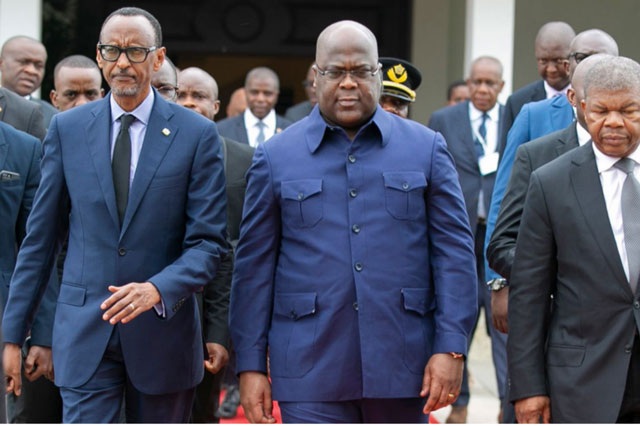
UNEASY PEACE: Angola’s Lourenco (right) has previously tried to broker peace between Rwanda’s Kagame and DRC’s Tshisekedi before full army confrontation takes place. The EAC should be playing a firmer role. FILE PHOTO
COMMENT | Nkwazi Mhango | 
I was left puzzled when I heard that Kenya that failed miserably to pacify Somalia, has now sent its army to fight M23 rebels in the DRC.  A million questions have been generated by the decision.
The first question is why Kenya alone? How did Kenya reach this decision to put the boots on the ground in the DRC? What’s Kenya’s overt or covert motive? What are the terms of its assignment? Who allowed Kenya into the DRC? Is it the only possible solution left for the East Africa Community? Is this what the DRC sought to achieve in the EAC? How does it benefit from its membership despite the fact that its contribution­­­­––––if maximumly and reasonable exploited––––is bigger than all other EAC members put together? Does the EAC know this and pretend not to? How can we put sense into the EAC?
            There are clearly many more questions than answers, which indicates that the DRC conflict isn’t as easy as one can think, and neither can it be resolved militarily. The EAC needs to devise, talk, and think about how to address this protracted conflict. Again, why’s the EAC or any of its members using iniquitous methodologies to address the conflict? Methinks… It’s because of coloniality if not the greed to use intervention as pretext of fleecing and robbing the resources in the DRC that’ve always motivated all criminals, local and foreign, to start wars.
            For, if the EAC were decolonialised, it would see the conflict in any of our region or in any African so-called country–––thanks to being created by our colonisers–––as an African problem instead of a particular country’s.
        Why are Africans unable to see such a clear and simple matter? Who benefit from such self-inflicted wars? We condemn our colonisers for dividing and the partition of us and our regions that they curved into fickle and feeble states, yet we are blinding taking pride in it without underscoring the fact that we’re harming ourselves.
        When the allegations continued that Rwanda is supporting M23 and was followed by Kenya announcing that they are sending an army to deal with it, I didn’t get it. Don’t Kenya, Rwanda, and the DRC know who benefits from this warmongering? If they don’t, I’ll help them.
            Only colonial agents, namely our local elites and politicians and their masters do know who benefits.
If we’re truly decolonised, why don’t we view ourselves as Africans  instead of Congolese, Rwandans, Ugandans, and so forth. When will we decolonise our minds and open our inner eye to see such a simple and realistic means of emancipating ourselves instead of continuing being our own enemies?
            For example, how much money is Kenya going to burn in the DRC and what for? Why hasn’t Kenya learned from Somalia?  Doesn’t the EAC and Kenya know that if the EAC is united to form one country, al-Shabaab will lose the pretext of fighting? Imagine, if all EAC members could send their armies to fight either al Shabaab or the M23, what would happen?
        The money we spend on fighting and killing each other is enough to unite our ‘fake countries’ and our people.
We should stop the situation of Africans fighting each other to control the resources to vend to their masters in the West. The West produces weapons and sells to them and in the end get their resources at a throwaway price!
Why is Kenya more interested in putting boots on the ground and not uniting the region wherein such toxic ethnic divisions will die naturally?

            Why is Rwanda that is feeling threatened by Interahamwe not convince others to unite and form one meaningful and powerful country known as the United Countries of East Africa (UCEA) or the United People of East Africa (UPEA) if not the United East Africa (UEA)?If the EAC unification is to be realised, the group of nations should be able to sanction a country that goes against its rules.  And if need be, invade and neutralize such a country so that it can test its medicine.
Source: The Ugandan Independent today.

Tuesday, 24 January 2023

Waswahili Pangeni uzazi Ila Zaaneni


 Novemba 15, 2022 ni maalumu duniani (un.org, Nov. 15, 2022), siku ambapo binadamu walifikia idadi ya bilioni nane. Wapo walioshangangilia kuwa angalau tunaongezeka tokana na kuishi maisha marefu na hivyo, kuyashinda magonjwa. Wengi walisikitika wakisema tumekuwa wengi mno kiasi cha kutishia uhai wa dunia yaani wachoyo sisi na viumbe wengine wasio na mchango wowote katika kuharibu dunia yetu. Binafsi nina yafuatayo:

Kwanza, ni kuwaambia Waswahili wasidanganywe na ongezeko hili ambalo limechangiwa kikubwa na mataifa mawili yaani China na India. Hivyo, msishangae kuwaona hawa jamaa kila mahali hata kule Matarawe, Mfaranyaki, Matemamanga, Namasakata, Nakapanya, na Mbamba Bay wakiuza chupi na ukwaju na upuuzi mwingine kana kwamba sisi hatuwezi kufanya hivyo. Wamezaana na kuongezeka na kuamua kutafuta riziki kwa wale wanaoona kuwa kuzaa ni matatizo. Nadhani tatizo si kuzaa bali kuandaa mazingira mazuri ya kutumia akili na raslimali zilizopo vizuri badala ya kuruhusu wengine kuja kuzifaidi na kufaidisha kwao wakati sisi tukiendelea kuumia.

Pili, niwaonye. Waswahili mko wachache sana duniani japo mna ardhi kubwa kuliko wote. Hivyo, mnahitaji kuzaana na kuzalishana sana tu vinginevyo mtakuwa kila ambacho wamombo huita extinct creatures. Hapa Kanada, tokana na kupungua kwa idadi ya watu, serikali inatumia fedha nyingi kuingiza wageni ili wazae na kuendeleza nchi. Pia, wanapofika wanalazimika kufuata mila za hapa hata kama hawazitaki. Pia, wanaonekana si bora kama wenyeji wao tofauti na kwetu ambapo wageni huonekana wa maana kuliko sisi hata kutulazimisha kufuata mila zao bila kuwalazimisha Hapa wana fedha. Sisi tukifikia hapa tutatumia nini kuvutia wengine? Na tunavyobaguliwa, hata tukiwakaribisha, watatutawala kama inavyooanza kuonekana. Rejea mfano wa wenzetu toka India ambao wamekaa miaka kwetu lakini wamegoma kuchanganyikana nasi.

Tatu, japo Mwenyewe aliyewaumba ambaye hakuna amjuaye bali kumsingizia aliwapendelea ingawa mnabaguliwa na kuchukiwa karibu na kila rangi duniani kwenye mfumo huu wa kibaguzi na kitwahuti. Kwani aliwapa ardhi kubwa na raslimali nyingi ambavyo wengi wanaitamani hata kutamani mtoweke wachukue wao. Nyinyi ni sawa na wengine hata kama hamjiamini, kujithamini, na kuthaminiana.

Nne, mna upendo wa mshumaa wa kukaribisha wageni kwenu wakati mnakataliwa kwao. Rejea Waswahili wanavyobaguliwa hata kuuawa huko Asia na Mashariki ya Kati kwa sababu ya asili au rangi ya ngozi yao. Mfano, hawa wachina waliojaa Tanzania, waliwabagua Waafrika wakati wa Ukovi wakati gonjwa lilianzia kwao. Huko India, na Mashariki ya Kati hali inajulikana. Rejea hata mnavyobaguliwa nchini na barani mwenu. Imefikia mahali hata Waswahili wanajiita waarabu huko Sudan.

Tano, hebu tufanye hesabu kidogo japo wengi hawazipendi. Kwa sasa, bara la Asia lina watu wapatao 4,734,852,393 kwa mujibu wa takwimu zilizotolewa hivi karibuni za Wordometer. Bara hili lina ukubwa wa kilometa za mraba 44,579,000.  Linganisha na Afrika yenye ukubwa wa kilometa za mraba 30,370,000 na idadi ya watu wapatao 1,416,625,724. Waswahili hawafikii hata nusu yao. China peke yake ina watu wapatao 1,452,462,600 ambao ni wengi kuliko Waswahili. Kwanini wasivamie Afrika kutafuta riziki na kufanikiwa tokana na ujinga wa Waswahili? Hivyo, wanaoshangaa utitiri wa wachina Afrika wajue ukweli huu. Watashindwaje kutuvamia wakati China yenyewe ina ukubwa wa kilometa za mraba 9,596,961. Hii maana yake ni nini? Waafrika wakizaa kama wachina, wanapaswa kuwa si chini ya watu bilioni nne na nusu angalau.

Sita, mfano mwingine wa karibu na nyumbani ni Nigeria ambayo ni ndogo kwa eneo kwa takriban kilometa za mraba 23,534 kuliko Tanzania lakini ina watu wapatao 206,139,589. Kenya ambayo haifikii hata nusu ya Tanzania ina watu wapatao 53,771,296. Uganda ina 45,741,007. Kenya na Uganda zikiwekwa pamoja–––jumlisha Burundi na Rwanda–––bado Tanzania inazizidi kwa eneo la ardhi hata raslimali. Linganisha na Tanzania ambayo ni kubwa kuliko hawa majirani zake yenye idadi ya watu wapatao 59,734,218. Je kama hao hapo juu wasio na ardhi wala raslimali wanazidi kuongezana, nyie mnaacha ili waje wachukue nchi yenu? Inakuwaje Nigeria yenye watu wengi kuliko nchi tatu hapo juu inaendelea kuzaa nanyi mbane ili iweje? Tanzania ikilinganishwa na Nigeria, inapaswa kuwa na watu wasiopungua 210,000,000. Ikilinganishwa na Kenya na Uganda, inapaswa kuwa na watu wasiopungua 150,000,000.

Saba, sasa nini kifanyike? Zaaneni na kupanga mipango ya kuwaendeleza watu wenu badala ya kuruhusu wageni waje kuwaibia, kuwabagua na hata kuwahujumu. Nchi ya India inaingiza fedha nyingi toka nje toka kwa raia wake walioko nje. Pia, inaingiza fedha nyingi tokana raia wengine wa kihindi waliopelekwa nje na ima wakoloni au dhiki ambao hutumia kila mbinu kutengeneza fedha na kutuma kwa ndugu zao hata wengine kuhamia kule ingawa wengi hurejea walikotoka baada ya kugundua ugumu wa maisha ulioko kule.

Mwisho, Watanzania na Waafrika hawana sababu yoyote ya msingi ya kujinyima kuzaa. Wakifanya hivyo, watakwisha kwa vile dunia nzima inawachukia, kuwabagua na kutamani raslimali zao. Cha mno, unganisheni nchi zenu muwe na taifa lenye nguvu badala ya kuogopana na kutegana kama ilivyo. Kwa ukubwa wa bara la Afrika, kama lingekuwa limeungana, hakuna nchi hata moja inayopaswa kuaminishwa kuwa kuzaa au kuongezeka kwa idadi ya watu ni tatizo.

Chanzo: Raia Mwema kesho.


Saturday, 21 January 2023

Tuesday, 17 January 2023

Where did Museveni’s COVID-19 vaccines go?


File pic: Covid 19 vaccine

THREE years ago, Ugandan strongman Yoweri Amos Kaguta Museveni told the world that his country would roll out its homemade COVID-19 vaccine.
        Such braggadocios caught me offguard. Museveni’ is quoted saying: ‘‘We are working on our vaccine. Actually, our vaccine will be better than all those because it will cover all variants” (Daily Monitor, June 20, 2021). What a daring statement shall it be real and truthful! Congratulations, shall you make good on your promise.
                First, I thought it was an April Fool’s Day prank. Again, how could it be when it was in the middle of June when the man gassed? Thus, it wasn’t a lie? Was it a political fustian? Who knows? Again, considering the one who broke the “good news”, I would think deeply, twice. Since when has Museveni become a stand-up comedian who can natter anything without underscoring the price to be paid for that? Everything has a beginning. Who knows?
            After checking and counterchecking with my people on the ground, I concluded that the news was real. Now, what’s the big and real deal? The first answer revolves around pandemic politics. Call it COVID-19 politics wherein rich and Western countries have monopolised everything from amassing the stuff to just hurriedly and solely certifying the vaccine even without following habitual scientific procedures. Jokes aside, the West and the East (China and Russia) have invented their new world order vis-a-vis drug certification.
            Up until now, we don’t know which vaccine is fit for curing or preventing COVID-19. Is this the leeway Museveni and “Uganda” have taken advantage of knowing that, even if things go aslant, they will say they are enjoying their freedom of certifying what they think is good for their people they can cheat or use as guinea pigs?
            Remember Madagascar and its concoction that is no longer heard of. Where is President Andry Rajoelina in the defence of his “invention“? Let us query even more. Remember the presidents who became fake inventors of treatments? As of recent, former US contentious president Donald Trump tried what Museveni is trying. He propounded a COVID-19-thwarting theory saying antiseptics can be used to thwart the virus. He is quoted saying: “So, supposing we hit the body with a tremendous — whether it’s ultraviolet or just very powerful light, then I see the disinfectant where it knocks it out in a minute, one minute. And is there a way we can do something like that, by injection inside or almost a cleaning?” Hogwash. Science is not politics. Science latches on facts not on fibs.
        Actually, Museveni is not the first and not the last to come up with such assertions. In 1987, Andre Zirimwabagabo Lurhuma, in conjunction with an Egyptian counterpart, Daniel Zagury Shawfiq, hoodwinked the then Zairean illiterate tinpot dictator Joseph-Desire Mobutu and his Egyptian counterpart, Hosni Mubarak that they had discovered an HIV/Aids cure. To make their bosses blissful, they named their fiction MM1 or Mobutu-Mubarak1
          Thanks to the despondency of the world, mainly Africa — that many quacks effortlessly take for a ride, at the time, initially listened to these scientific shams. This was not the end of the story of such hanky-panky-cum-hoo-ha.
           The last buffoon in power to try a hand on the “breakthrough” of discovering HIV/Aids miracle cure was the former Gambian clown Yahya Jammeh whose education, up until now, has never been made public. Instead of allowing doctors to get away with the credit of the craziness-cum-con, this powerful laughing stock took it upon himself by administering his dangerous concoction of herbs hinged on spiritual healing techniques to vulnerable poor HIV/Aids patients in his country who later died because of megalomaniac tendency entrenched in undreamed-of tomfoolery. Now that we know the equivocation of allegations of cure discovery, we need to warn Museveni to brace himself for the challenges that come with such a stance. How seriously close is Uganda to discovering a COVID-19 vaccine? If Museveni finds out that the aha moment was a sham, he still can recant his statement and move on.
            In summation, I must warn Museveni and the like to be wary of the disgrace that comes with the failure to make good on his promise. It is sad that those who once stood where he stands vis-à-vis the discoveries of cure are all dead. Had they been alive, I would have asked him to consult with them to see what they suffered thereof. Again, being an African politician, Museveni has undivided right to say whatever he deems fit despite what.
            Trump’s gullibility reminds us of what transpired in Kenya in the 1990s when former President Daniel arap Moi astounded the world by announcing that Kenya had discovered Kemron as a cure for HIV/Aids after doctors Davy Koech and Arthur Obel assured him that the cure was real while it was fake. It seems surprise is the ambit of autocrats. 

            Will Uganda become the first African country to beat others by discovering a true COVID-19 cure? I can’t truly tell. What I can tell is: This thing is hard to actualise and substantiate amid the COVID-19 or vaccine politics wherein the colossi of the world seek to get credit and make dosh out of their hastened inventions of cures.
Source:NewsDay Zimbabwe today.

Kutaifisha Mifugo ni Ukoloni Serikali Itafute Suluhu

Taarifa kuwa ng’ombe 3,083 zilitaifishwa na serikali hivi karibuni baada ya kukutwa kwenye mbuga ya Wanyama ya Tarangire, siyo habari nzuri si kwa wafugaji, wahanga, wananchi, serikali wala taifa kwa ujumla. Kweli bado tunanyang’anya mifugo kwa kuingia eti kwenye mbuga au hifadhi kwenye karne ya 21! Tunamkomoa nani zaidi ya uchumi wetu hasa ikizingatiwa kuwa hawa Wanyama wanaopigwa mnada huuzwa kwa bei ya kutupwa na mara nyingi kununuliwa na makundi ya wafanyabiashara wanaoshirikiana na waendesha minada? Je hii ni haki kwa wafugaji wetu walioko karibu na mbuga na hifadhi ambazo zimetokea kuwa tishio kwao na mifugo yao?
            Je nini kifanyike? Ingawa wahusika walikaririwa wakisema kuwa kupiga watuhumiwa faini hakuzuii wao kuendelea kuingiza mifugo yao kwenye maeneo husika, kwanini wasiongeze viwango vya faini au kutafuta njia mbadala na mujarabu itakayohakikisha suluhu inapatikana badala kufilisiana na kuumizana?  
        Naishauri serikali kuwatafutia wafugaji wake maeneo ya malisho hasa ikizingatiwa kuwa kinachoitwa mbuga au hifadhi ni ardhi ambayo, kabla ya kuundwa Tanzania ilikuwa ikitumiwa na wafugaji bila kikwazo chochote. Kimsingi, ni ardhi yao waliyonyang’anywa. 
        Ajabu, aliyewanyang’anya ardhi ya malisho yao sasa anaanza kuwanyang’anya hata mifugo yao na kuongeza uhasama na umaskini.
        Hawa wahanga wana akili na maarifa ya namna ya kutunza hata kuharibu wanyama.                 Kwanini hatuwaangalii hivi? Mtu aliyekwishapoteza vyanzo vyake vya mapato na maisha ana hasara gani akihujumu hawa wanyama wasio tena na akili ya kuweza kutoa ushahidi dhidi yao? Kuendeleza mbinu hatarishi za kunyang’anyana mifugo kunaweza kujenga mazingira hatarishi ambapo watakaolipia ni wanyama hawa hawa mnaotaka kuwalinda. Lindeni wanyama na wafugaji kwa pamoja kwa kuweka utaratibu mzuri wa kugawana raslimali hii.
        Mbali na kuwadhulumu, unapotaifisha mifugo ya mtu na kuipiga mnada, unamtia umaskini yeye, familia yake, jamii yake hata eneo atokako. Kwani, unamnyima uwezo wa kujikimu na kuchangia kwenye uchumi wa taifa. Pia, ifahamike, kwa wafugaji, Wanyama si utajiri tu kwao bali ni alama yao ya heshima katika baadhi ya jamii. Hivyo, mfugaji anapofilisiwa Wanyama wake anaathirika kiuchumi na kijamii. Kutaifisha Wanyama wa mfugaji hakuna tofauti na kumuua yeye na jamii yake. Maana, ndiyo kazi anayojua. Ni sawa na kumtoa Samaki majini ukategemea aendelee kuishi.
        Kama serikali imeweza kuwatafutia Wanyama makazi, inashindwaje kuwatafutia wananchi wake maeneo ya kufugia na kulisha mifugo yao? Wanyama hawawezi kuwa bora zaidi ya watu na mifugo yao. Inakuwaje wenye ng’ombe wakamatwe na kuwekwa ndani? Je hilo ndilo jibu au kufanya watu waichukie serikali yao tokana na maamuzi na sheria za kikoloni na za kizamani?                 Kumbukeni, Ni hawa hawa waliowapigia au ambao watawapigia kura. Mbona Wanyama wanapoingia kwenye makazi ya watu kudhuriwa na waathirika wala serikali kutiwa ndani? Mbona madereva wanapovunja sheria za barabarani hupigwa faini bila kutaifisha magari yao au kwa vile wenye magari wengi ni matajiri na wakubwa kama wakoloni walivyotunga sheria hizi makusudi kujilinda?
        Ushahidi unaonyesha kuwa Wanyama wamekuwa wakiingia kwenye maeneo ya wananchi. Lenani Seyani, mmoja wa wafugaji anasema “sisi na hifadhi sio maadui, kipindi hiki wanyamapori wameanza kuja kwa wingi maeneo yetu ya makazi huku Terati na kwingineko na tumekuwa hatuwadhuru licha ya kuja na magonjwa” (Mwananchi, Desemba 27, 2022).
         Hawa ni watanzania walioamua kufanya kazi ya ufugaji. Kutaifisha ng’ombe zao, licha ya kuionyesha serikali kama mnyanyasaji, haiisaidii, serikali, wananchi wala Tanzania. Nini maana ya kupigania na kupata uhuru sasa? Nadhani serikali yetu ilirithi ima sheria au mawazo ya kikoloni.                 Kimsingi, kuwapatia wafugaji malisho ni jukumu la serikali hasa ikizingatiwa kuwa serikali iliwakuta hao wafugaji wakiishi vizuri tu na Wanyama kwa maelfu kama siyo mamilioni ya miaka. Hapa kinachopaswa kufanywa, ni kuelimishana na kutafatuta suluhu pamoja badala ya serikali kujifanya ina haki kuliko wafugaji wakati serikali na nchi ni mali ya watanzania popote walipo.
        Kama ambavyo serikali iliondoa ujinga wa kuzuia watu wa mipakani kuuza mazao nje ya nchi, iondoe haya makatazo ya kuingiza Wanyama kwenye mbuga. Kwa mfano Wamasai, huwa hawali nyamamwitu. Hivyo, wapewe mafunzo na vibali juu ya namna ya kuchangia mbuga na hifadhi bila kuleta madhara kama ilivyokuwa kwa miaka milioni nyingi iliyopita kabla ya kuja hizi serikali na mataifa yaliyotengenezwa na mkoloni mwaka 1884.                 Nashauri watenge maeneo ya hifadhi na mbuga lau nusu ambapo wananchi wataruhusiwa kuingiza mifugo yao na kulisha huku wakipewa jukumu la kuhakikisha Wanyama hawadhuriwi. Huu ni mfumo unaotumika kuondoa migogoro baina ya binadamu na Wanyama uliokwishafanyika sehemu nyingi duniani. 
        Mfano, jamii zinazosifika kwa kuwinda na kuua Wanyama zinapowezeshwa kiuchumi na kielimu juu ya faida za Wanyama na kuona matunda yake, hugeuka kuwa walinzi wazuri wa Wanyama kwa vile wana faida kwao na nchi zao. Na wafugaji kadhalika. Wakielimshwa na kupewa jukumu la kusimamia Wanyama, watawalinda kama ilivyokuwa hapo awali kabla ya kuingia ukoloni.
Chanzo: Raia Mwema Kesho.